
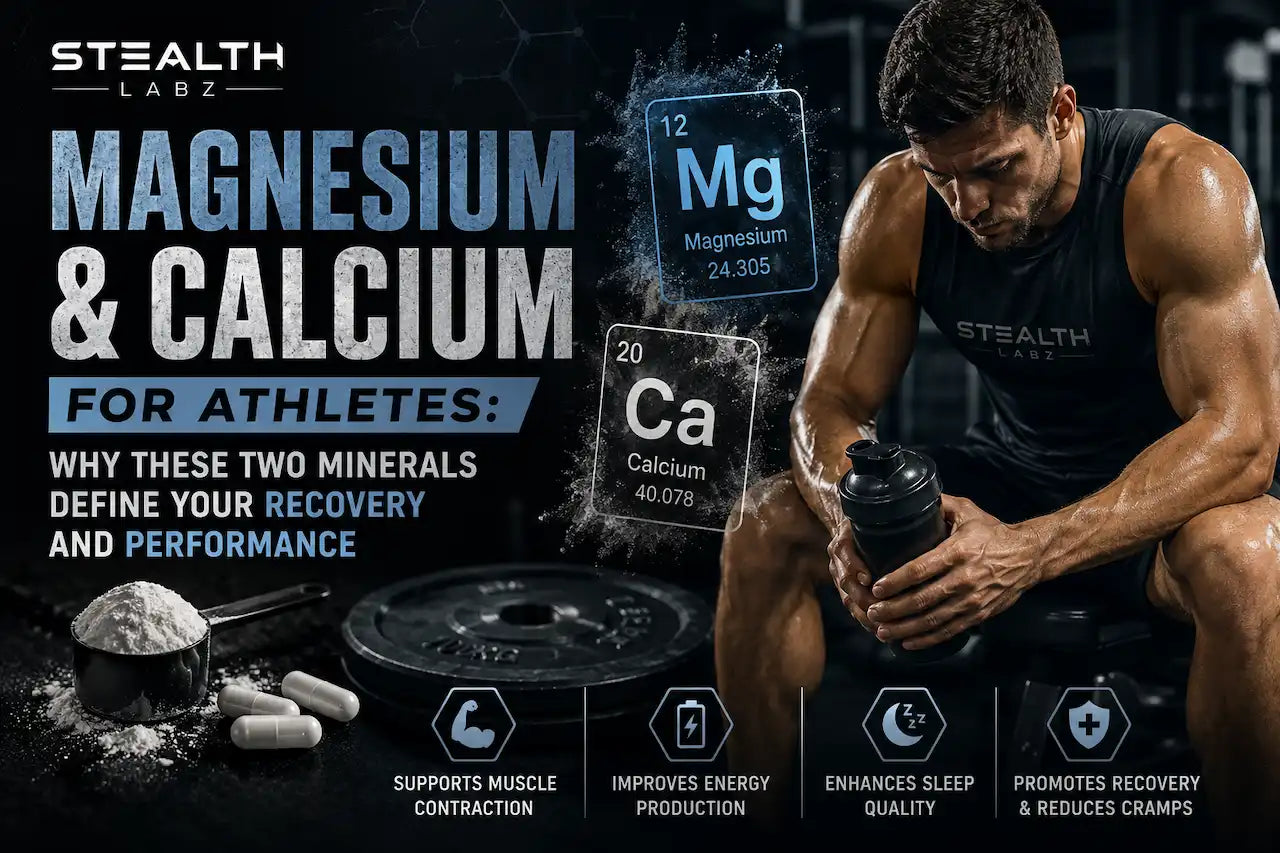
Magnesium and Calcium for Athletes: Benefits, Intake & Recovery
Magnesium and calcium are essential minerals involved in muscle function, nerve signaling, energy metabolism and bone health.
For athletes, getting enough of both matters because training increases nutritional demands and places repeated stress on muscles and bones. However, supplementation is not automatically necessary for every athlete; the first priority is meeting individual requirements through food and identifying genuine dietary gaps.
This guide explains what magnesium and calcium do, recommended intake, food sources, when supplementation may be useful, and how both minerals fit into a complete athletic recovery strategy. Magnesium is involved in more than 300 enzyme systems, including processes related to energy production, protein synthesis and muscle function.
What Does Magnesium Do for Athletes?
Magnesium plays several roles relevant to exercise and recovery.
It contributes to:
-
Normal muscle and nerve function
-
Energy production
-
Protein synthesis
-
Movement of calcium and potassium across cell membranes
-
Bone health
-
Normal heart rhythm
The current adult RDA ranges from 310 to 420 mg per day, depending on age and sex. There is no single official athlete-specific RDA that applies to everyone.
Athletes with restrictive diets, low overall calorie intake or inadequate magnesium-rich foods may be more likely to fall short but supplementation should be based on actual intake and individual need rather than assuming all athletes are deficient.
Four Ways Magnesium Supports Athletic Function
1. Muscle and nerve function
Magnesium helps regulate processes involved in normal muscle contraction, relaxation and nerve signaling.
2. Energy metabolism
Magnesium is required for several reactions involved in cellular energy production.
3. Protein synthesis
It acts as a cofactor in biological processes involved in protein synthesis and tissue function.
4. Bone and mineral balance
Magnesium contributes to bone structure and helps regulate the movement of calcium and potassium across cell membranes.
Magnesium supplementation should not be presented as a guaranteed performance booster. A meta-analysis found no significant improvements in muscle strength or power among athletes and physically active people who already had relatively adequate magnesium status.
Signs of Low Magnesium Intake or Deficiency
Magnesium deficiency cannot be diagnosed from workout symptoms alone.
Early signs of deficiency can include:
-
Fatigue
-
Weakness
-
Reduced appetite
-
Nausea
More significant deficiency may contribute to muscle contractions or cramps, numbness, abnormal heart rhythms and other symptoms.
Muscle soreness, poor sleep or low motivation have many possible causes, so they should not automatically be blamed on magnesium.
If symptoms are persistent or severe, professional evaluation is more appropriate than self-diagnosing a mineral deficiency.
How Athletes Can Meet Magnesium Needs
Food should usually be the starting point.
Good magnesium sources include:
-
Pumpkin seeds
-
Almonds
-
Spinach
-
Black beans
-
Whole grains
-
Chia seeds
-
Cashews
NIH notes that foods such as seeds, nuts, leafy greens and legumes can contribute substantial magnesium.
Supplementation may be useful when diet does not provide enough. Magnesium citrate is generally better absorbed than magnesium oxide, although the appropriate amount still depends on total dietary intake.
For athletes who also need electrolyte support around training, review the current formula and Supplement Facts for LYTES Electrolyte Hydration Formula.
What Does Calcium Do for Athletic Performance?
Calcium is best known for bone health, but it also plays important roles in muscle function and nerve transmission.
Most calcium in the body is stored in bones and teeth, while the smaller circulating pool is involved in:
-
Muscle contraction
-
Nerve transmission
-
Blood clotting
-
Hormonal signaling
For athletes, adequate calcium intake is particularly important because training repeatedly loads the skeleton and depends on normal muscle and nerve function.
The goal is adequate intake, not simply consuming more calcium than recommended.
Four Important Roles of Calcium for Athletes
1. Muscle contraction
Calcium is required for normal muscle function and contraction.
2. Bone structure
More than 99% of the body's calcium is stored in bones and teeth, making adequate calcium important for maintaining skeletal health.
3. Nerve signaling
Calcium participates in nerve transmission and neuromuscular function.
4. Long-term bone support
Athletes repeatedly expose bones to mechanical loading. Adequate nutrition combined with exercise helps support bone health over time. Exercise itself is associated with improvements in bone mineral density and bone structure.
Remove the current claim that calcium directly improves fat oxidation or accelerates fat loss; NIH describes the evidence for calcium and weight management as mixed.
What Happens When Calcium Intake Is Too Low?
Chronically inadequate calcium intake can negatively affect bone health over time.
Because the body tightly regulates calcium in the blood, it can draw calcium from bone to maintain normal physiological functions. Long-term calcium inadequacy can contribute to reduced bone strength and increased osteoporosis risk.
Severe low blood calcium can also affect neuromuscular function, but athletes should not diagnose calcium deficiency from cramps, coordination changes or performance alone.
Athletes with low-calorie diets, limited dairy or fortified foods, or other dietary restrictions should pay particular attention to calcium intake.
How Magnesium and Calcium Work Together
Magnesium and calcium both contribute to normal muscle, nerve and bone function, but they should be viewed as complementary nutrients rather than managed according to a fixed universal ratio.
Calcium participates in muscle contraction and nerve transmission, while magnesium contributes to muscle and nerve function and helps regulate movement of calcium and potassium across cell membranes.
There is no official recommendation requiring athletes to maintain a 2:1 calcium-to-magnesium ratio, so remove that claim.
Instead, focus on meeting the recommended intake for each nutrient based on age, sex and individual diet.
For athletes who also want amino acids around training, see Elevate BCAA/EAA Recovery + Hydration.
Recommended Magnesium and Calcium Intake
There is not one universal mineral target for every athlete.
For healthy adults, current U.S. recommendations are:
|
Mineral |
Adult Recommended Intake |
Food Sources |
|
Magnesium |
310–420 mg/day depending on age and sex |
Seeds, nuts, leafy greens, legumes, whole grains |
|
Calcium |
Usually 1,000–1,200 mg/day depending on age and sex |
Dairy, fortified plant milks, sardines, salmon with bones, kale |
Athletes should first compare their usual dietary intake against these established recommendations.
Supplementation can help fill a genuine gap, but it should not be described as essential simply because someone trains four or five times per week.
How Supplements Can Fit Into an Athlete's Recovery Plan
Supplements are most useful when they address a specific gap rather than replacing a balanced diet.
A complete recovery plan may include:
-
Fluids and electrolytes after substantial sweat loss
-
Adequate daily protein
-
Carbohydrates to support training demands
-
Vitamins and minerals when dietary intake is inadequate
-
Sufficient calories and sleep
Protein and minerals also serve different functions. Minerals support normal physiological processes, while dietary protein provides amino acids used for muscle repair and adaptation.
For athletes looking for a convenient protein option, ISO PRO Whey Protein Isolate can help contribute to daily protein intake.
What to Expect From Improving Mineral Intake
There is no reliable universal timeline for noticing benefits from increasing magnesium or calcium intake.
The outcome depends on:
-
Whether intake was actually inadequate
-
Severity and duration of the deficiency
-
Overall diet
-
Health status
-
Training load
-
Other nutrient deficiencies
Magnesium supplementation does not consistently improve strength or muscle performance in already well-nourished athletes, while correcting a true deficiency may be more meaningful.
Instead of promising results in specific weeks, assess whether your overall diet meets nutrient requirements and monitor training, recovery and health over time.
For more information about hydration and mineral replacement after training, read our guide to electrolytes for muscle recovery.
The Bottom Line on Magnesium and Calcium for Athletes
Magnesium and calcium are essential nutrients with important roles in muscle function, nerve signaling, energy metabolism and bone health.
For athletes, the goal should be adequate intake, not automatically taking high-dose supplements.
Start by:
-
Eating magnesium- and calcium-rich foods
-
Comparing intake with recommended levels
-
Considering dietary restrictions and training demands
-
Using supplements only when they help fill a genuine gap
-
Avoiding claims that more magnesium or calcium automatically means better performance
A strong athletic nutrition plan still depends on adequate calories, protein, carbohydrates, hydration and recovery.
For broader training-support options, explore the Stealth Labz Athletic Performance collection.
Why Choose Stealth Labz for Athletic Nutrition?
Stealth Labz focuses on transparent formulas and products designed around specific training needs.
Key qualities to emphasize include:
-
Clearly disclosed ingredient amounts
-
No hidden proprietary blends
-
Dedicated hydration, protein and performance products
-
Straightforward serving directions
-
Formulas designed for active users
Avoid broad statements such as “highest bioavailability,” “works without conflicts,” or claims that every product automatically improves the effects of another unless those exact claims are supported by evidence.
The strongest trust signal is transparency: let users see the formula, dose and purpose of every product.
Frequently Asked Questions
How do magnesium and calcium support athletic performance?
Magnesium contributes to energy metabolism, protein synthesis, muscle function and nerve signaling. Calcium supports muscle contraction, nerve transmission and bone structure.
Can athletes get enough magnesium and calcium from food?
Yes. Many athletes can meet their needs through a well-planned diet. Magnesium-rich foods include nuts, seeds, legumes and leafy greens, while calcium-rich options include dairy, fortified foods and certain vegetables and fish.
What is the ideal calcium-to-magnesium ratio?
There is no official universal 2:1 ratio recommendation for athletes. It is better to meet the established requirement for each mineral individually.
Do magnesium and calcium prevent sports injuries?
Adequate mineral intake supports normal muscle and bone health, but neither mineral should be advertised as independently preventing sports injuries.
When should I take magnesium?
Timing is usually less important than total intake. Follow the supplement label and account for magnesium already obtained from food. The adult upper limit for supplemental magnesium is 350 mg/day unless otherwise directed by a healthcare professional; this limit does not include magnesium naturally present in food.
When should I take calcium?
Calcium supplements are absorbed more efficiently in smaller doses; NIH notes that absorption is highest at 500 mg or less at one time. Taking calcium with food can also improve absorption for many supplement forms.
Can magnesium or calcium supplements interact with medication?
Yes. Both can interact with certain medications. Magnesium may interact with some antibiotics and bisphosphonates, while calcium can interact with medications including levothyroxine and some antibiotics.
Conclusion
Magnesium and calcium aren't flashy supplements, but they're doing constant work behind the scenes — powering muscle contractions, supporting nerve signaling, and keeping bones strong enough to handle repeated training stress. For most athletes, the priority isn't finding a stronger supplement; it's making sure daily food choices actually cover what training demands.
Start with your diet. Compare your typical intake of magnesium and calcium-rich foods against the recommended ranges, and treat supplementation as a way to close a genuine gap, not a shortcut around eating well. Neither mineral will boost performance on its own if your levels are already adequate, and neither should be taken in high doses just because you train often.
Minerals are only one piece of a complete recovery plan. Training also puts real demands on your cardiovascular system and body composition, so if you're working on trimming fat alongside building strength, it's worth pairing solid mineral intake with an effective training approach, our guide on what exercise actually helps burn belly fat breaks down which workouts are backed by evidence and which popular claims don't hold up.




Leave a comment
This site is protected by hCaptcha and the hCaptcha Privacy Policy and Terms of Service apply.