

Whey Protein Isolate Benefits: Is the Upgrade Actually Worth It?
Whey protein isolate's real advantage isn't that it builds more muscle than concentrate, it's that it delivers the same protein in far fewer calories, with almost no lactose, in a faster-absorbing form. For most lifters, that's a genuine upgrade.
But it's worth understanding exactly what you're paying more for, because the "isolate builds more muscle" claim you'll see everywhere isn't the full picture.
What Is Whey Protein Isolate?
Whey protein isolate is a highly refined protein supplement derived from milk during cheese production. It goes through extensive filtration, cross-flow microfiltration or ion exchange to strip out most of the fat, carbohydrates, and lactose, leaving a product that's typically 90% or more pure protein by weight.
This differs from whey protein concentrate, the less-processed, more affordable option that typically contains 70–80% protein along with more residual fat and lactose (up to 3.5g per serving, versus under 1g in isolate).
Isolate vs Concentrate: What the Difference Actually Means for You
|
Factor |
Whey Isolate |
Whey Concentrate |
|---|---|---|
|
Protein content |
90%+ |
70–80% |
|
Lactose per serving |
Under 1g |
Up to 3.5g |
|
Fat and carbs |
Minimal (1–3g each) |
Higher |
|
Cost |
Higher |
Lower |
|
Muscle-building effect |
Comparable per gram of protein |
Comparable per gram of protein |
Here's the honest part most product-focused articles skip: the muscle-protein-synthesis benefit of isolate's higher purity is often overstated.
Any quality whey protein shake, isolate or concentrate, delivers a meaningful anabolic benefit. The real, well-documented advantages of isolate are:
-
Fewer calories and carbs per gram of protein — useful if you're tracking intake closely during a cut
-
Dramatically lower lactose — the difference that actually matters for lactose-sensitive people
-
Faster digestion — a modest edge for immediate post-workout timing
If you're not lactose-sensitive, not counting calories closely, and mainly want a convenient protein source, concentrate can work just as well for muscle building at a lower price. Isolate earns its premium specifically for people in the situations above.
Who Genuinely Benefits Most from Isolate
-
Lactose-sensitive individuals — this is where isolate's advantage is clearest and best-supported
-
People in a calorie deficit or cutting phase — minimizing carbs and fat per gram of protein matters more when every calorie is being tracked
-
Athletes prioritizing fast post-workout absorption — isolate's lighter processing digests slightly faster than concentrate
-
Anyone who wants the cleanest possible macro profile from their protein source
Whey Isolate vs Casein: Different Jobs, Not Competitors
This is a separate comparison worth understanding, since the two often get conflated. Whey digests quickly, making it the better choice immediately post-workout when you want fast amino acid delivery to support muscle repair.
Casein digests slowly — it actually forms a gel-like curd in your stomach, making it well suited for a steady, extended release of amino acids overnight.
A practical approach many lifters use: whey (isolate or concentrate) post-workout, casein before bed. They're not competing products, they solve different timing problems.
Benefits of Whey Protein Isolate for Fitness Goals
Muscle growth and repair. Rich in leucine and the full essential amino acid profile, isolate triggers muscle protein synthesis efficiently, supporting recovery after intense training.
Weight management. Its high-protein, low-calorie profile supports satiety, helps preserve muscle during a cut, and fits cleanly into calorie-controlled diets without the added carbs and fat that come with concentrate.
Faster recovery. Quick absorption means amino acids reach your muscles sooner post-workout, which can help reduce lingering soreness and get you back to training faster.
How to Choose a Quality Whey Isolate
Not all isolates are created equal. Look for:
-
Isolate listed as the primary protein source, not blended heavily with concentrate while still marketed as "isolate"
-
Minimal fillers — the ingredient list should be short and clean
-
Third-party testing for purity and potency verification
-
Added digestive support (like digestive enzymes) if you have a sensitive stomach, even with the lower lactose content
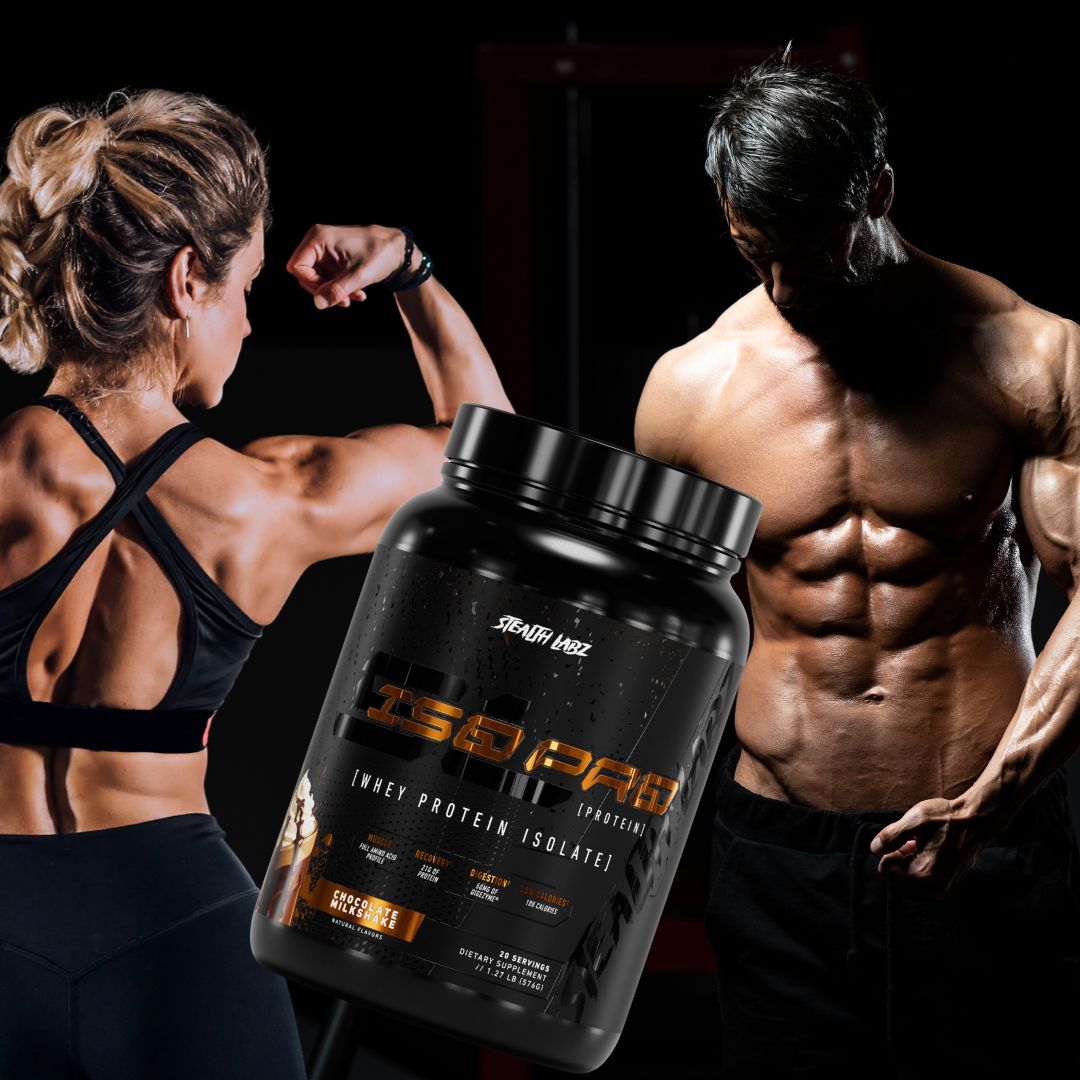
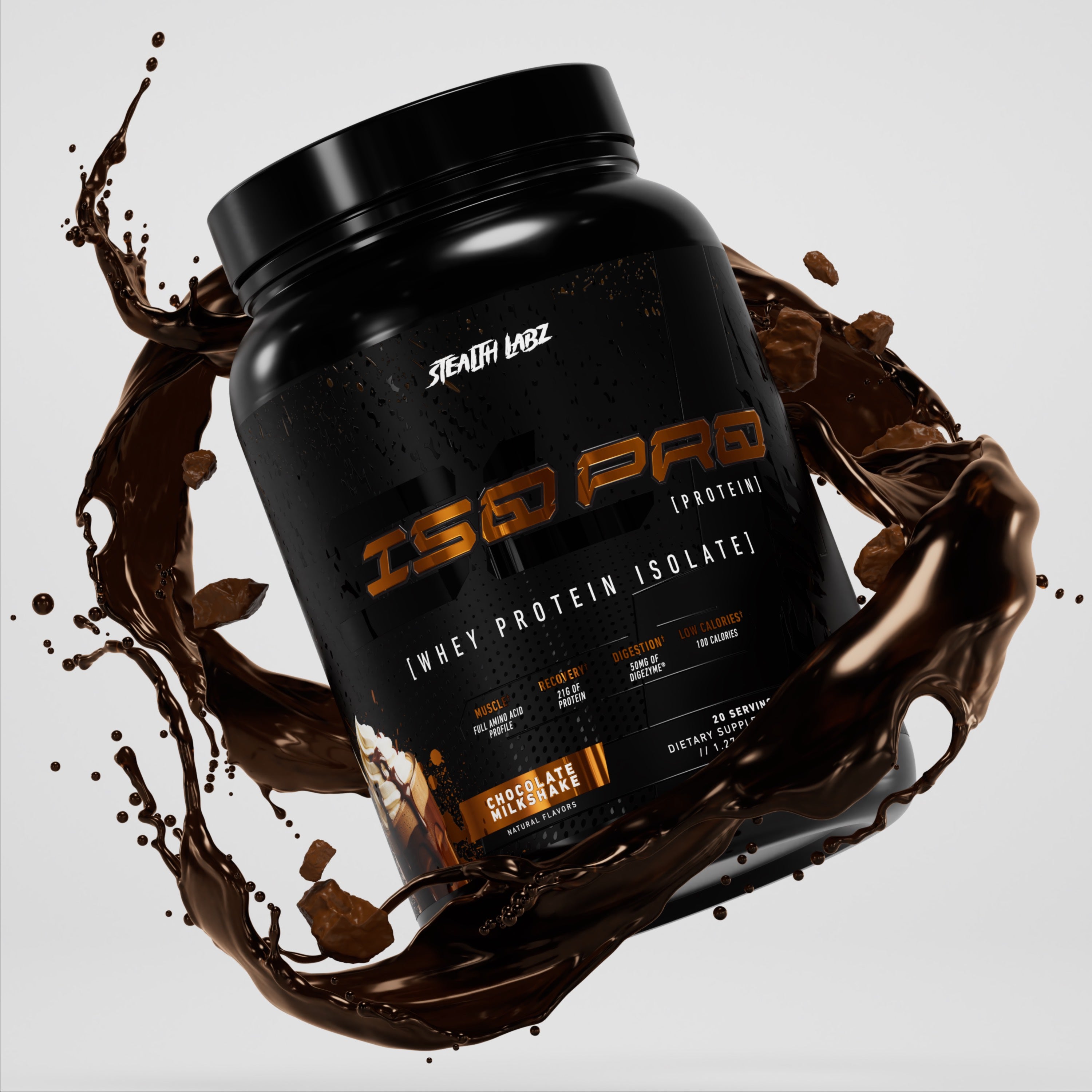
StealthLabz ISO PRO is built around these standards over 90% pure protein per serving with minimal carbs and fat, plus digestive enzyme support for easier digestion even for isolate-sensitive users.
When Casein or Concentrate Might Actually Be the Smarter Choice
To be fair to the alternatives: if you're not lactose-sensitive, not tracking calories tightly, and price is a real factor, whey concentrate delivers essentially the same muscle-building benefit at a lower cost.
And if your goal is overnight muscle preservation rather than post-workout speed, casein is the better tool for that specific job — not a worse version of whey.
Frequently Asked Questions
Does whey protein isolate actually build more muscle than concentrate?
Not meaningfully, gram of protein for gram of protein. The real advantages of isolate are lower calories, lower carbs, and dramatically lower lactose — not a bigger muscle-building effect on its own.
Is whey protein isolate worth the extra cost?
It depends on your situation. If you're lactose-sensitive, tracking calories closely, or want the cleanest possible macro profile, yes. If none of those apply, whey concentrate can deliver comparable results for less money.
Can I use whey protein isolate if I'm lactose intolerant?
Generally yes — isolate contains under 1g of lactose per serving, which most lactose-sensitive individuals tolerate well. Severe intolerance may still warrant caution; consult a doctor if you're unsure.
Should I take whey protein isolate or casein before bed?
Casein is generally the better choice for overnight use, since its slow digestion provides a steady amino acid release over several hours — better matched to an extended fasting window like sleep than whey's fast-absorbing profile.
Is whey protein isolate good for weight loss?
Yes, when used as part of a calorie-controlled diet. Its high protein, low calorie profile supports satiety and helps preserve muscle mass while in a deficit.
Can vegetarians or vegans use whey protein isolate?
Vegetarians can, since it's dairy-derived rather than meat-derived. Vegans should look for a plant-based protein alternative, as whey isolate is not vegan.
Bottom Line
Whey protein isolate is a genuine upgrade for the right person — someone who's lactose-sensitive, tracking calories, or wants the leanest possible protein source. It's not a magic muscle-building multiplier over concentrate, and being honest about that actually makes the case for isolate stronger where it counts: purity, digestibility, and macro efficiency. If that's what you're after, ISO PRO delivers it with a clean formula built for exactly those priorities.
Ready to try a whey isolate built around purity and digestibility? Buy ISO PRO today.

Leave a comment
This site is protected by hCaptcha and the hCaptcha Privacy Policy and Terms of Service apply.