
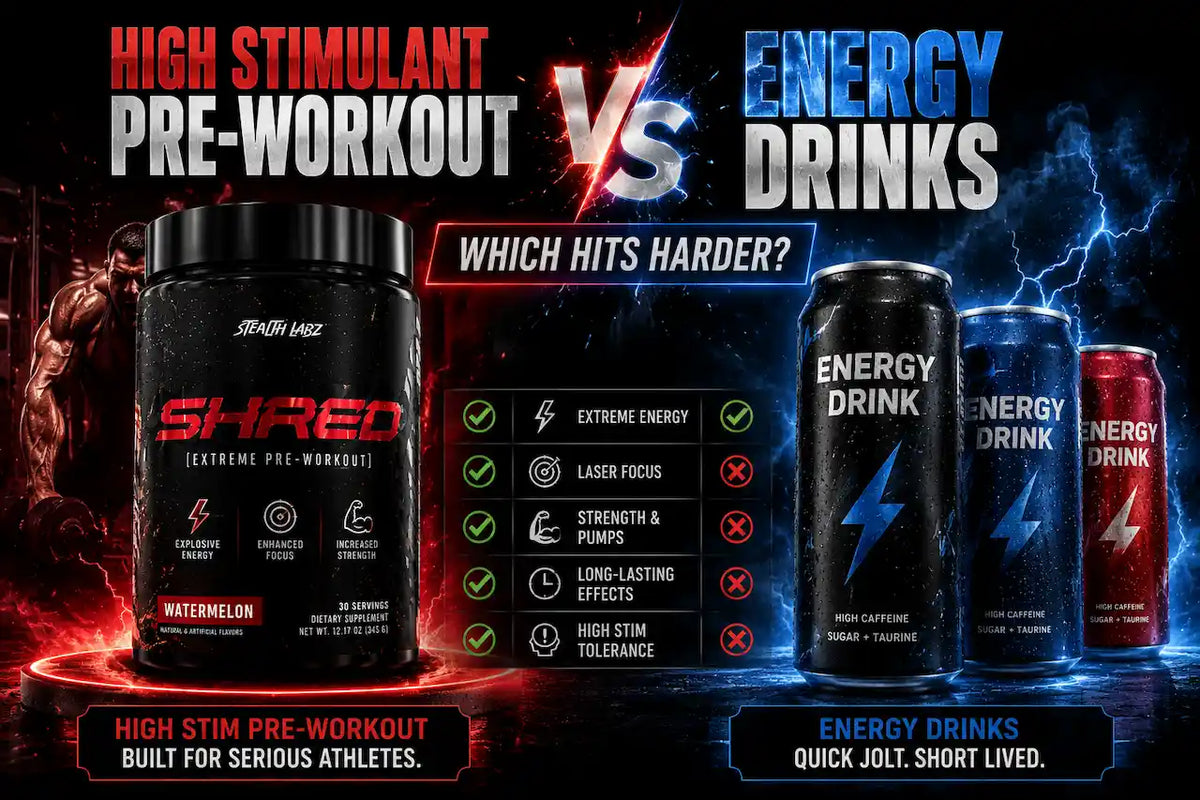
High Stimulant Pre-Workout vs Energy Drinks — Which Hits Harder?
Many athletes and gym enthusiasts often ask: “Is a pre-workout better than an energy drink?” With countless options available, from Monster and Red Bull to high stimulant pre-workouts like Surge Pre-Workout, it can be confusing to know which delivers the best results for energy, focus, and endurance.
This article compares pre-workouts vs energy drinks, examining ingredients, effects, and how each supports performance. By the end, you’ll understand which option hits harder and suits your training style in 2026.
What Are Energy Drinks?
Energy drinks are beverages designed to increase alertness and temporary energy. Common ingredients include:
-
Caffeine – Usually 80–300 mg per serving
-
Sugar – Rapid energy spike, often leading to a crash
-
Taurine & B-Vitamins – Support metabolism and mild cognitive boost
Energy drinks are convenient and widely available, but they often come with short-lived energy spikes and potential side effects such as jitters, sugar crashes, or heart palpitations. Popular options include Monster, Red Bull, and Rockstar.
What Are High Stimulant Pre-Workouts?
High stimulant pre-workouts are powdered or capsule supplements specifically formulated to boost energy, focus, endurance, and pump during workouts. Key features include:
-
Targeted dosage of caffeine (100–300 mg)
-
Beta-Alanine & L-Citrulline – Improve stamina, delay fatigue, and increase nitric oxide for pumps
-
Amino acids (BCAAs & EAAs) – Support muscle performance and recovery
-
Electrolytes – Maintain hydration and reduce fatigue
Unlike energy drinks, pre-workouts like Surge Pre-Workout are designed for gym performance, not just temporary alertness.
Pre-Workout vs Energy Drink: Key Differences
|
Feature |
Energy Drink |
High Stimulant Pre-Workout |
|
Purpose |
General energy, alertness |
Workout performance, focus, pump |
|
Caffeine Content |
Moderate (80–300 mg) |
High and controlled (100–300 mg) |
|
Sugar |
Often high |
Usually sugar-free or low sugar |
|
Additional Ingredients |
Taurine, B-vitamins |
Beta-alanine, L-citrulline, amino acids, electrolytes |
|
Effect Duration |
Short-lived, 30–60 mins |
Sustained through workout, 60–120 mins |
|
Target Audience |
General consumers |
Athletes, gym enthusiasts |
Summary: Energy drinks are great for a temporary boost, but pre-workouts hit harder in terms of stamina, focus, and gym-specific performance.
Comparing Effects: Energy, Focus, and Pump
-
Energy Boost:
-
Energy drinks provide fast energy via caffeine and sugar, but this is usually followed by a crash.
-
High stimulant pre-workouts like Surge Pre-Workout deliver sustained energy by combining caffeine with other synergistic ingredients.
-
Focus & Mental Alertness:
-
Energy drinks improve alertness briefly.
-
Pre-workouts enhance mental focus during intense lifting thanks to L-Tyrosine and moderate stimulant blends.
-
Pump & Blood Flow:
-
Energy drinks do not improve pump.
-
Pre-workouts like Surge contain L-Citrulline to increase nitric oxide, giving better vascularity and muscle fullness.
Pre-Workout vs Monster: Is One Better?
Many compare pre-workout vs Monster, the popular energy drink. Consider:
-
Sugar Content: Monster is high in sugar, causing energy spikes and crashes.
-
Stamina Support: Pre-workouts like Surge provide endurance support and reduce fatigue.
-
Workout Optimization: Pre-workouts are formulated for high-intensity training, while Monster is for casual energy boosts.
Verdict: For gym sessions, a high stimulant pre-workout is generally better than Monster for consistent energy, focus, and pump.Want to explore more options? See our Best Supplements for Bodybuilding guide for top-rated products that enhance strength and endurance.
How to Use Pre-Workouts Safely
-
Timing: Take 20–30 minutes before workouts
-
Dosage: Follow label recommendations to avoid overstimulation
-
Hydration: Drink water before and during exercise
-
Avoid Additional Stimulants: Limit caffeine elsewhere to reduce jitters
Proper use ensures maximum energy without side effects, outperforming energy drinks in gym performance.
Advantages of Pre-Workouts Over Energy Drinks
-
Tailored for Workouts: Ingredients designed to support strength, endurance, and pump.
-
Sustained Energy: Avoids sugar crashes and jitters.
-
Recovery Support: Amino acids reduce muscle breakdown and speed recovery.
-
Hydration & Electrolytes: Maintain performance even in intense sessions.
-
Customizable: Many pre-workouts offer creatine-free options for sensitive users.
FAQs
Q1: Is pre-workout better than energy drinks?
Yes, for workouts. Pre-workouts improve stamina, focus, and pump, while energy drinks primarily give a temporary caffeine spike.
Q2: Can I take energy drinks with pre-workouts?
Not recommended. Combining stimulants can increase heart rate, jitters, and risk of insomnia.
Q3: How does Surge Pre-Workout compare?
Surge contains high-quality caffeine, L-Citrulline, beta-alanine, and electrolytes, giving sustained energy, focus, and pumps without creatine or high sugar.
Q4: Are energy drinks safe before workouts?
They’re safe in moderation but can cause sugar crashes, dehydration, or jittery feelings during intense exercise.
Q5: Can I build muscle without pre-workout or energy drinks?
Yes. Proper training, nutrition, and sleep are essential. Supplements enhance energy and focus but aren’t mandatory for gains.
Conclusion
When comparing pre-workout vs energy drink, high stimulant pre-workouts clearly hit harder for gym performance. Energy drinks provide quick alertness, but pre-workouts deliver sustained energy, mental focus, and vascular pump, making them ideal for serious lifters and athletes.
If you want peak energy and optimal performance, consider Surge Pre-Workout designed to outperform traditional energy drinks while supporting focus, endurance, and muscle pump.

Leave a comment
This site is protected by hCaptcha and the hCaptcha Privacy Policy and Terms of Service apply.