
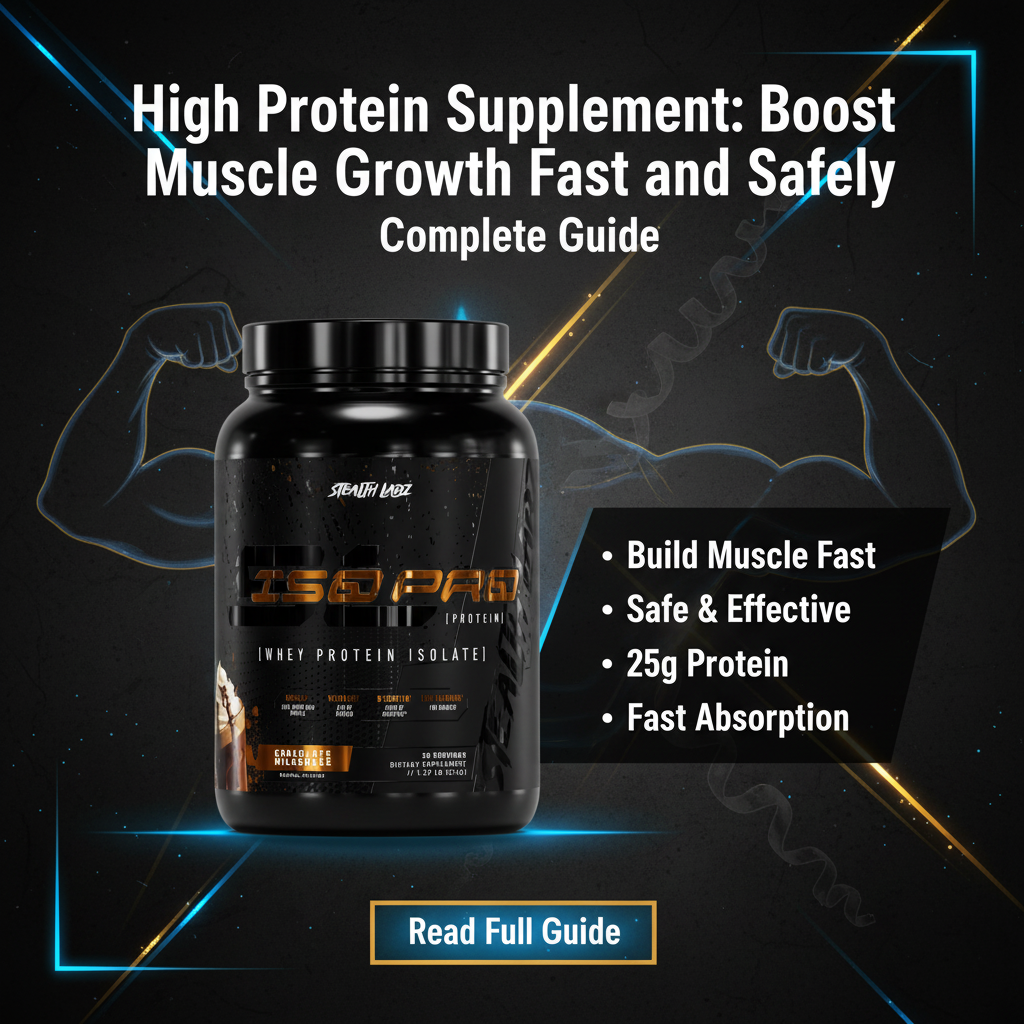
High Protein Supplement Guide: How to Pick the Right One
For most lifters, a whey protein isolate (90%+ protein, minimal carbs/fat, fast-absorbing) is the best all-around high protein supplement. Choose casein if you want slow-release overnight protein, and plant-based blends if you're dairy-free. What matters most isn't the marketing on the label — it's protein-per-scoop, added sugar, and whether the source fits your digestion and diet.
If you already know how much protein you need daily (see our full breakdown here), the next question is which supplement actually gets you there efficiently. Here's how to evaluate one instead of just trusting the front-of-label claims.
Protein Supplement Types, Compared
|
Type |
Source |
Protein Content |
Digestion Speed |
Best For |
|
Whey Isolate |
Milk (whey) |
90%+ |
Fast |
Post-workout, lean cutting, general use |
|
Whey Concentrate |
Milk (whey) |
70–80% |
Moderate |
Budget-friendly bulking |
|
Whey Hydrolysate |
Milk (whey, pre-digested) |
80–90% |
Very fast |
Sensitive stomachs, rapid post-workout uptake |
|
Casein |
Milk (casein) |
~80% |
Slow (4–7 hrs) |
Before bed, appetite control |
|
Plant-Based Blend |
Pea / rice / hemp |
70–85% |
Moderate |
Dairy-free or vegan diets |
What to Actually Check on the Label
Protein per scoop, not just "high protein" marketing claims. A serving should list a specific gram amount (20–25g is typical) if a label leads with vague claims instead of a number, that's a flag to look closer.
Added sugar and carb count. Some "high protein" products pad flavor with 8–15g of added sugar per scoop, which works against a cutting or recomposition goal. Look for under 2–3g of sugar per serving if that matters to you.
Third-party testing. Because supplements aren't tested by the FDA before sale, independent testing (NSF Certified for Sport, Informed Choice, or a certificate of analysis from the manufacturer) is the closest thing to a quality guarantee.
Isolate vs. concentrate, specifically. Isolate goes through extra filtration to remove most of the lactose, fat, and carbs — which is why it's the standard pick for anyone tracking macros closely or sensitive to dairy sugars. Concentrate keeps more of the natural whey nutrients and is usually cheaper, which makes it a reasonable choice if digestion and cost matter more to you than absolute purity.
Where Iso Pro Fits
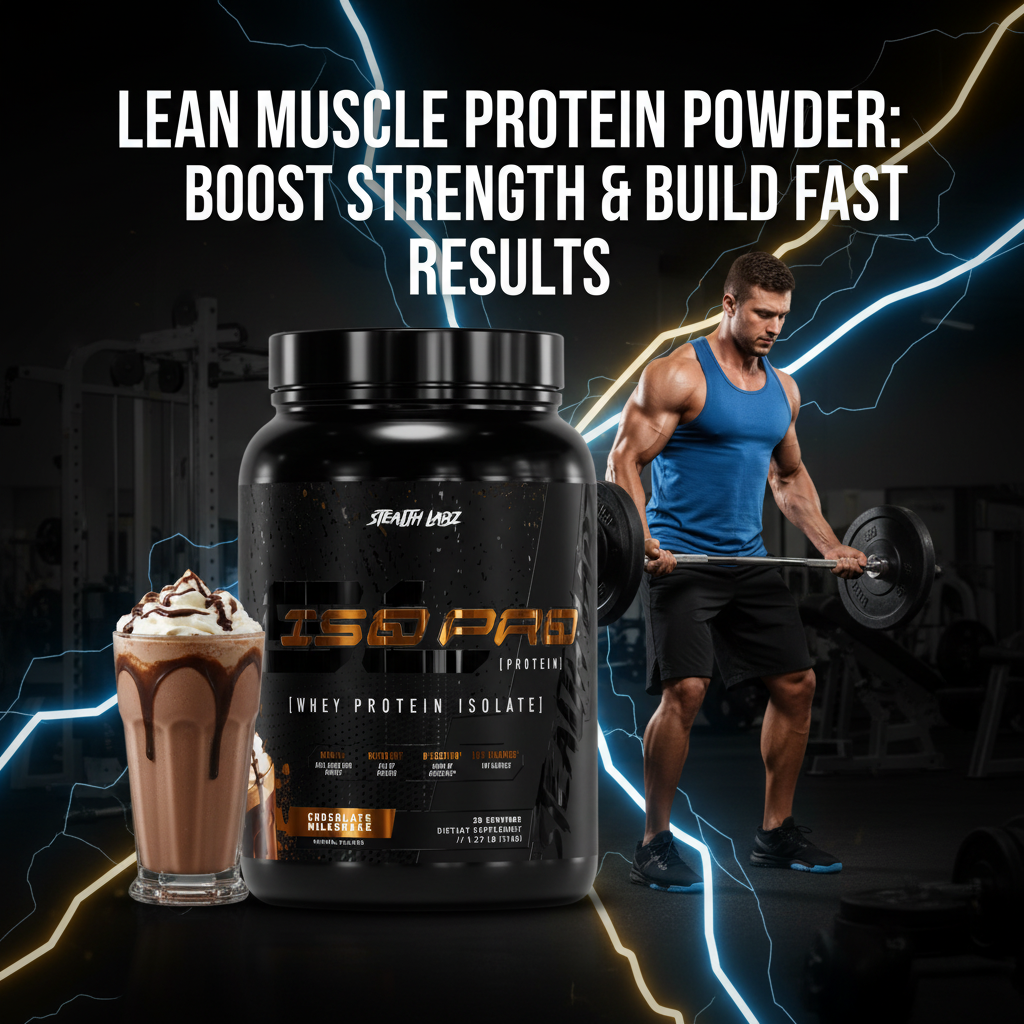
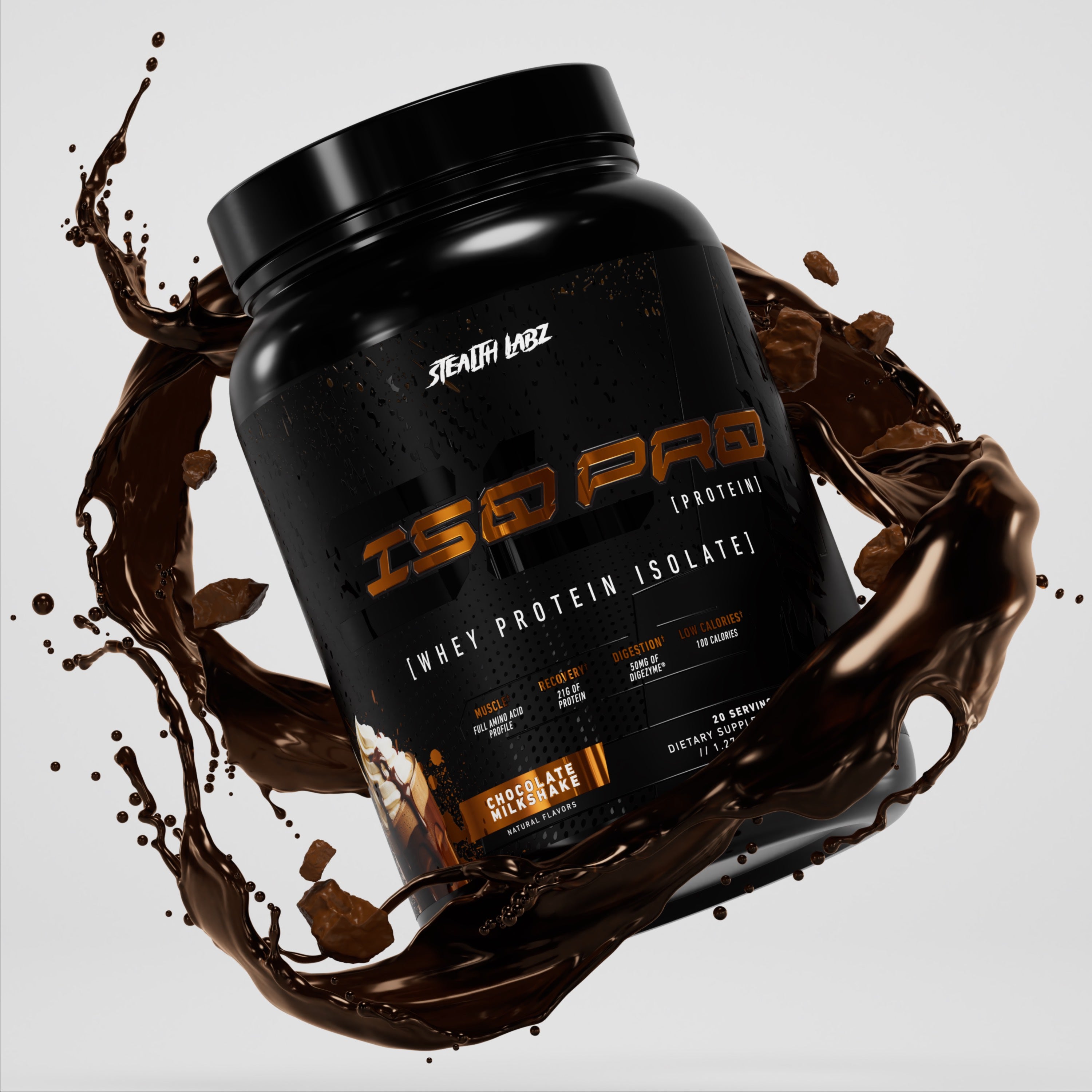
Iso Pro is Stealth Labz's whey isolate, delivering roughly 21g of protein per scoop with minimal carbs and fat, plus a digestive enzyme blend (DigeZyme®) to help with absorption. It's a straightforward fit for the isolate row in the table above — fast-digesting, low-extras, useful post-workout or as a between-meal top-up.
Who Should Choose What
Muscle building on a normal diet: Whey isolate or concentrate both work, isolate if you want cleaner macros, concentrate if budget matters more.
Cutting or tracking calories closely: Isolate, for the lower carb/fat load per gram of protein.
Before bed: Casein, for its slow-release digestion profile that keeps amino acids available overnight.
Dairy-free or vegan: A plant-based blend (pea + rice is a common combination used to cover a more complete amino acid profile than either alone).
FAQs
What's the actual difference between whey isolate, concentrate, and a blend?
Isolate is filtered further to remove more lactose, fat, and carbs, leaving 90%+ pure protein. Concentrate keeps more of those extras (70–80% protein) and is usually less processed and cheaper. A "blend" typically mixes isolate and concentrate, or combines multiple plant sources, to balance cost and profile.
Is a high protein supplement safe to take every day long-term?
For healthy adults, yes — whey and plant proteins are widely used long-term without issues. If you have a diagnosed kidney condition or another relevant health issue, check with your doctor before adding a daily protein supplement.
Do I need a protein supplement if I already eat a lot of meat, eggs, or dairy?
Not necessarily. If you're already consistently hitting your target range from food (see our protein needs guide), a supplement is a convenience option, not a requirement.
Which supplement type has the most protein per scoop?
Whey isolate typically has the highest concentration by percentage (90%+), meaning less powder is needed to hit the same gram target compared to concentrate or plant blends.
Can protein powder alone cause weight gain?
Only if it pushes your total daily calories above what you burn — the same as any other food. A single scoop of a low-carb isolate is roughly 100–120 calories, which is easy to account for in most diets.
Related Reading
-
How Much Protein Do You Really Need to Gain Muscle — figure out your daily gram target first
%20is%20the%20best%20all-around%20high%20protein%20supplement.%20Choose%20casein%20if%20you%20want%20slow-release%20overnight%20protein,...)
Leave a comment
This site is protected by hCaptcha and the hCaptcha Privacy Policy and Terms of Service apply.