
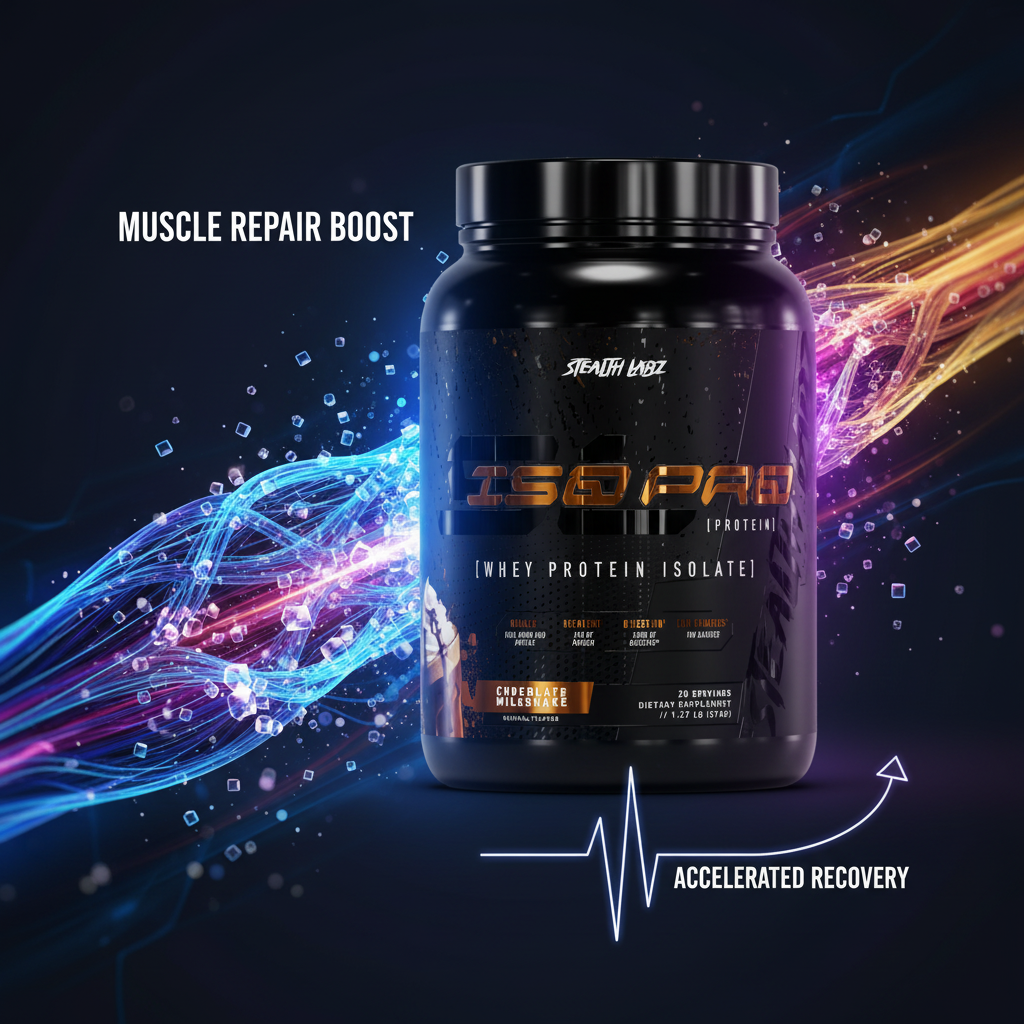
Whey Protein Isolate for Recovery: Benefits, Timing & Muscle Repair
Hard resistance training increases the body's need for protein and essential amino acids needed to repair and adapt muscle tissue.
Whey protein isolate is a convenient complete protein source that digests relatively quickly and provides essential amino acids, including leucine. When combined with resistance training and sufficient total daily protein, whey supplementation can support gains in lean mass and strength.
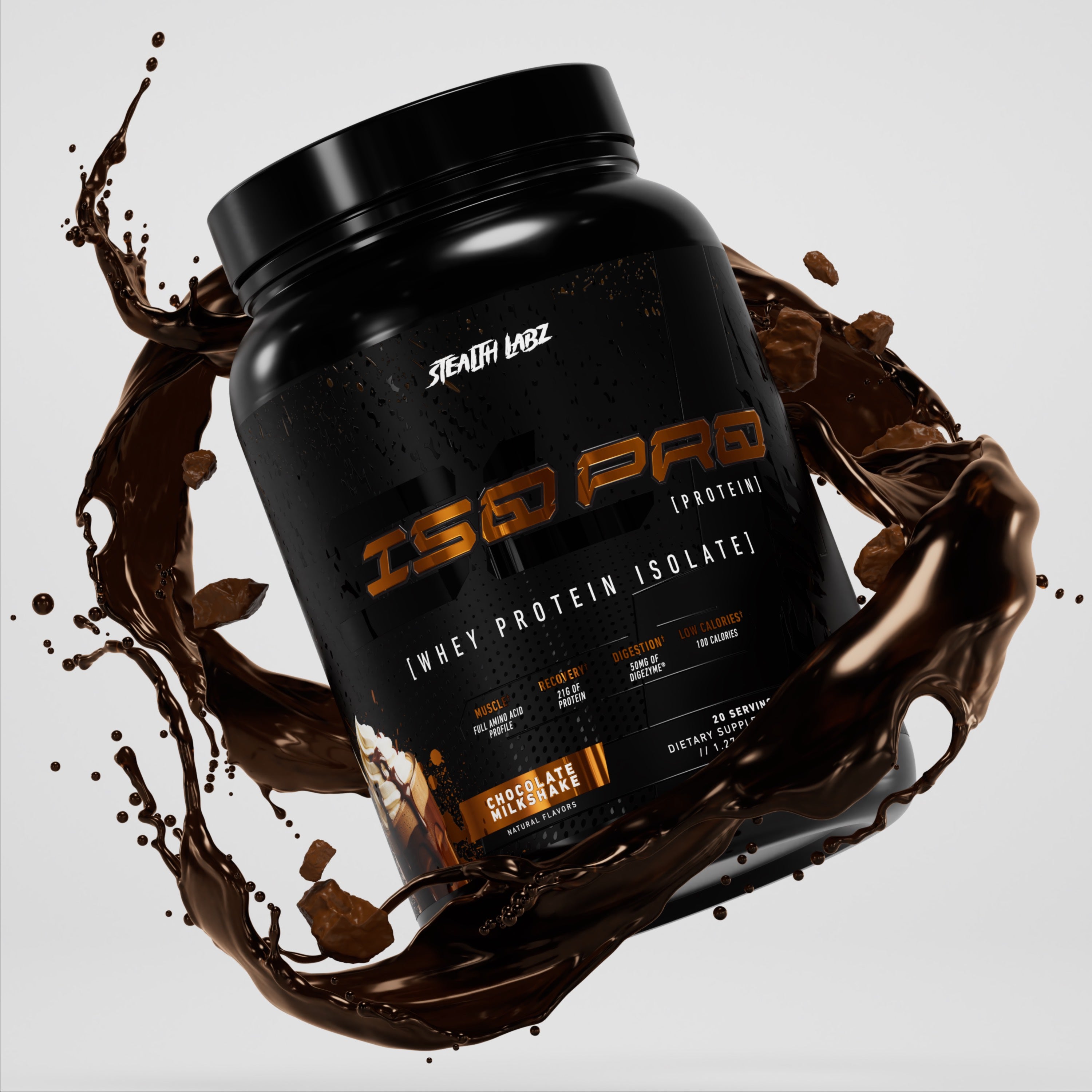
Stealth Labz ISO PRO is a whey protein isolate designed for athletes and active adults who want a low-carb protein option for post-workout recovery or daily protein intake. Its current product page lists nearly 21 g of whey isolate per scoop along with DigeZyme® digestive enzymes.
Review the current formula, serving directions and product details on the ISO PRO Whey Protein Isolate page.
What Is Whey Protein Isolate and How Does It Support Recovery?
Whey protein isolate is a highly filtered form of whey protein designed to contain a high proportion of protein while reducing much of the fat, carbohydrate and lactose found in less-filtered whey products.
Its main recovery benefit comes from providing a complete source of essential amino acids, including leucine, which is involved in stimulating muscle protein synthesis after resistance exercise.
Research shows that whey protein consumed alongside resistance training can contribute to gains in lean or fat-free mass.
However, whey should not be described as directly “healing” muscles, preventing injury or guaranteeing reduced inflammation. Recovery also depends on total protein intake, calories, carbohydrates, sleep, hydration and training load.
For a broader recovery strategy, read our guide to supplements for faster muscle recovery and strength gains.
Whey Protein Isolate: Protein Content, Digestion and Absorption
Whey isolate undergoes additional processing compared with whey concentrate, which generally reduces more fat, carbohydrate and lactose while increasing the proportion of protein.
That makes isolate particularly useful for people who want:
-
A protein-dense supplement
-
Lower carbohydrate and fat intake
-
Less lactose than many whey concentrates
-
Convenient protein around training
-
Easy control of daily protein intake
ISO PRO's current serving directions recommend mixing one scoop, approximately 30 g, with 8–10 oz of cold water or a preferred milk alternative.
ISO PRO also contains DigeZyme®, a multi-enzyme blend. The article should say it is included for digestive support, rather than guaranteeing superior nutrient absorption or no digestive discomfort.
Why Protein Matters During Muscle Recovery
Resistance training stimulates muscle remodeling and increases muscle protein turnover.
Consuming adequate protein supplies amino acids that the body can use to repair and build muscle proteins during recovery.
The important point is that whey does not work independently of training. The combination of progressive resistance exercise and sufficient dietary protein drives adaptation over time.
Research involving resistance-trained individuals has found small additional improvements in lean or fat-free mass when whey-containing supplements are combined with resistance training.
Protein is therefore one part of recovery alongside:
-
Adequate calories
-
Carbohydrates
-
Hydration
-
Sleep
-
Rest between demanding sessions
How Whey Protein Isolate Supports Muscle Protein Synthesis
Whey protein provides all nine essential amino acids and is naturally rich in branched-chain amino acids such as leucine.
Leucine is particularly important because it helps initiate signaling involved in muscle protein synthesis.
In a controlled trial involving resistance-trained young men, 20 g of whey protein after resistance exercise strongly stimulated myofibrillar muscle protein synthesis, while larger doses produced different responses depending on the exercise and conditions studied.
The practical benefits of sufficient protein intake may include:
-
Supporting muscle repair and remodeling
-
Supporting lean-mass development
-
Helping meet increased protein needs
-
Supporting recovery between resistance-training sessions
Avoid guaranteeing reduced DOMS, inflammation or faster strength restoration from ISO PRO specifically unless finished-product research demonstrates those effects.

Key Benefits of Whey Protein Isolate for Athletes
Complete amino-acid profile
Whey provides all essential amino acids required for muscle-protein synthesis.
Leucine-rich protein source
Leucine contributes to the signaling response involved in stimulating muscle protein synthesis after training.
Convenient protein intake
A protein shake can make it easier to meet daily protein targets when whole-food meals are inconvenient.
Lower fat and lactose than many concentrates
Additional filtration generally gives isolate a leaner macronutrient profile than whey concentrate.
Useful around resistance training
Research supports protein supplementation around resistance exercise as part of a program designed to increase muscle mass and strength.
For a detailed comparison of both forms, see whey isolate vs whey concentrate.
ISO PRO Price and Value
ISO PRO is currently listed at $37.99 on the Stealth Labz product page.
Price alone does not determine protein quality. When comparing whey isolates, consider:
-
Protein per serving
-
Serving count
-
Calories
-
Carbohydrates and fat
-
Ingredient transparency
-
Digestive-enzyme additions
-
Cost per serving
-
Flavor and mixability
-
Independent quality documentation, if available
Avoid saying ISO PRO is objectively “cleaner and more effective” than competitors unless you perform a direct comparison using current labels and supporting evidence.
Also avoid relying on a permanent price inside evergreen content, since pricing and promotions can change.
Whey Protein Isolate: Pros and Cons
Pros
-
Complete protein source
-
Rich in essential amino acids
-
Convenient for increasing daily protein intake
-
Generally lower in lactose than whey concentrate
-
Lower-fat and lower-carbohydrate options are widely available
-
Useful before or after resistance training
-
Easy to fit into cutting or muscle-building diets
Cons
-
Dairy-based
-
Not suitable for people with a milk-protein allergy
-
Usually costs more than whey concentrate
-
Not vegan
-
Not automatically necessary if dietary protein intake is already adequate
-
Does not guarantee less soreness or faster recovery
Whey isolate is useful primarily because it provides convenient high-quality protein—not because it has unique fat-burning or instant-recovery properties.
Whey Isolate vs Concentrate, Casein and Plant Protein
|
Protein Type |
Key Characteristic |
Practical Use |
|
Whey Isolate |
Highly filtered, relatively low fat/lactose |
Convenient high-protein option |
|
Whey Concentrate |
Less processed, typically contains more lactose/fat |
Cost-effective daily protein |
|
Casein |
Digests more slowly |
Useful when slower protein delivery is preferred |
|
Plant Protein |
Varies by source and amino-acid profile |
Useful for dairy-free or vegan diets |
Do not claim whey isolate automatically builds more muscle than concentrate.
If two protein products provide sufficient high-quality protein and essential amino acids, total protein intake and resistance training are generally more important than choosing isolate simply because it digests faster.
That makes whey isolate especially useful for its macronutrient profile, lower lactose content and convenience—not because concentrate is ineffective.
Who Is Whey Protein Isolate Best For?
Whey isolate can be particularly useful for:
-
Resistance-training athletes
-
Bodybuilders
-
People struggling to meet daily protein targets
-
Users who want relatively low carbohydrate and fat intake
-
People who tolerate small amounts of lactose better than regular whey products
-
Individuals cutting calories while trying to maintain adequate protein
-
Busy users who need convenient protein between meals
It may be less necessary for someone who already meets their protein requirements consistently through whole foods.
People with a milk-protein allergy should not treat whey isolate as an appropriate alternative simply because it contains less lactose.
How to Use Whey Protein Isolate for Recovery
The most important factor is meeting your overall daily protein requirement.
Protein around your workout is useful, but you do not need to rush to consume a shake within exactly 30 minutes.
A 2026 systematic review found that consuming protein before versus after resistance training did not meaningfully change lean-body-mass outcomes overall, suggesting that the classic narrow anabolic-window concept is overstated.
Practical approach:
After training:
A whey shake is convenient when your next protein-containing meal is not coming soon.
Between meals:
Use it to fill gaps in daily protein intake.
Morning:
Useful when breakfast would otherwise be low in protein.
Rest days:
Protein requirements still matter because muscle remodeling continues outside the workout itself.
For a deeper timing guide, read when to drink protein shakes for muscle gain.
Total Daily Protein Matters More Than a 30-Minute Window
One of the biggest myths in post-workout nutrition is that protein must be consumed within 30 minutes or the workout's benefits will be lost.
Current evidence does not support such a narrow window.
Protein supplementation around training can support muscle growth, but consistent daily protein intake remains the bigger priority. Research comparing protein timing suggests that exact pre- versus post-workout timing has relatively little influence on changes in lean body mass.
A practical strategy is to distribute quality protein across the day and include a protein-containing meal or shake reasonably close to training when convenient.
Whey isolate is valuable because it makes this easier—not because muscles stop responding if you wait more than 30 minutes.
What Can You Combine With Whey Protein Isolate?
Build a supplement routine around actual nutritional or training needs rather than using every product simultaneously.
For example:
-
Whey protein: Helps meet daily protein requirements
-
Creatine: Supports strength and high-intensity exercise performance
-
Electrolytes: May help when substantial sweat losses occur
-
Pre-workout: Provides performance-focused ingredients when appropriate
-
EAAs/BCAAs: May offer convenient amino acids around training, although they may add less value when complete protein intake is already sufficient
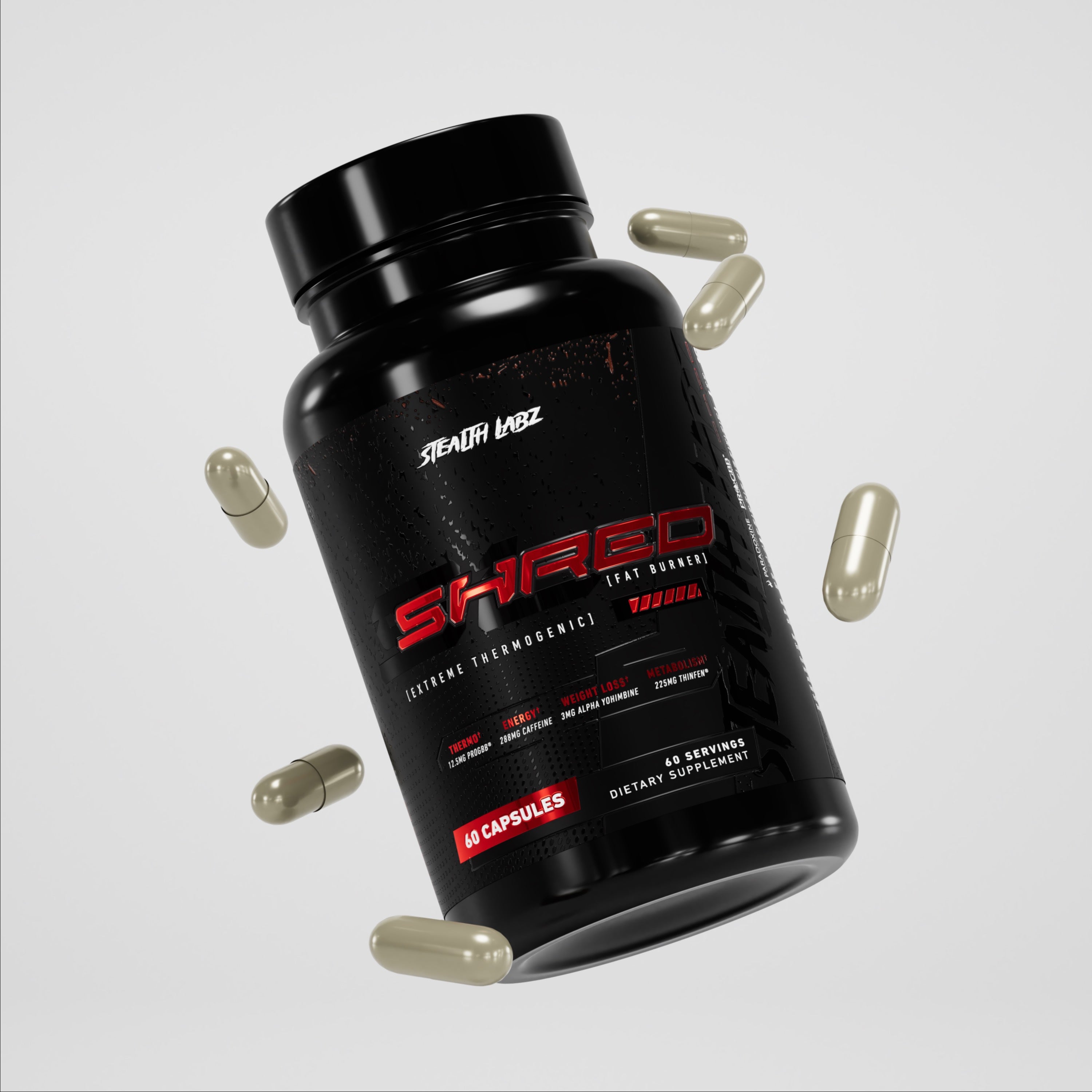
There is no need to automatically combine ISO PRO with a fat burner, testosterone-support product and multiple workout supplements simply for muscle recovery.
For users who want a packaged performance combination, review the Stealth Labz Muscle Building Stack.
Frequently Asked Questions
Does whey protein isolate help muscle recovery?
Yes, whey provides essential amino acids needed for muscle protein synthesis and can help athletes meet their protein requirements during recovery. Whey supplementation combined with resistance training has been associated with additional gains in lean or fat-free mass.
Does whey protein isolate reduce muscle soreness?
Do not treat reduced DOMS as guaranteed. Protein supports muscle repair and adaptation, but soreness depends on exercise novelty, volume, intensity, recovery status and other factors.
Is whey isolate better than whey concentrate?
Not automatically for muscle growth. Both can provide high-quality complete protein. Isolate generally has less lactose, fat and carbohydrate, which may make it more suitable for certain diets or digestive preferences.
When should I drink whey protein after a workout?
You do not need to hit an exact 30-minute window. Protein consumed reasonably around resistance training can be useful, while total daily protein intake remains a major priority.
How much whey protein should I take?
The appropriate serving depends on total daily protein intake, body size, meals and goals. Research in young resistance-trained men found substantial stimulation of muscle protein synthesis after 20 g of whey, with responses varying according to dose and exercise conditions.
Can I take whey protein on rest days?
Yes. Rest days are still part of the recovery process, and protein intake should be based on daily nutritional requirements rather than only workout days.
Is whey protein isolate lactose-free?
Not necessarily. Whey isolate generally contains less lactose than concentrate, but “low lactose” and “lactose-free” are not the same claim. Check the specific product label if lactose is a concern.
Can people with a milk allergy use whey isolate?
Whey is derived from milk, so people with a milk-protein allergy should not assume whey isolate is safe simply because it contains less lactose.
Is ISO PRO good for cutting?
It can fit a cutting diet because it provides a convenient protein source with a relatively low-carb profile. Fat loss itself still depends on overall energy balance.
Final Verdict, Is Whey Protein Isolate Good for Muscle Recovery?
Yes. Whey protein isolate is a convenient source of complete protein and essential amino acids that can support muscle protein synthesis and help athletes meet their daily protein needs.
Its strongest advantages are:
-
High-quality complete protein
-
Essential amino acids and leucine
-
Relatively low fat and carbohydrate content
-
Lower lactose than many whey concentrates
-
Convenient use around workouts or between meals
But whey isolate is not a magic recovery product. Total protein intake, resistance training, calories, carbohydrates, hydration and sleep all contribute to recovery and muscle growth.
ISO PRO is best positioned as a convenient, low-carb whey isolate for daily protein and post-training nutrition, rather than a product that guarantees faster healing or eliminates soreness. Its current product page lists nearly 21 g of whey isolate per scoop and DigeZyme® digestive enzymes.
For athletes comparing different muscle-growth supplements and combinations, explore the Stealth Labz muscle-building resources rather than relying on protein timing alone.
More insights:
- Whey Protein Isolate Benefits: Boost Muscle Growth & Recovery Fast
- Best Whey Protein Isolate: Top Picks for Muscle Growth 2026
- 10 Post-Workout Protein Drinks... with Whey Protein Isolate
- Whey Isolate vs Whey Concentrate
- Best Supplements for Muscle Recovery After Workouts
- Ultimate Hydration Guide
- Fat-Burning Strategies
Fuel up, recover faster, and crush your next session!

Leave a comment
This site is protected by hCaptcha and the hCaptcha Privacy Policy and Terms of Service apply.