
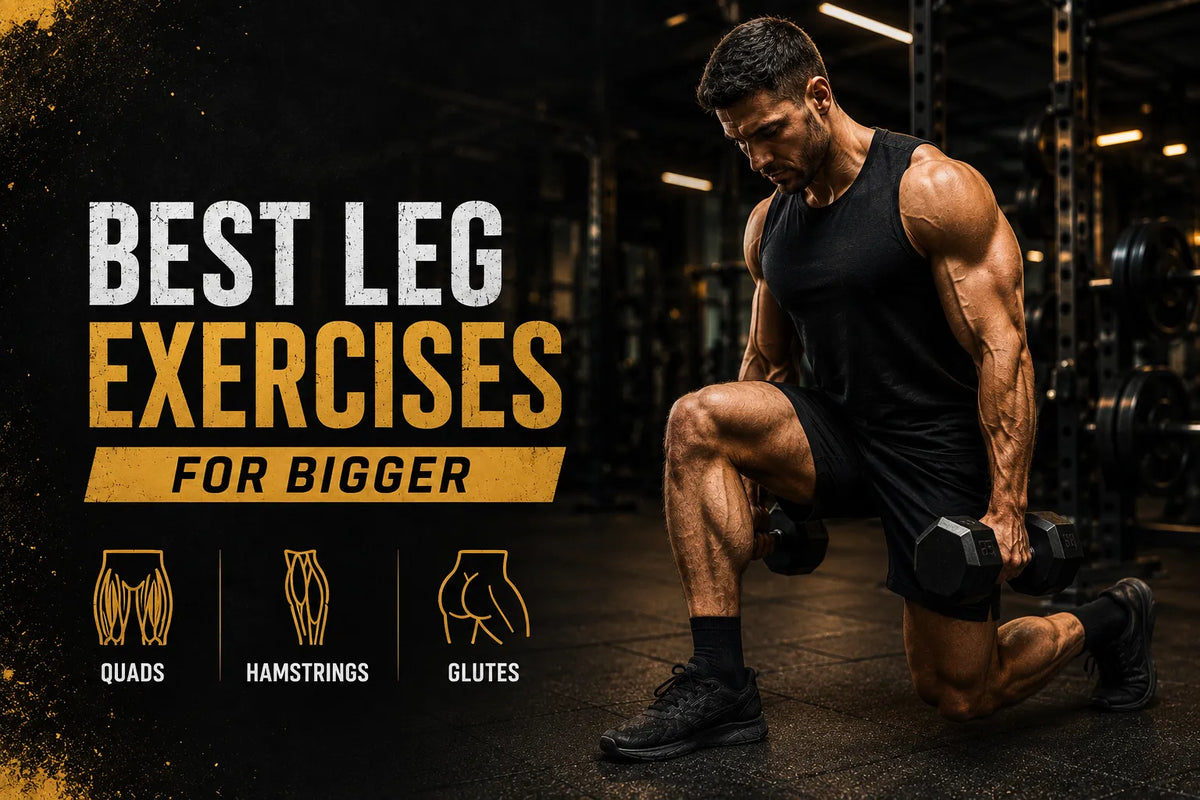
Best Leg Exercises for Bigger Quads, Hamstrings & Glutes
You've squatted, lunged, and leg-pressed for months and your legs still look the same as your first day in the gym. Meanwhile your arms and chest are growing just fine. Sound familiar?
This is one of the most common frustrations lifters bring up in gym forums and communities. "why won't my legs grow no matter what I do?" The usual answer isn't genetics, it's exercise selection, weak points nobody's addressing, and not enough volume on the movements that actually build size.
This guide breaks down the best leg exercises for quads, hamstrings, and glutes specifically, why each one works, how to program them, and how to recover fast enough to keep making progress week after week.
Why "Just Squat More" Isn't the Full Answer
Squats are the foundation of any leg day, but relying on a single compound lift to build your entire lower body is one of the biggest mistakes lifters make. Quads, hamstrings, and glutes each respond best to different movement patterns:
-
Quads grow best from knee-dominant movements with a long stretch under load (squats, lunges, leg extensions).
-
Hamstrings need hip-hinge and knee-flexion movements (Romanian deadlifts, leg curls, Nordic curls).
-
Glutes respond to hip-extension-focused movements (hip thrusts, Bulgarian split squats, deadlifts).
If your program only includes squats and calls it a day, you're likely under-training two of the three major muscle groups in your legs. That's exactly why "leg day" threads on Reddit so often circle back to the same advice: pick exercises for each muscle group, not just one big lift.
Best Quad Exercises
1. Barbell Back Squat
The back squat remains the gold standard for quad development; it lets you load the movement heavier than almost anything else and drives full lower-body recruitment.
How to do it: Bar on your upper back, feet shoulder-width, brace your core, and squat until your thighs are at least parallel to the floor before driving back up.
Programming: 3–4 sets of 6–10 reps.
2. Front Squat
Because the bar sits across the front of your shoulders, the front squat shifts more emphasis onto the quads and requires a more upright torso, great if you feel your lower back taking over on back squats.
Programming: 3 sets of 8–10 reps.
3. Leg Press
The leg press lets you isolate the quads without needing to stabilize a bar on your back, making it a smart addition for higher-rep, higher-fatigue quad work later in a workout.
Programming: 3 sets of 10–15 reps. Adjust foot placement lower on the platform to bias the quads more.
4. Walking Lunges
Lunges add a single-leg, functional component to leg day and help fix strength imbalances between your left and right leg, something bilateral lifts like squats can mask.
Programming: 3 sets of 10–12 steps per leg.
5. Leg Extension
As an isolation move, the leg extension lets you fully fatigue the quads at the end of your workout with virtually no other muscles involved.
Programming: 2–3 sets of 12–15 reps, focusing on a slow, controlled lowering phase.
Best Hamstring Exercises
1. Romanian Deadlift (RDL)
The RDL is consistently ranked as one of the most effective hamstring builders in strength-training communities; it loads the hamstrings through a long stretch at the bottom, which research and lifter experience both point to as a key driver of muscle growth.
How to do it: Hold a barbell or dumbbells, hinge at the hips while keeping a slight knee bend, lower the weight along your legs until you feel a deep hamstring stretch, then drive your hips forward to stand.
Programming: 3 sets of 8–10 reps.
2. Lying or Seated Leg Curl
Leg curls isolate the hamstrings through knee flexion the movement pattern that hip-hinge exercises like RDLs don't fully train.
Programming: 3 sets of 10–12 reps.
3. Nordic Hamstring Curl
Frequently mentioned in fitness communities as one of the most brutal but effective hamstring exercises, the Nordic curl builds eccentric hamstring strength, which is directly linked to reduced hamstring strain risk.
Programming: 2–3 sets of 5–8 reps (use a resistance band or partner assistance if you're new to these).
4. Good Mornings
Good mornings train the same hip-hinge pattern as RDLs but shift more load onto the lower back and hamstrings together, making them a useful accessory movement once your hinge technique is solid.
Programming: 3 sets of 8–10 reps with light-to-moderate weight.
Best Glute Exercises
1. Hip Thrust
The hip thrust is widely regarded in gyms and online lifting communities alike as the single best exercise for isolating and overloading the glutes, since it allows heavy loading at the exact point of peak hip extension.
How to do it: Upper back braced against a bench, barbell across your hips, drive through your heels to lift your hips until your torso is parallel to the floor, squeezing your glutes at the top.
Programming: 3 sets of 8–12 reps.
2. Bulgarian Split Squat
This single-leg movement is a favorite among coaches for building glute size and correcting side-to-side imbalances, and it consistently comes up as one of the most challenging and effective leg exercises lifters recommend to each other.
Programming: 3 sets of 8–10 reps per leg.
3. Conventional or Sumo Deadlift
Deadlifts train the glutes through full hip extension under heavy load, making them one of the most efficient exercises for building both glute size and total-body strength at the same time.
Programming: 3–4 sets of 5–8 reps.
4. Cable Kickback or Glute Bridge
As a finisher, kickbacks or glute bridges let you fully fatigue the glutes with a controlled, joint-friendly movement.
Programming: 2–3 sets of 12–15 reps per side.
Also Read > Best Bicep and Tricep Exercises for Bigger Arms
Sample Leg Day Workout (Quads, Hamstrings & Glutes)
|
Exercise |
Sets x Reps |
Muscle Focus |
|
Barbell Back Squat |
4 x 8 |
Quads, Glutes |
|
Romanian Deadlift |
3 x 10 |
Hamstrings, Glutes |
|
Bulgarian Split Squat |
3 x 10/leg |
Glutes, Quads |
|
Leg Curl |
3 x 12 |
Hamstrings |
|
Leg Extension |
3 x 15 |
Quads |
|
Hip Thrust |
3 x 12 |
Glutes |
Train legs 1–2 times per week with at least 48 hours of recovery between sessions for the same muscle group.
How Often Should You Train Legs?
A question that comes up constantly in fitness forums is whether legs need their own dedicated day or can be split across the week. For most lifters, training legs twice per week once focused on heavier compound work and once on higher-rep accessory work produces better growth than a single, high-volume session, since it spreads out the fatigue and gives each muscle group more frequent stimulus.
Common Mistakes That Stall Leg Growth
-
Skipping full range of motion — half squats and shallow lunges limit the stretch that drives muscle growth.
-
Only training one movement pattern — squats alone won't build hamstrings or glutes.
-
Not progressively overloading — adding weight, reps, or sets over time is what actually forces legs to grow.
-
Under-eating protein — muscle repair and growth require enough daily protein intake, especially after high-volume leg sessions.
-
Skipping recovery — legs are large muscle groups that generate significant fatigue; under-recovering between sessions caps your progress.
Fueling Recovery After Leg Day
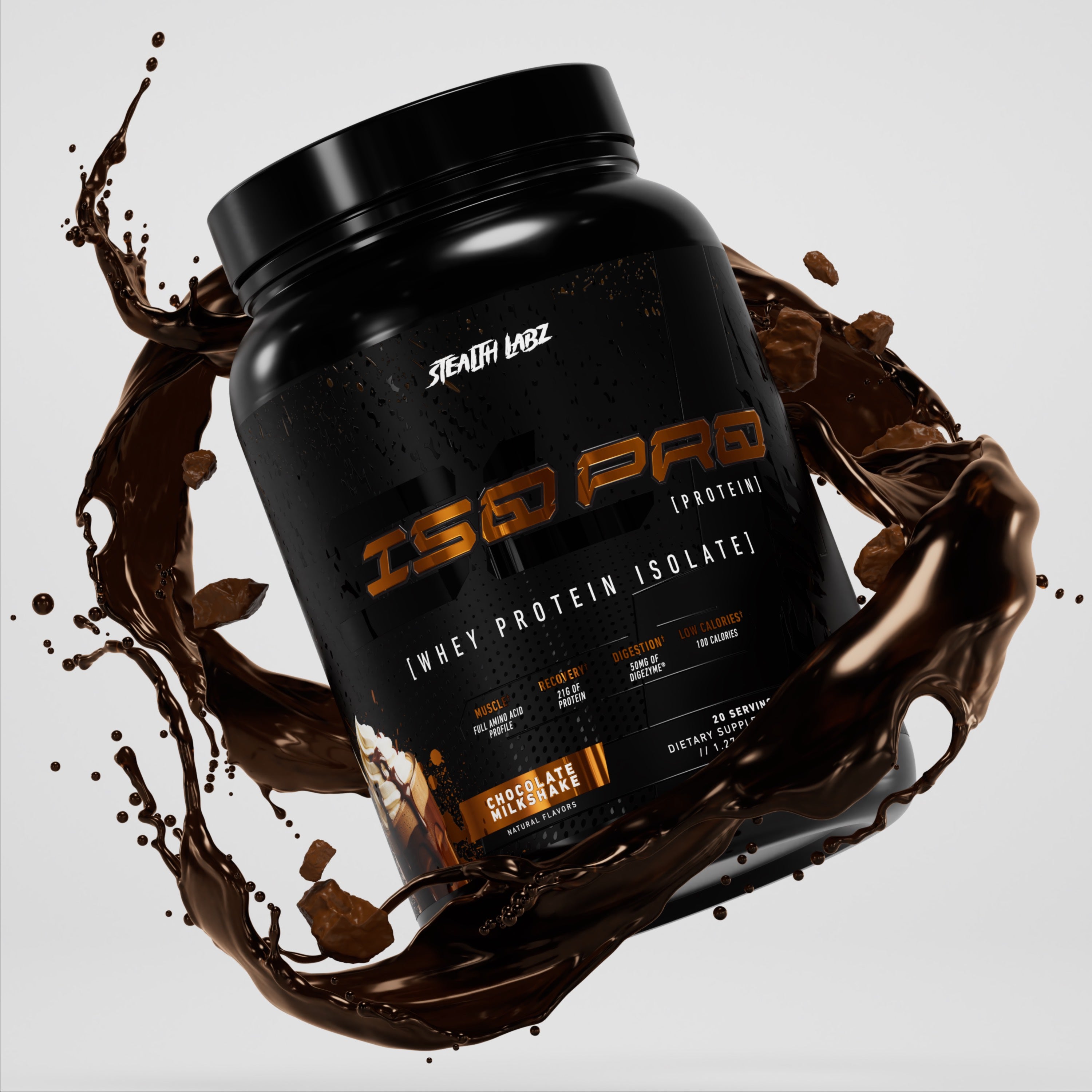
Leg day creates more muscle damage and central fatigue than almost any other session, which is why recovery nutrition matters just as much as the workout itself. A fast-digesting protein source like ISO PRO – Whey Protein Isolate post-workout helps supply the amino acids your quads, hamstrings, and glutes need to repair and grow.
Pairing that with ELEVATE – BCAA/EAA Plus during your session can help reduce next-day soreness and keep your energy steady through those last few working sets of squats or RDLs — especially useful for lifters who train legs twice a week and need to recover fast between sessions.
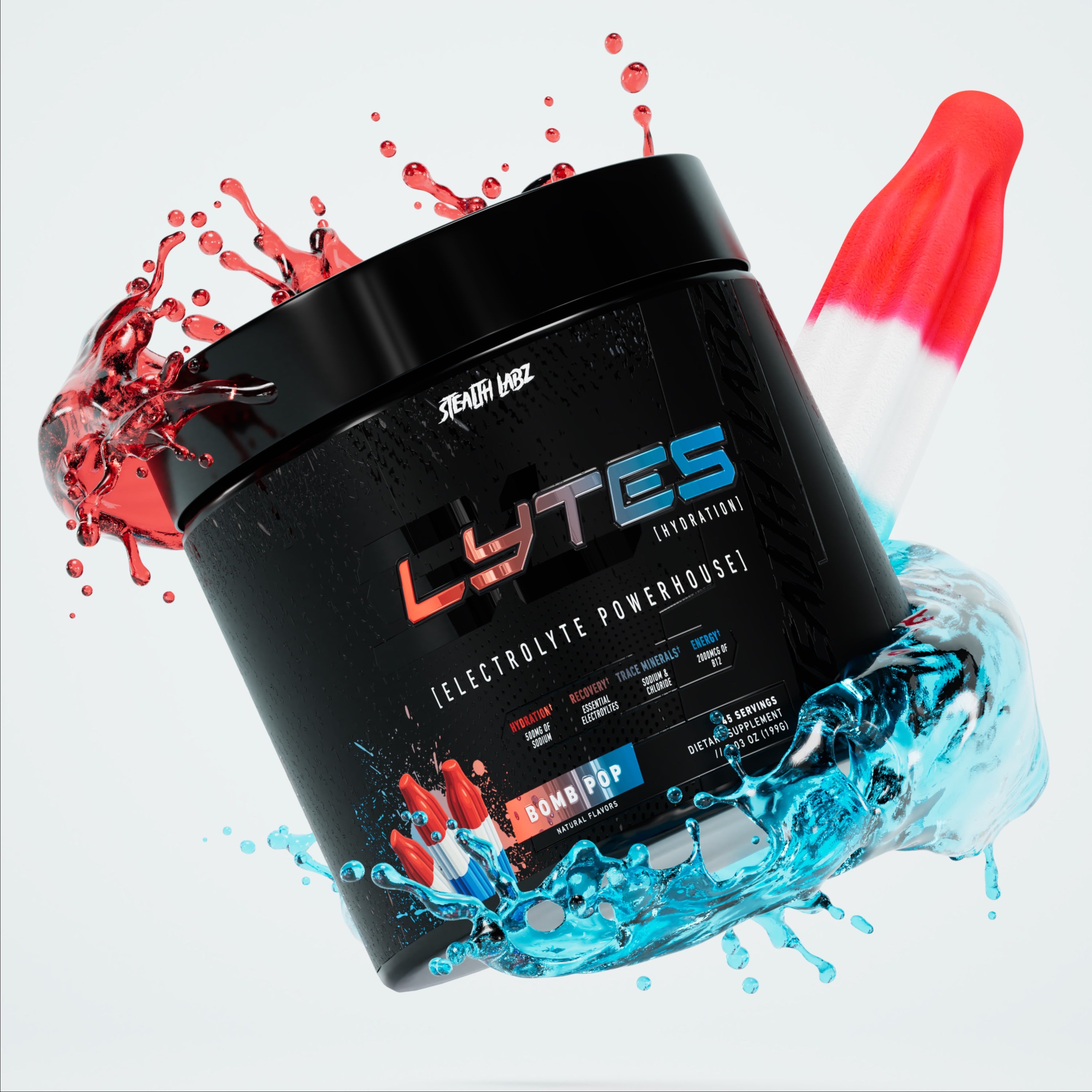
If your leg days leave you drenched and cramping, restoring electrolytes with Lytes – Electrolyte Powerhouse supports hydration and helps prevent the cramping that can cut a heavy squat or deadlift session short.
And for the energy to actually push through a tough compound-lift-heavy leg day, many lifters stack in Surge Pre Workout beforehand for focus and endurance.
Frequently Asked Questions
What are the best leg exercises for overall growth?
Barbell squats, Romanian deadlifts, and hip thrusts are widely considered the three most effective leg exercises, since together they train the quads, hamstrings, and glutes through their primary movement patterns.
Why won't my quads grow even though I squat every week?
This is usually a volume, range-of-motion, or exercise-variety issue. Adding front squats, lunges, or leg extensions alongside your regular squats and making sure you're going deep enough typically resolves stalled quad growth.
Is the leg press as effective as squats?
The leg press is a strong quad-building accessory exercise, but it doesn't replicate the full-body stabilization or glute/hamstring involvement of a squat. Most lifters get the best results using both rather than choosing one over the other.
How many times a week should I train my legs?
Training legs twice a week, with 48+ hours between sessions, is generally more effective for growth than one long session, since it allows more frequent muscle stimulus without excessive fatigue.
What's the best exercise specifically for glutes?
The hip thrust is typically ranked as the single best glute-isolation exercise because it allows heavy loading at the point of peak hip extension, where the glutes are most active.
Do I need supplements to grow my legs faster?
No — consistent training, progressive overload, and adequate protein intake are what drive growth. Supplements like whey protein isolate and BCAA/EAA simply make it easier to hit your recovery needs, especially after high-volume leg sessions.
Read More on Stealth Labz Blogs
-
Best Supplements for Muscle Growth: What Really Works — Pair your training with the right supplement stack.
-
Best Muscle Recovery Supplements for Men 2026 — How to recover faster between heavy leg days.
-
Whey Protein Isolate vs Concentrate: Ultimate Muscle-Building Showdown — Choose the right protein for post-leg-day recovery.
Final Thoughts
Building bigger quads, hamstrings, and glutes isn't about doing more of the same exercise, it's about training each muscle group with the movement patterns it responds to best, progressively adding weight or reps, and recovering properly between sessions. Start with the compound lifts (squats, RDLs, hip thrusts), layer in the accessory work, and give your legs the fuel they need to actually grow.
Ready to recover as hard as you train? Start with ISO PRO for post-leg-day muscle repair, add ELEVATE for recovery during your workout, and stay hydrated with Lytes.
Shop the full Stealth Labz lineup today and build the legs you've been training for.

Leave a comment
This site is protected by hCaptcha and the hCaptcha Privacy Policy and Terms of Service apply.