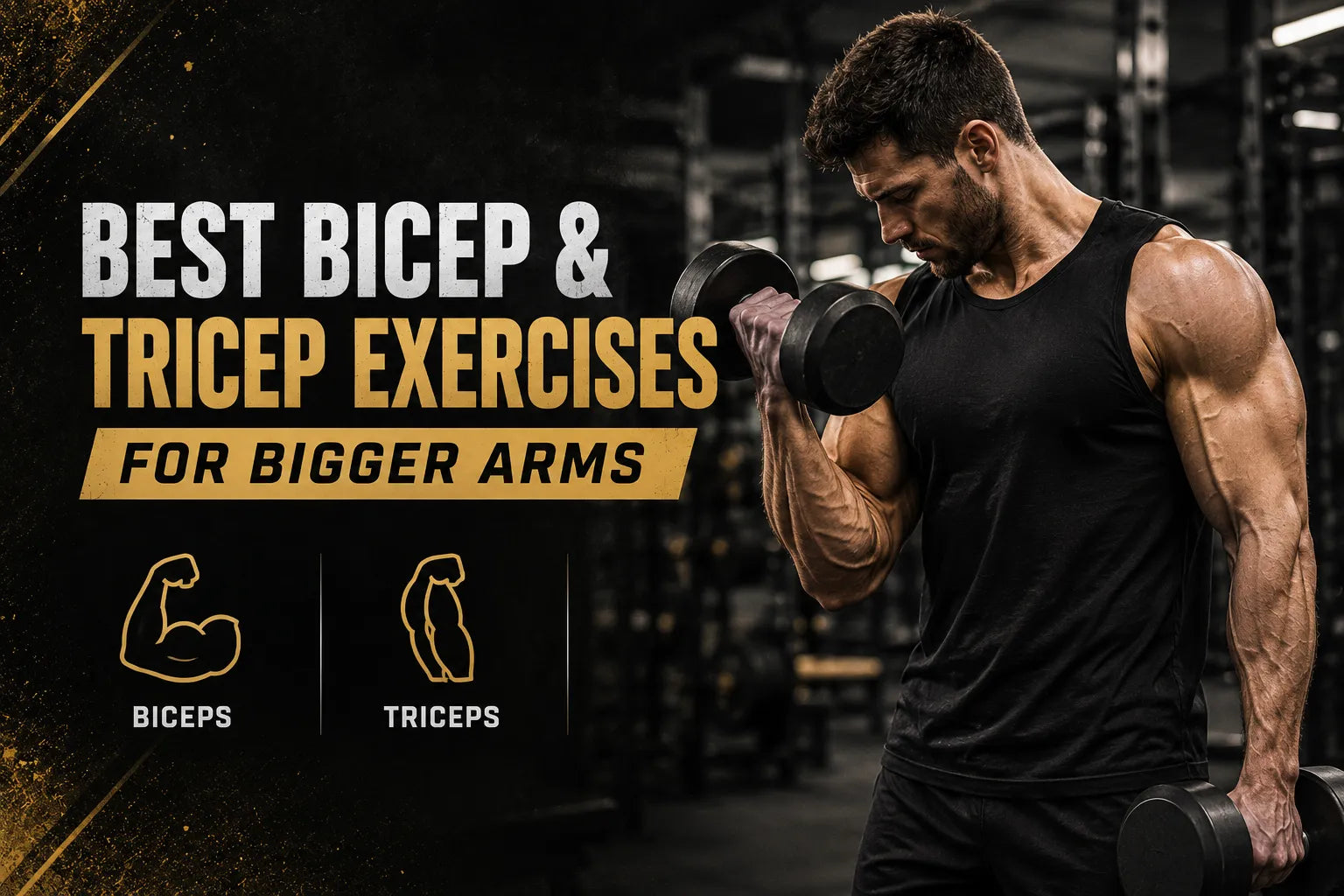
Best Bicep and Tricep Exercises for Bigger Arms
You've been curling for months. Your arms feel pumped after every workout. But when you check the mirror or the tape measure nothing's changed. If that sounds familiar, the problem usually isn't effort. It's exercise selection, and the fact that most people train biceps twice as hard as triceps, even though triceps make up roughly two-thirds of your upper arm size.
This guide breaks down the best bicep and tricep exercises for bigger arms, why each one works, how often to train them, and the recovery habits that actually let that muscle grow between sessions.
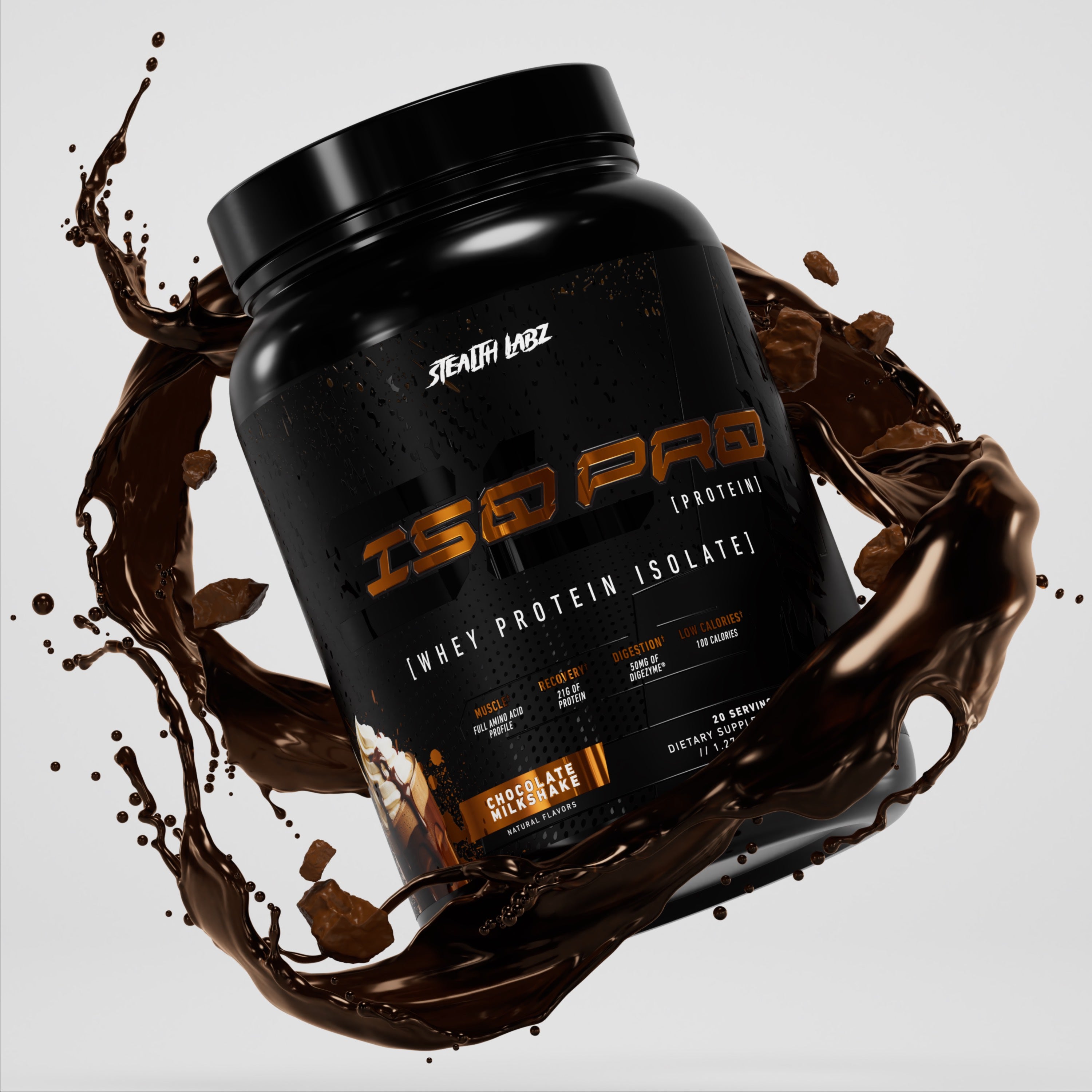
Buy ISO PRO – Whey Protein Isolate to give your arms the protein they need to recover and grow after training.
Why Your Arms Aren't Growing (The Real Problem)
Before jumping into exercises, it helps to know what's actually holding arm growth back for most lifters:
-
Triceps neglect. Since triceps are the bigger muscle group on your upper arm, under-training them is the #1 reason arms stay small even when biceps get plenty of curls.
-
No progressive overload. Doing the same weight and reps every week signals your body there's no reason to grow.
-
Poor exercise selection. Some popular "arm" exercises — like dumbbell kickbacks — put your triceps in a weak position with almost no tension where it counts.
-
Training arms too often (or not enough). Biceps and triceps are small muscle groups that recover fast, but they still need 48–72 hours between hard sessions to repair and grow.
-
Under-eating protein. Muscle repair requires enough protein intake, especially on days you train arms directly.
Fix these five issues and the exercises below will actually translate into visible size.
Arm Anatomy in 30 Seconds
You don't need a kinesiology degree to build bigger arms, but understanding the muscles helps you pick smarter exercises:
-
Biceps brachii — the front-of-arm muscle with two heads (short and long); responsible for the classic "peak."
-
Brachialis — sits underneath the biceps; growing it pushes the biceps upward, making the whole arm look thicker from the front.
-
Triceps brachii — three heads (long, lateral, medial) on the back of the arm, making up the majority of your arm's total mass.
If your goal is bigger arms, both muscle groups and all five heads — need direct, targeted work.
Best Bicep Exercises for Bigger Arms
1. Barbell Curl
The barbell curl lets you load the most weight of any bicep exercise, making it the best choice for building raw size and strength.
-
Keep elbows pinned to your sides
-
Avoid swinging the torso to "cheat" the weight up
-
3–4 sets of 8–12 reps
2. Incline Dumbbell Curl
Sitting on an incline bench stretches the biceps at the bottom of the movement, increasing time under tension through the long head.
-
Let the arms hang fully behind the torso
-
Control the lowering phase — don't just drop the weight
-
3 sets of 10–12 reps
3. Hammer Curl
Hammer curls (neutral grip, palms facing each other) shift emphasis onto the brachialis, the muscle that pushes your biceps up and out.
-
Keep wrists straight throughout
-
Curl straight up toward the shoulder without rotating the grip
-
3 sets of 10–15 reps
4. Concentration Curl
Widely considered one of the most isolated bicep exercises because it removes momentum and shoulder involvement almost entirely.
-
Rest your elbow against your inner thigh
-
Curl slowly and squeeze at the top
-
3 sets of 12–15 reps per arm
5. Cable or Preacher Curl
Both keep constant tension on the biceps throughout the full range of motion — something free weights can't do as well, especially at the top of the rep.
-
Avoid locking out the elbows aggressively at the bottom
-
3 sets of 10–12 reps
Best Tricep Exercises for Bigger Arms
1. Close-Grip Bench Press
This is the heaviest, most effective mass-builder for triceps — and it's often easier on the elbows than skull crushers.
-
Grip just inside shoulder width
-
Keep elbows tucked, not flared
-
3–4 sets of 6–10 reps
2. Overhead Cable or Dumbbell Tricep Extension
Overhead positioning creates the deepest stretch on the triceps' long head — the largest of the three heads and the one most lifters under-train.
-
Keep elbows close to your ears
-
Lower slowly behind the head before pressing back up
-
3 sets of 10–12 reps
3. Rope Tricep Pushdown
A joint-friendly alternative to skull crushers that still delivers strong tension on the lateral head, with less strain on the elbows.
-
Spread the rope apart at the bottom of the movement
-
Keep elbows locked at your sides throughout
-
3 sets of 12–15 reps
4. Dips (Bodyweight or Weighted)
A compound movement that builds both size and pressing strength, hitting all three tricep heads when performed with an upright torso.
-
Lean forward slightly to shift more emphasis to chest, stay upright for triceps focus
-
3 sets of 8–12 reps (add weight once bodyweight gets easy)
5. Skull Crushers (Optional, Elbow-Permitting)
Still an effective mass builder for lifters with healthy elbows, but swap it for rope pushdowns or JM presses if you feel joint discomfort.
-
Lower the bar toward your forehead, not your neck
-
3 sets of 10–12 reps
Exercise to deprioritize: dumbbell tricep kickbacks. They place the triceps in their weakest, shortest position, so even experienced lifters get limited muscle-building benefit compared to pushdowns or extensions.
Sample Bicep and Tricep Workout
|
Exercise |
Sets |
Reps |
Rest |
|
Close-Grip Bench Press |
4 |
6–10 |
90 sec |
|
Barbell Curl |
4 |
8–12 |
75 sec |
|
Overhead Cable Tricep Extension |
3 |
10–12 |
60 sec |
|
Incline Dumbbell Curl |
3 |
10–12 |
60 sec |
|
Rope Tricep Pushdown |
3 |
12–15 |
45 sec |
|
Hammer Curl |
3 |
10–15 |
45 sec |
|
Dips |
3 |
To near-failure |
60 sec |
Start with the heaviest compound movements (close-grip bench, barbell curl) while you're fresh, then move into isolation work to finish off each muscle.
How Often Should You Train Arms?
Biceps and triceps are relatively small, fast-recovering muscle groups, but they still need real rest between sessions. Most lifters build the fastest arm size training each muscle 2–3 times per week, either with:
-
A dedicated arm day once per week, plus indirect volume from push/pull days, or
-
Arms trained directly twice weekly on a push/pull/legs (PPL) split, since triceps already get work on push day and biceps on pull day
Training arms every single day is a common mistake — without 48–72 hours to recover, you're accumulating fatigue without giving the muscle time to actually grow.
Buy Elevate – BCAA/EAA Plus to support recovery between arm sessions and reduce next-day soreness.
Nutrition and Recovery: The Part Most People Skip
Exercise selection builds the stimulus — but muscle is actually built during recovery. If your arms aren't growing despite good training, check these three levers:
-
Protein intake. Aim for roughly 0.7–1g of protein per pound of bodyweight daily. Buy ISO PRO – Whey Protein Isolate makes it easier to hit that target with a fast-absorbing post-workout shake.
-
Amino acids and hydration. BCAAs/EAAs support muscle protein synthesis and reduce soreness, especially useful the day after a heavy arm session. Stack with Elevate for recovery support.
-
Training intensity and energy. Pushing enough volume and weight to create overload requires consistent energy in the gym. Buy Surge Pre Workout for focus and endurance through your heaviest sets.
For lifters focused specifically on building size across the whole body — arms included — the Muscle Building Stack combines protein, aminos, and performance support in one routine.
Frequently Asked Questions
What is the best exercise for bigger biceps?
The barbell curl is generally considered the top mass-builder because it allows the most weight to be loaded safely, but pairing it with an incline dumbbell curl (long head) and hammer curl (brachialis) targets the full muscle for maximum size.
What is the best exercise for bigger triceps?
Close-grip bench press builds the most overall tricep mass because it's a heavy compound movement, while overhead extensions specifically target the long head — the largest of the three tricep heads and the one most commonly under-trained.
Should I train my biceps and triceps on the same day?
Yes — training them together in one arm-focused session (as in the sample workout above) is efficient and lets you superset opposing muscle groups, which can also help you push more total volume in less time.
How many times a week should I train arms for growth?
Most lifters see the best results training arms directly 2–3 times per week, with at least 48 hours of rest between sessions targeting the same muscle group.
Why aren't my arms growing even though I train them often?
The most common culprits are under-training triceps relative to biceps, lack of progressive overload, insufficient protein intake, and not allowing enough recovery time between sessions.
Do compound lifts help build bigger arms?
Yes — close-grip bench press and weighted dips are compound movements that build significant tricep size while also improving pressing strength, making them worth prioritizing alongside isolation curls and extensions.
Read More on Stealth Labz Blogs
-
Best Muscle Recovery Supplements for Men 2026 — Speed up recovery between arm and full-body sessions.
-
Whey Protein Isolate vs. Concentrate: Ultimate Muscle-Building Showdown — Choose the right protein for your goals.
-
Best Supplements for Muscle Growth: What Really Works — Build a complete stack around your training.
-
Muscle Growth Strategies — More training and nutrition guides for building size.
Final Thoughts
Bigger arms come down to a simple formula: train both biceps and triceps directly, prioritize the exercises that create real tension (not just a pump), progressively add weight or reps over time, and give your body the protein and recovery it needs between sessions. Triceps deserve at least equal — if not more — attention than biceps, since they make up most of your arm's size.
Start with the sample workout above twice a week, fuel it with ISO PRO post-training, recover with Elevate, and bring consistent energy to the gym with Surge Pre Workout.
Shop the Muscle Building Stack and start building the arms you've been training for.

Leave a comment
This site is protected by hCaptcha and the hCaptcha Privacy Policy and Terms of Service apply.