
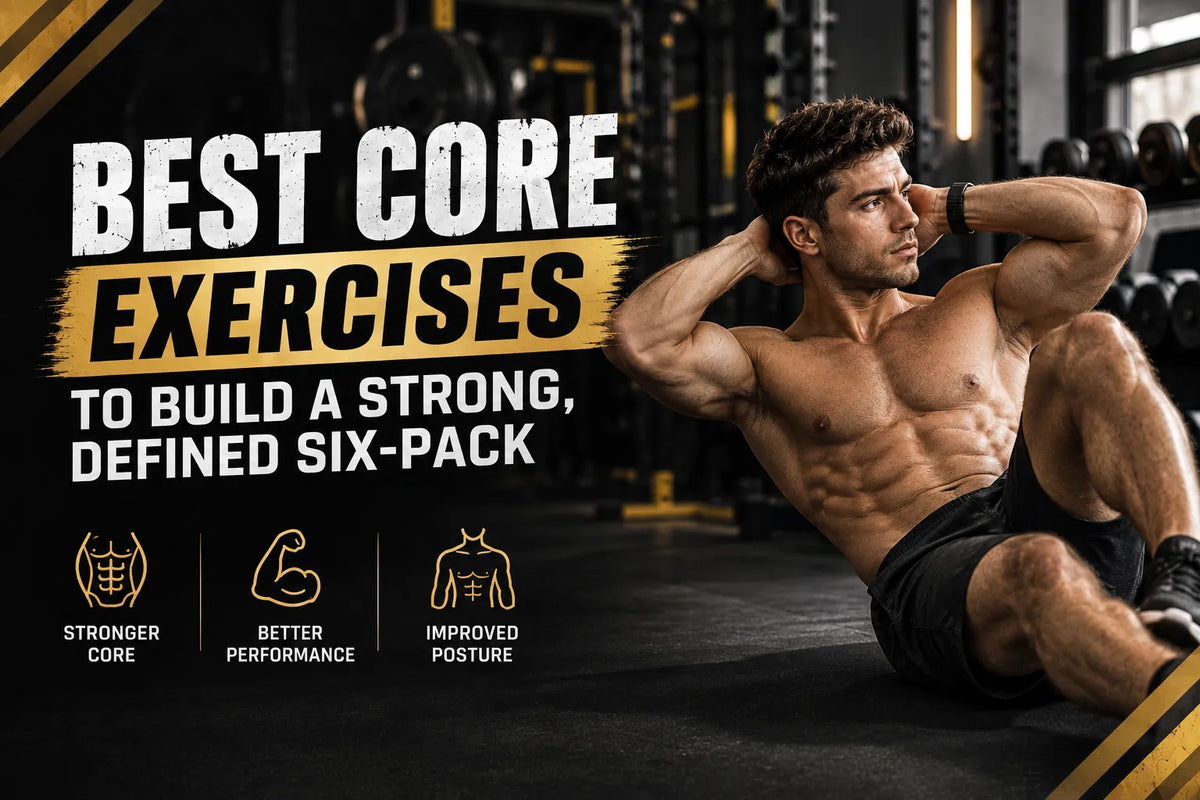
Best Core Exercises to Build a Strong, Defined Six-Pack
You do 100 crunches a night. Your core feels tight, sore even, the next morning. But when you check the mirror, your abs still look... soft. Not gone, just not there.
If that sounds familiar, you're asking the same question that shows up constantly in fitness forums and Reddit threads: "why isn't my core work turning into a visible six-pack?" The honest answer is usually two things — you're doing exercises that don't activate the rectus abdominis as hard as you think, and no amount of crunches will out-train a body fat percentage that's hiding the muscle underneath.
Below is a science-backed ranking of the best six-pack exercises based on muscle activation research, plus the programming and nutrition side that most "ab workout" articles skip entirely.
How We Ranked These Six-Pack Exercises
Not every "ab exercise" trains your abs equally. Some primarily load your hip flexors, lower back, or shoulders and only lightly involve the rectus abdominis and obliques. To rank exercises fairly, we used criteria drawn from EMG (electromyography) research and real-world programming:
-
EMG activation — how much the rectus abdominis and obliques actually fire during the movement, not just how hard it feels
-
Resistance through range of motion — bodyweight moves plateau quickly; exercises that let you add load keep producing growth stimulus for years
-
Spinal safety — an exercise that aggravates your lower back isn't a "best" exercise, it's a liability
-
Carryover to real strength — core exercises that also improve bracing and stability under a barbell earn extra points
A widely cited San Diego State University study (sponsored by the American Council on Exercise) tested EMG activation across common ab exercises and found the bicycle crunch consistently outperformed the standard crunch by a wide margin — which is exactly why it's ranked near the top below, while the basic crunch barely makes the list.
The Best Six-Pack Exercises, Ranked

1. Hanging Leg Raise
The single best mass-building move for the lower abs. Hanging under your own bodyweight forces your core to stabilize your entire body while you flex your hips and spine, producing some of the highest lower-ab EMG activation of any exercise tested.
Why it ranks #1: Full range of motion, progressive overload potential (add ankle weights as it gets easier), and it trains the lower abs — the region most lifters neglect. Sets/Reps for growth: 3–4 sets of 8–15 reps Form tip: Curl your pelvis up at the top instead of just swinging your legs — that pelvic tilt is what actually recruits the rectus abdominis.
2. Cable Crunch (Kneeling)
Unlike bodyweight crunches, the cable crunch lets you add resistance indefinitely, which matters because your abs — like any other muscle — need progressive overload to keep growing past a beginner stage.
Why it ranks #2: Direct spinal flexion under adjustable load = the closest thing to a "bench press for your abs." Sets/Reps for growth: 3–4 sets of 10–15 reps Form tip: Round through your upper spine and pull from your ribs toward your hips, don't just bend at the shoulders.
3. Ab Wheel Rollout
This one shows up constantly in strength-training communities as an underrated core builder, and for good reason: it trains the core anti-extension pattern, which is arguably more important for a strong, defined midsection than crunching movements alone.
Why it ranks #3: Forces your abs to resist spinal extension under load, building both visible size and functional core strength. Sets/Reps for growth: 3 sets of 6–12 reps, start from your knees before progressing to standing Form tip: Stop the rollout before your lower back arches — that's the point your abs have stopped controlling the movement.
4. Bicycle Crunch
The exercise research consistently ranks as the top EMG performer for the rectus abdominis and obliques among bodyweight ab movements — despite being one of the simplest moves on this list.
Why it ranks #4: No equipment needed, hits both the rectus abdominis and obliques in one movement, and is easy to progress by slowing the tempo. Sets/Reps for growth: 3 sets of 20–30 total reps (slow and controlled, not fast and sloppy)
5. Hollow Body Hold
Borrowed from gymnastics, this static hold trains your core to stay braced under tension — the same skill that protects your spine during heavy squats and deadlifts.
Why it ranks #5: Builds true core stability and endurance, not just isolated ab flexion. Sets/Reps for growth: 3–4 sets, hold for 20–45 seconds Form tip: Press your lower back flat into the floor the entire time; if it arches, the set is over.
6. Weighted Decline Sit-Up
A more advanced progression of the standard sit-up, the decline angle increases the range of motion and lets you hold a plate or dumbbell to keep adding resistance over time.
Why it ranks #6: Long range of motion plus progressive loading potential. Sets/Reps for growth: 3 sets of 10–15 reps Form tip: Curl through your spine one vertebra at a time rather than yanking yourself up — that's what keeps the tension on your abs instead of your hip flexors.
7. Pallof Press
An anti-rotation exercise using a cable or resistance band, the Pallof press trains your obliques and deep core to resist twisting — a pattern almost nobody trains directly, but one that shows up in every rotational sport and heavy lift.
Why it ranks #7: Builds oblique strength and core stability without any spinal flexion, making it a safe option even for lifters managing lower back issues. Sets/Reps for growth: 3 sets of 10–12 reps per side.
Also Read >> Best Chest Exercises for Hypertrophy
Why You're Not Seeing Your Abs (Even With Core Training)
This is the part most "best ab exercises" articles conveniently leave out, and it's the single most-asked follow-up question in fitness communities: I train abs consistently, so why can't I see them?
The rectus abdominis and obliques are just like any other muscle — training them makes them stronger and can add some size, but visibility depends almost entirely on the layer of body fat sitting on top of them.
For most people, abs start becoming visible somewhere in the 12–15% body fat range for men and 18–22% for women, and a true "defined six-pack" usually requires getting leaner than that.
In practice, that means:
-
A calorie deficit is non-negotiable. No ab exercise burns enough calories to meaningfully reduce the fat covering your midsection — that's a math problem solved through diet, not spot-training.
-
Protein intake protects the muscle you're building. While cutting calories, adequate protein helps preserve the ab and core muscle you're working so hard to develop, so it's actually visible once the fat comes off.
-
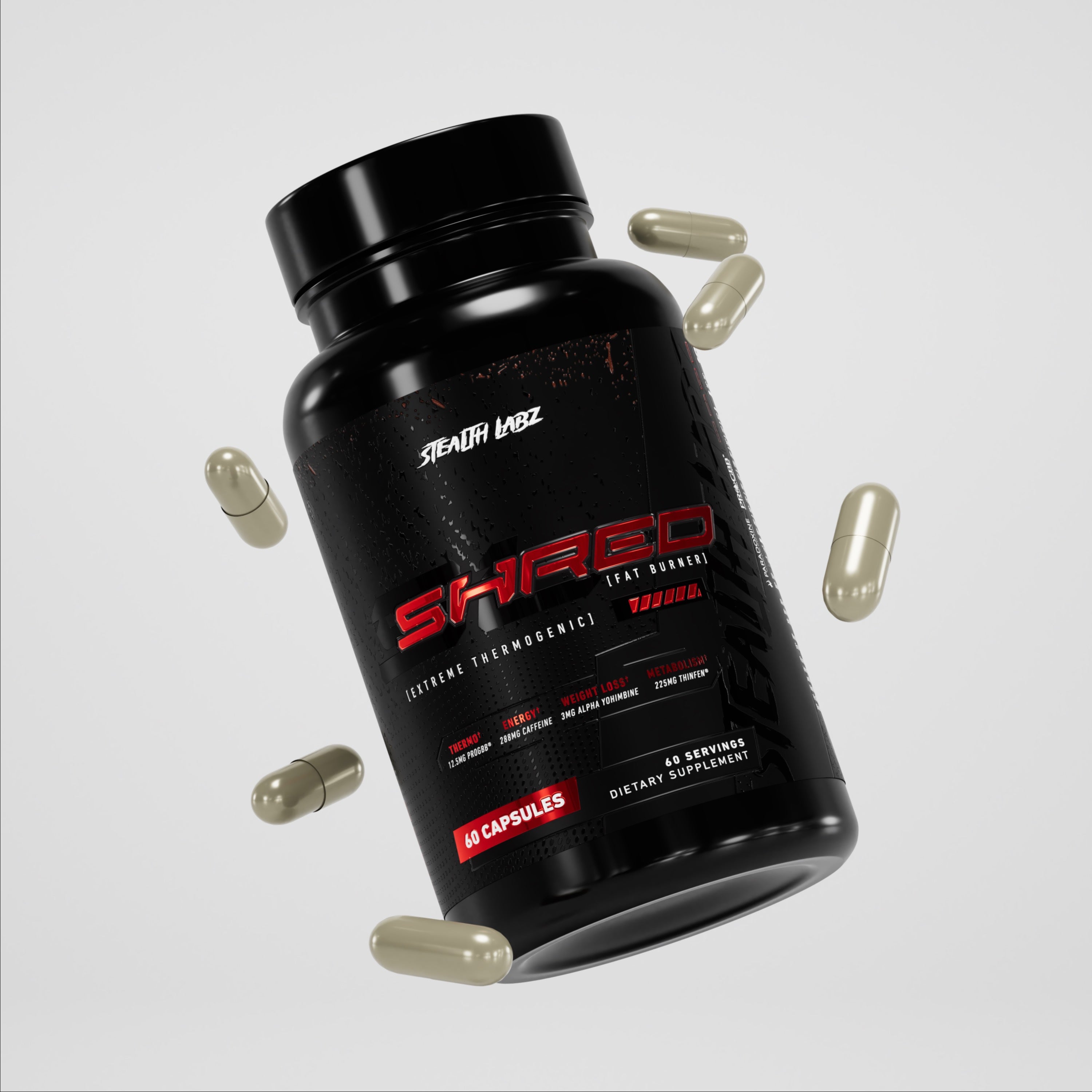
A thermogenic can support the deficit, not replace it. Products like SHRED are designed to support metabolism, energy, and appetite control while you're in a calorie deficit — useful support, not a shortcut around one.
If you want a deeper breakdown of how to lose the fat covering your abs without sacrificing the muscle you've built, our guide on how bodybuilders lose fat without losing muscle walks through the exact strategy.
How to Program Core Training for Visible Results
Exercise selection is only half the equation — frequency, volume, and consistency decide whether that stimulus actually builds a stronger, more visible core.
-
Frequency: Train your core 3–4x per week. Unlike larger muscle groups, the abs recover relatively quickly and respond well to higher frequency.
-
Volume: Aim for 15–25 total working sets per week across your core exercises, mixing flexion movements (crunches, sit-ups) with anti-extension and anti-rotation work (rollouts, Pallof press).
-
Progressive overload still applies. If your ab workout feels "easy," you're not adding weight, reps, or difficulty fast enough — the same progressive overload principle that drives growth everywhere else in your body applies to your core too.
-
Don't neglect volume elsewhere. Heavy compound lifts like squats, deadlifts, and overhead presses already demand significant core bracing — factor that into your weekly core volume so you're not overtraining.
Sample Weekly Core Routine
|
Day |
Exercise |
Sets x Reps |
|
Day 1 |
Hanging Leg Raise |
4 x 10–15 |
|
Day 1 |
Cable Crunch |
3 x 12–15 |
|
Day 1 |
Pallof Press |
3 x 10–12/side |
|
Day 2 |
Ab Wheel Rollout |
3 x 8–12 |
|
Day 2 |
Bicycle Crunch |
3 x 25 total |
|
Day 2 |
Hollow Body Hold |
3 x 30 sec |
|
Day 3 |
Weighted Decline Sit-Up |
3 x 12–15 |
|
Day 3 |
Ab Wheel Rollout |
2 x 10 |
Fuel the Fat Loss: Recovery and Nutrition Matter As Much As the Reps
Building a defined six-pack is really two projects running in parallel: building the muscle and revealing it. Both need support beyond just the workout.
-
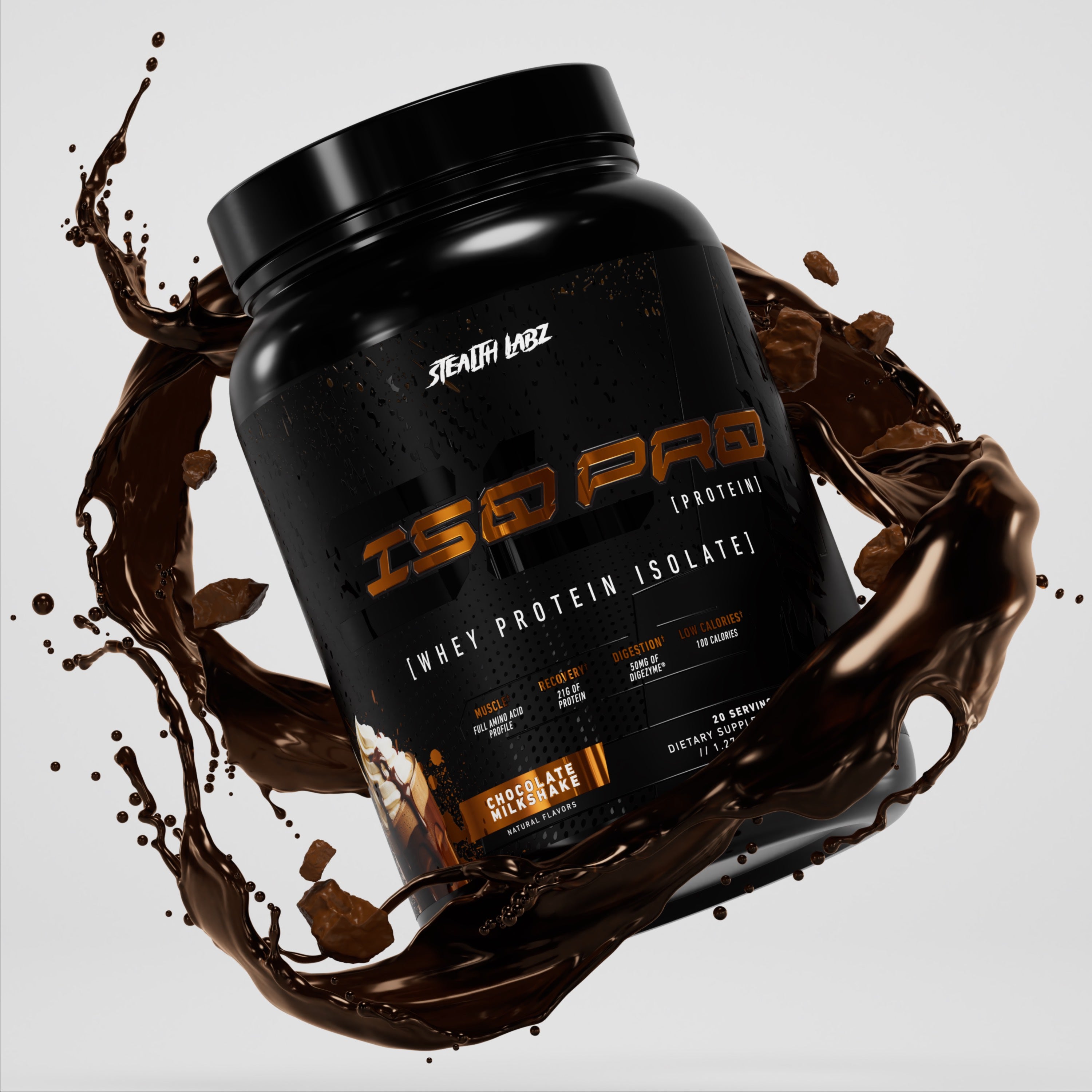
Protein to preserve muscle in a deficit. While cutting calories to reveal your abs, a fast-digesting whey isolate like ISO PRO helps protect the lean muscle you've built, including your core, so it doesn't disappear along with the fat.
-
Amino acid support to reduce soreness between core sessions. Training abs 3–4x per week adds up. ELEVATE combines BCAA/EAAs and electrolytes to support recovery so you're not skipping sessions from lingering soreness.
-
Metabolic support for the fat-loss side of the equation. SHRED is formulated to support thermogenesis, energy, and appetite control during a calorie deficit.
-
A complete stack if you're serious about the cut. The Fat Burning Stack bundles ISO PRO, ELEVATE, and SHRED together for lifters focused on revealing muscle they've already built.
Frequently Asked Questions
What are the best six-pack exercises?
Based on muscle activation research, the hanging leg raise, cable crunch, ab wheel rollout, and bicycle crunch rank among the most effective, combining strong rectus abdominis and oblique activation with genuine progressive overload potential.
How long does it take to get a six-pack?
This depends far more on your starting body fat percentage than your ab workout. Someone starting around 20% body fat may need several months of a consistent calorie deficit to reveal visible abs, while someone already at 15% might see results in a matter of weeks. Core training builds the muscle; the timeline to see it is set by fat loss.
Can you get a six-pack from ab exercises alone?
No. Ab exercises build and strengthen the muscle, but visibility depends on reducing the layer of body fat covering it. Even someone with a genuinely strong, well-developed core won't see it defined until their body fat percentage drops enough — that's a nutrition and calorie-deficit problem, not a training one.
How often should I train my abs for a six-pack?
Most people see the best results training core 3–4 times per week, since ab muscles recover faster than larger muscle groups like legs or back. Just make sure total weekly volume from both dedicated core work and compound lifts (squats, deadlifts) doesn't tip into overtraining.
Are crunches or planks better for a six-pack?
They train different things. Crunches and their variations (bicycle crunch, cable crunch) directly flex the spine and build visible rectus abdominis size. Planks and hollow holds build core endurance and bracing strength, which supports heavier lifting and better posture, but contribute less to visible muscle size on their own. A well-rounded program uses both.
Do I need equipment to build a six-pack, or can I do it with bodyweight only?
Bodyweight exercises like bicycle crunches, hollow body holds, and hanging leg raises (using a pull-up bar) can absolutely build a strong core. That said, equipment-based options like the cable crunch and ab wheel let you keep adding resistance over time, which becomes important once bodyweight moves stop feeling challenging.
Read More on Stealth Labz
-
How Do Bodybuilders Lose Fat Without Losing Muscle: Most Effective Strategies — the exact strategy for revealing the abs you're building.
-
Progressive Overload Explained: The #1 Driver of Muscle Growth — why your core routine needs to keep getting harder, not just longer.
-
How Many Sets Per Week for Maximum Muscle Growth — dial in your weekly core volume alongside the rest of your training.
-
Best Muscle Recovery Supplements for Men in 2026 — recover faster between high-frequency core sessions.
Final Thoughts
The best six-pack exercises aren't a secret — hanging leg raises, cable crunches, ab wheel rollouts, and bicycle crunches form the backbone of nearly every evidence-based core program. But exercise selection only builds the muscle; it's your calorie deficit and protein intake that decide whether anyone actually sees it.
Pick 4–5 exercises from this list, train your core 3–4 times a week, keep adding resistance or reps over time, and support the fat-loss side with the right nutrition. Start with ISO PRO to protect your muscle through the cut and SHRED to support the deficit that reveals it.
Shop the Fat Burning Stack and build the training and nutrition routine that finally gets your six-pack to show.


Leave a comment
This site is protected by hCaptcha and the hCaptcha Privacy Policy and Terms of Service apply.