
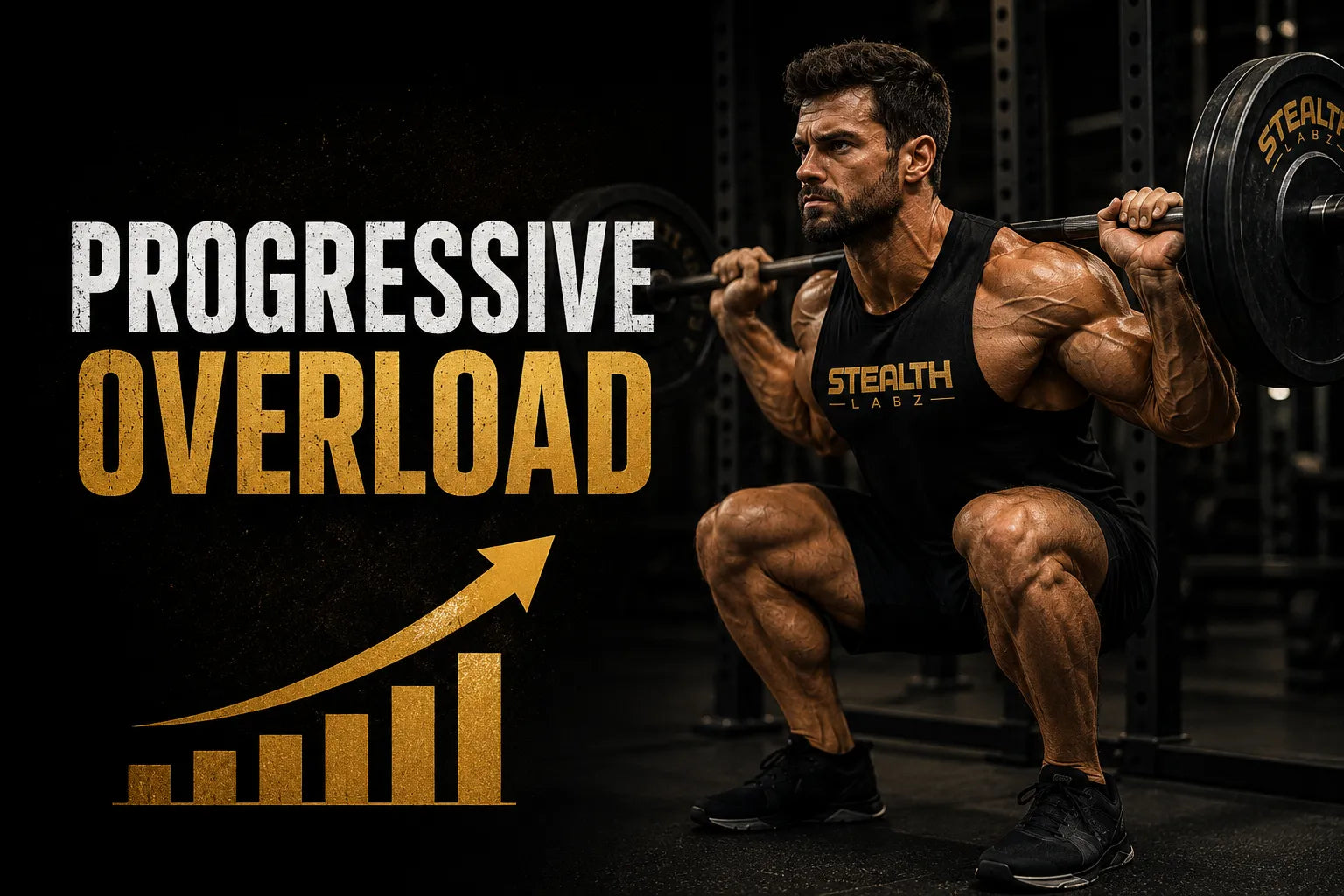
Progressive Overload Explained: The #1 Driver of Muscle Growth
If you've been lifting for a while and your weights haven't moved in weeks (or months), you're not broken, you're just missing the one variable that actually forces your body to grow: progressive overload.
It's the single most-cited principle in every serious strength and hypertrophy discussion, and for good reason. Your muscles don't grow because you show up to the gym. They grow because you consistently ask them to do a little more than they're used to. Skip that, and you can train five days a week for a year and still look the same in the mirror.
In this guide, we'll break down exactly what progressive overload is, why it's the real engine behind muscle growth, the most effective ways to apply it, and how to tell the difference between a normal plateau and a mistake in your programming plus how proper recovery support fits into the equation.
What Is Progressive Overload?
Progressive overload is the gradual, systematic increase of stress placed on your muscles over time through more weight, more reps, more sets, less rest, or better technical control of the movement. When you consistently do a little more than your last session, your body has no choice but to adapt: muscle fibers rebuild thicker and stronger to handle the new demand.
The opposite of doing the same weight, same reps, same sets, week after week gives your body zero reason to change. This is why so many lifters train hard for months and still plateau: effort alone doesn't build muscle. Increasing demand does.
Why Progressive Overload Is the #1 Driver of Muscle Growth
Muscle growth (hypertrophy) happens through three main mechanisms: mechanical tension, metabolic stress, and muscle damage. Of the three, mechanical tension, the force your muscles produce against a challenging load, has the strongest, most consistent link to long-term size and strength gains.
Progressive overload is simply the practical method for increasing that tension over time. Chasing a "pump," switching exercises every session, or training to exhaustion can all feel productive, but without progressively increasing the actual demand on the muscle, none of it reliably translates into new growth.
This is the exact reasoning strength coaches and evidence-based lifting communities repeat constantly: fatigue and soreness are side effects of training, not proof that a muscle was actually forced to adapt.
The Most Common Ways to Apply Progressive Overload
You don't need to add weight to the bar every single session; in fact, trying to do that too aggressively is one of the fastest ways to stall out or get hurt. Here are the proven methods, roughly in order of how most lifters should prioritize them:
-
Add weight: The most direct method. Small, consistent jumps (2.5–5%) beat big jumps that wreck your form.
-
Add reps: Keep the weight the same and perform more repetitions before increasing load again.
-
Add sets: Increase total training volume for a muscle group across the week.
-
Reduce rest between sets: Forces the same work into a shorter time frame, increasing density.
-
Slow the tempo / increase time under tension: Especially useful on the eccentric (lowering) portion of a lift.
-
Improving range of motion or technique: A deeper squat or more controlled rep at the same weight is a legitimate form of overload.
-
Increase training frequency: Hitting a muscle group more often per week, if recovery allows.
The mistake most beginners make is trying to overload every variable at once. Pick one or two, progress them deliberately, and let the others stay constant for a few weeks at a time.
How to Actually Track Progressive Overload (So You Stop Guessing)
The most common reason people fail to progressively overload isn't a lack of effort, it's a lack of tracking. If you don't know what you lifted last week, you're just guessing at what "more" looks like this week.
-
Log every session. Weight, reps, sets, and how many reps you had left in the tank (RIR/RPE).
-
Set a target before you walk in. Decide in advance whether today's goal is +1 rep, +5 lbs, or one less minute of rest.
-
Review weekly, not daily. Some sessions will be flat or even down — that's normal. Look at the 3–4 week trend, not a single workout.
-
Prioritize your main lifts. You don't need to progressively overload every accessory exercise every week — focus your tracking on compound movements first.
Progressive Overload and Plateaus: What's Actually Going Wrong
Hitting a wall after your first year of training is completely normal, most lifters plateau within a few months of consistent training once the easy "newbie gains" phase ends. When that happens, it's rarely because progressive overload "stopped working." It's usually one of these:
-
Recovery isn't keeping up with training demand. Muscle repair happens between sessions, not during them, inadequate protein, sleep, or rest days will stall progress no matter how well you program.
-
You're overloading too many variables at once. Trying to add weight, reps, and frequency simultaneously often backfires.
-
Nutrition isn't supporting the adaptation. You can't build new muscle tissue in a meaningful calorie or protein deficit.
-
You've stopped tracking, so "progress" has quietly become repetition.
This is where the training and the recovery side of muscle growth intersect. Progressive overload creates the stimulus but your body still needs the raw materials and recovery capacity to actually rebuild stronger.
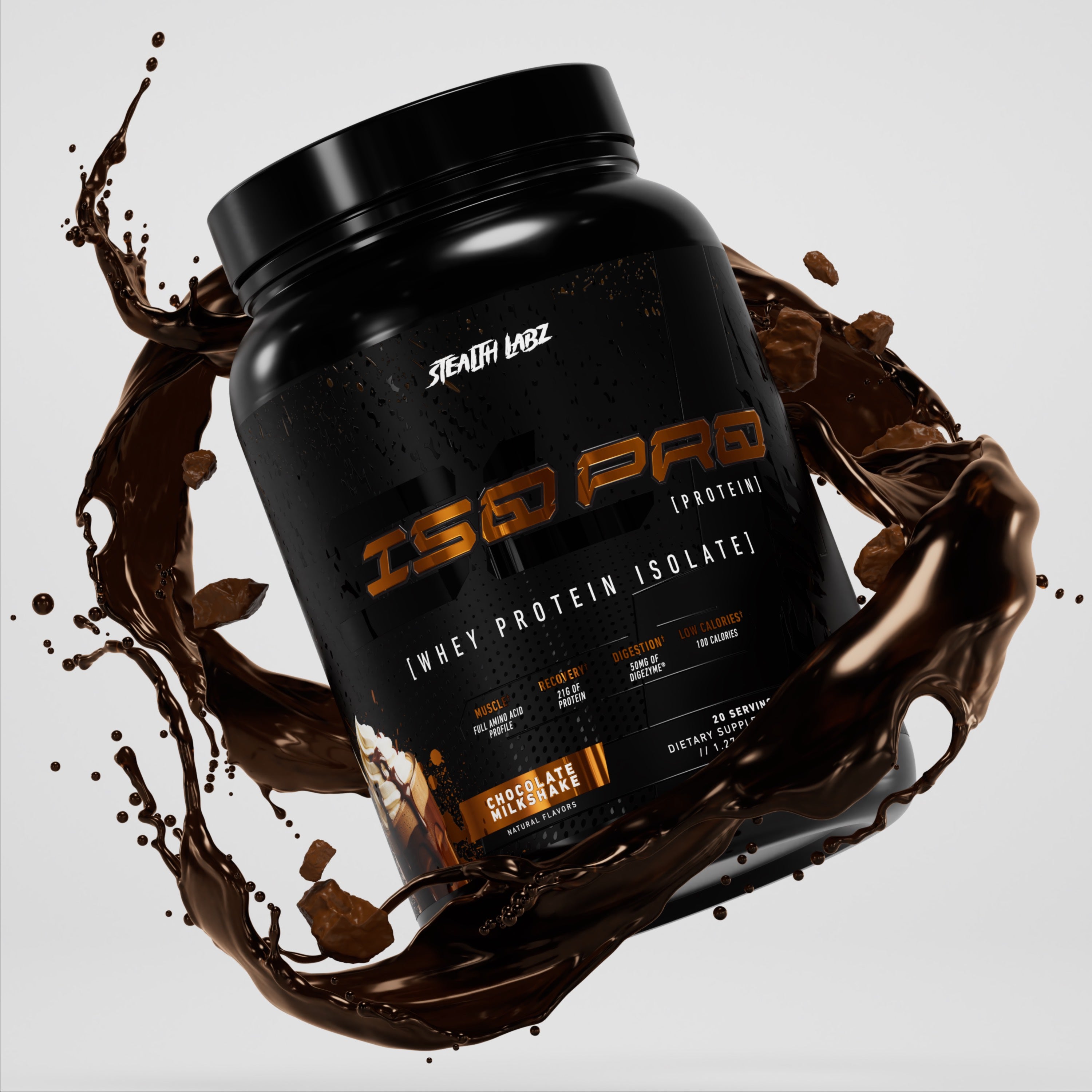
A high-quality whey protein isolate like ISO PRO makes it easier to hit the daily protein intake your muscles need to repair and grow after progressively harder sessions, and pairing it with ELEVATE's BCAA/EAA blend helps support recovery between the sessions where the real overload is happening.
Progressive Overload for Beginners vs Intermediate/Advanced Lifters

Beginners can typically add weight almost every session for the first several months; this is the "newbie gains" window, and it's the easiest time to apply progressive overload consistently.
Intermediate lifters usually need to slow down to weekly or biweekly increases, and start rotating through rep-based and volume-based overload instead of relying only on adding weight.
Advanced lifters often need to plan overload in structured blocks: a few weeks of increasing volume, followed by a deload, followed by a few weeks pushing intensity because the body adapts more slowly the closer you get to your genetic ceiling.
If you're training hard enough to need this kind of structured progression, your recovery demands go up too. This is often where lifters add a test-support formula like Alpha Extreme to help support the hormonal side of recovery and training capacity as intensity increases.
Common Mistakes That Undermine Progressive Overload
-
Chasing soreness instead of tension. Feeling wrecked the next day isn't a reliable sign that a muscle was progressively overloaded.
-
Changing exercises too often. You can't track progress on a lift you only do once a month.
-
Ignoring form breakdown. Adding weight at the cost of range of motion or control isn't real overload — it's just risk.
-
Skipping deload weeks. Constant, unbroken intensity increases eventually outpace recovery and lead to stalled lifts or injury.
-
Under-fueling training. Without enough calories and protein, your body has no material to build with, no matter how well you're progressing your lifts.
Frequently Asked Questions
What is progressive overload in simple terms?
Progressive overload means gradually increasing the demand on your muscles over time through more weight, reps, sets, or better execution so your body is forced to keep adapting and getting stronger.
How often should I increase weight for progressive overload?
It depends on your training age. Beginners can often add weight nearly every session. Intermediate and advanced lifters typically progress weekly, biweekly, or in structured training blocks instead.
Can you build muscle without progressive overload?
Some initial growth is possible from simply starting to train, especially for beginners, but sustained, long-term muscle growth requires consistently increasing the training demand. Without it, most lifters plateau.
Is progressive overload only about lifting heavier weights?
No. Adding reps, adding sets, reducing rest, slowing tempo, and improving range of motion are all legitimate forms of progressive overload — not just increasing the load on the bar.
Why am I not gaining muscle even though I train hard?
Training hard isn't the same as progressively overloading. If your weight, reps, and volume have stayed flat for weeks, your body has no new reason to adapt — and inadequate protein, sleep, or recovery can stall progress even when your programming is correct.
How does nutrition affect progressive overload results?
Progressive overload creates the stimulus for growth, but your body still needs enough protein, calories, and recovery time to actually rebuild the muscle tissue stronger. Under-fueling is one of the most common reasons lifters plateau despite good programming.
Do I need a deload week?
Most structured training programs, especially for intermediate and advanced lifters, benefit from a planned deload every 4–8 weeks to let recovery catch up before the next round of increased intensity.
Final Thoughts
Progressive overload isn't a trick or a hack, it's the actual mechanism your body responds to when building muscle and strength. The lifters who keep making progress year after year aren't training harder in some vague sense; they're tracking their numbers, deliberately increasing demand over time, and giving their bodies what they need to recover between sessions.
The training side is on you: log your lifts, pick one or two overload methods at a time, and review your trend every few weeks instead of judging progress session to session. The recovery side is where the right support makes a real difference — enough protein, enough rest, and smart supplementation to help your body keep up with the demands you're placing on it.
Ready to support your training with the recovery your muscles need to grow? Start with ISO PRO whey protein isolate to hit your daily protein target, add ELEVATE for recovery and muscle protection between sessions, and fuel harder training days with Surge Pre-Workout.
Read More on Stealth Labz Blogs
-
Whey Protein Isolate vs. Concentrate: Ultimate Muscle-Building Showdown — Which protein source actually fuels muscle growth better.
-
Best Supplements for Faster Muscle Recovery and Strength Gains — What to take between hard training sessions.
-
Best Muscle Recovery Supplements for Men in 2026 — A full breakdown of recovery-focused stacking.
-
Fat Burning Guides — How to keep building strength while in a calorie deficit.
,%20you're%20not%20broken,%20you're%20just%20missing%20the%20one%20variable%20that%20actually%20forces%20your%20body%20to%20grow:%20progressive%20o...)
Leave a comment
This site is protected by hCaptcha and the hCaptcha Privacy Policy and Terms of Service apply.