
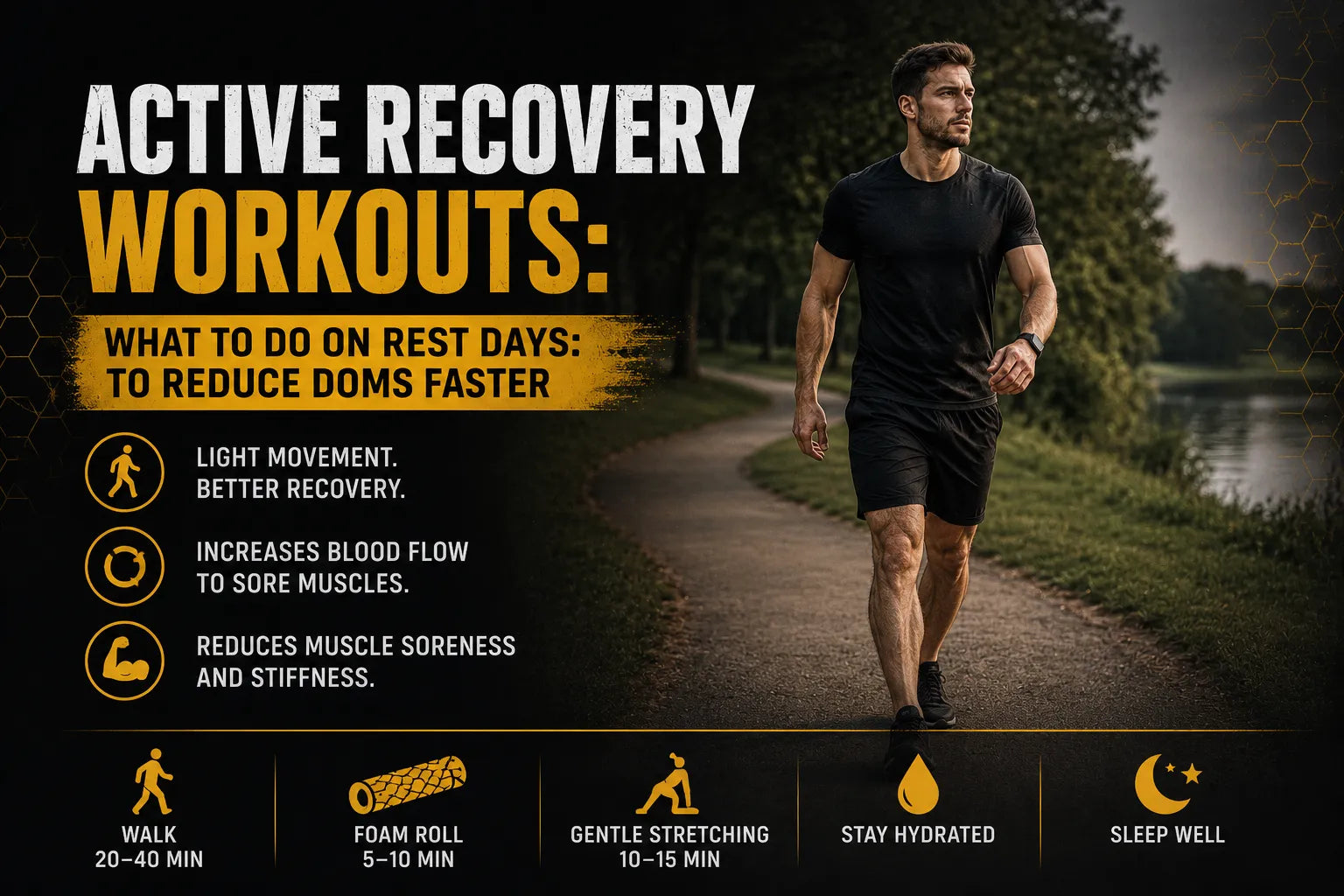
Active Recovery Workouts What to Do on Rest Days to Reduce DOMS Faster
You crushed leg day. Now it's 36 hours later, you can barely walk down stairs, and your instinct is to collapse on the couch until the soreness disappears on its own. Here's the problem: that instinct is usually wrong.
Delayed onset muscle soreness (DOMS) is caused by microscopic tears in muscle fibers from hard or unfamiliar training, and complete inactivity doesn't speed up the repair process — it just delays your next good session. What actually works is active recovery: short, low-intensity movement that increases blood flow to sore muscles without adding more damage.
This guide breaks down exactly what active recovery workouts to do on your rest days, how long they should take, what to eat and drink to support the repair process, and the mistakes that keep people sore for longer than they need to be.
Why You Get So Sore in the First Place (DOMS, Explained)
DOMS typically shows up 12–24 hours after training, peaks somewhere between day one and day three, and then fades on its own. It's most common after:
-
Trying a new exercise or movement pattern
-
Increasing training volume or intensity too quickly
-
Heavy eccentric (lengthening) movements like slow squats, deadlifts, or downhill running
For years, people blamed lactic acid buildup for this soreness but that's outdated. Lactic acid clears from muscle tissue within about an hour of finishing a workout. DOMS is actually inflammation and micro-tearing in the muscle fibers themselves, which is part of the normal adaptation process that eventually makes muscle bigger and stronger.
The key distinction: normal DOMS feels like tightness, tenderness, and stiffness. Something else sharp, localized pain, swelling, or soreness that gets worse instead of better after 3–4 days may be an injury and is a reason to see a doctor rather than push through it with active recovery.
Active Recovery vs Total Rest: What Actually Reduces DOMS Faster

When you're sore, you have two options: passive recovery (doing nothing) or active recovery (light, deliberate movement). Research and sports-medicine guidance consistently favor active recovery for standard post-workout soreness, for one simple reason: light movement keeps blood flowing to the muscle, which delivers oxygen and nutrients to the tissue that's repairing itself and helps clear metabolic waste faster than sitting still does.
A widely used benchmark from the National Academy of Sports Medicine (NASM) puts active recovery at 15–30 minutes, at roughly 30–60% of your max heart rate low enough that you could hold a conversation the entire time. That's the "talk test": if you're too out of breath to talk, it's not active recovery anymore, it's another workout.
The Best Active Recovery Workouts to Reduce DOMS Faster
Any of the following work well as active recovery picks based on what's accessible and what actually sounds appealing on a sore day, since consistency matters more than the specific activity.
1. Easy Walking or Hiking
The simplest, most accessible option. A 20–30 minute walk increases circulation without stressing sore muscle tissue. Hiking on uneven terrain adds light, varied muscle engagement if you want a bit more than flat-ground walking.
2. Light Cycling
Cycling at a conversational pace is a favorite among lifters because it's low-impact on joints while still moving blood through the legs — especially useful after a heavy lower-body session.
3. Swimming or Water Walking
Being in water takes weight off your joints entirely while the gentle resistance and temperature can help ease stiffness. Great option if you're sore across multiple muscle groups at once.
4. Yoga or Mobility Flows
Controlled stretching and joint mobility work address the tightness that comes with DOMS directly, and many lifters report yoga sessions on rest days to improve how their next training session feels.
5. Foam Rolling / Self-Massage
Foam rolling won't eliminate DOMS, but it can offer short-term relief from tightness and improve range of motion, similar to the temporary relief you'd get from a massage.
6. Light Pump-Focused Training
More advanced lifters sometimes use very light, high-rep "blood flow" sets on the sore muscle group itself (think: bodyweight squats, light band work) ; this is more nuanced and best reserved for people who already understand their own recovery capacity.
The common thread: low intensity, short duration, and movement that feels noticeably easier than your actual training. If you finish an "active recovery" session more fatigued than when you started, the intensity was too high.
What to Eat and Drink on Your Active Recovery Day
Movement is half the equation what you put into your body on a rest day matters just as much for how fast DOMS resolves.
Protein is non-negotiable on recovery days.
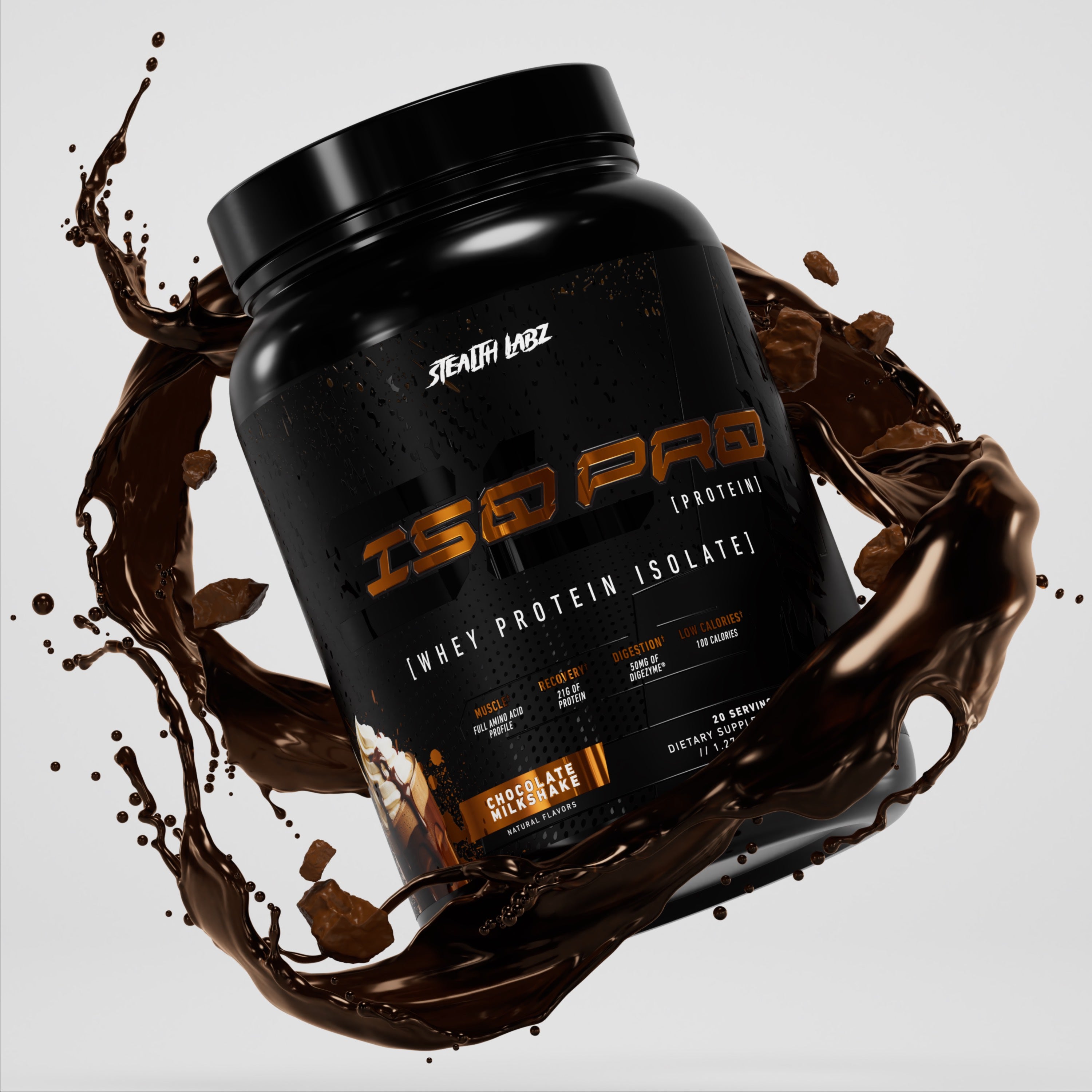
Muscle repair requires amino acids, and a fast-digesting protein source helps make sure your body has what it needs to rebuild the tissue that's currently sore. A clean whey isolate like ISO PRO is an easy way to hit your protein target on a day when a full meal-prep session isn't happening.
Amino acids and electrolytes support the repair process further.
BCAAs and EAAs help reduce muscle protein breakdown, and pairing them with electrolytes matters more than most people realize even a light walk or swim causes some fluid loss, and dehydration alone can make muscles feel tighter and more fatigued than they actually are. ELEVATE combines both in one formula, making it a practical addition to an active recovery day.
Hydration deserves its own callout.
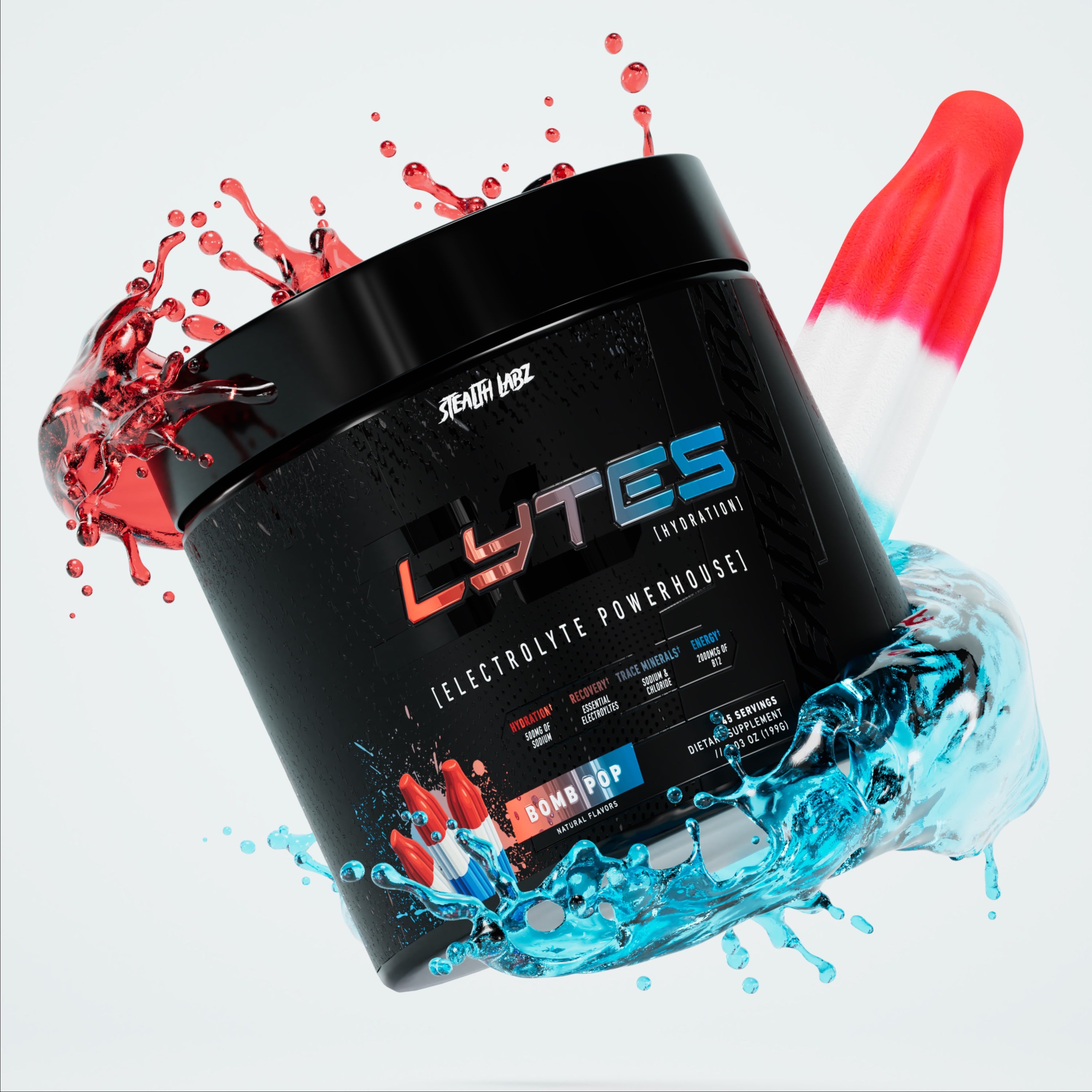
If you trained hard the day before, you may still be under-hydrated from that session. Replacing electrolytes with something like LYTES supports fluid balance and can help take the edge off soreness-related fatigue.
Sleep is the recovery tool nobody wants to hear about.
No supplement or active recovery session compensates for chronically short sleep; most muscle repair and growth hormone release happens during deep sleep, so treating 7–9 hours as part of your "recovery stack" is just as important as anything you take or do during the day.
Sample Active Recovery Day Routine
Here's a simple structure you can repeat any time DOMS shows up after a hard training day:
-
Morning: 20–30 minute walk, bike ride, or swim at an easy, conversational pace
-
Post-activity: Foam roll or stretch the sore muscle group for 5–10 minutes
-
Throughout the day: Sip ELEVATE for amino acids and electrolytes
-
With a meal or shake: Get in a full serving of ISO PRO to support muscle repair
-
Evening: Light mobility work or a short yoga flow, then prioritize a full night's sleep
Mistakes That Keep You Sore Longer
-
Going too hard on "recovery" day. If you can't hold a conversation during the activity, it's not active recovery anymore.
-
Doing nothing at all. Total inactivity for standard DOMS tends to leave people stiffer, not looser.
-
Skipping protein because it's a "rest day." Muscle repair doesn't pause just because you're not training.
-
Ignoring hydration. Dehydration amplifies the perception of soreness and fatigue.
-
Confusing DOMS with an actual injury. Sharp, one-sided, or worsening pain is a signal to rest fully and get it checked out — not to push through with movement.
Frequently Asked Questions
What is the best active recovery workout for DOMS?
Low-intensity options like walking, easy cycling, swimming, and yoga are the most effective and accessible active recovery workouts. The goal is light movement that increases blood flow without adding more muscle damage 15–30 minutes at a pace where you can still hold a conversation.
Should I work out or rest completely when sore?
For standard muscle soreness (DOMS), light activity is generally better than complete rest, since gentle movement increases circulation and can ease stiffness faster than sitting still. Full rest is more appropriate for actual injuries or severe pain that worsens over several days.
How long does DOMS usually last?
DOMS typically starts 12–24 hours after training, peaks around day one to three, and fades within about a week. Active recovery and proper nutrition can make that window feel more manageable, though it won't eliminate soreness overnight.
Can supplements reduce DOMS faster?
Adequate protein intake, amino acids (BCAAs/EAAs), and proper hydration support the muscle repair process and can help reduce how prolonged and severe soreness feels. Supplements complement but don't replace — light movement, sleep, and consistent nutrition.
Is foam rolling actually effective for muscle soreness?
Foam rolling can offer short-term relief from tightness and improve range of motion, similar to a light massage, though the effect tends to be temporary rather than a long-term fix for soreness.
How often should I schedule active recovery days?
Most lifters benefit from at least one active recovery day per week, and more frequently during high-volume training blocks or after unusually intense sessions. Listen to how your body responds if soreness is consistently lingering past 3–4 days, it may be worth reassessing training volume.
Read More on Stealth Labz Blogs
-
Best Supplements for Faster Muscle Recovery and Strength Gains — Pair your active recovery routine with the right supplement stack.
-
Best Muscle Recovery Supplements for Men in 2026 — A deeper look at protein, aminos, and hydration for recovery.
-
Whey Protein Isolate vs Concentrate: Ultimate Muscle-Building Showdown — Understand which protein source fits your recovery goals.
-
Explore More Muscle Growth Guides — Training and recovery strategies to keep building size and strength.
Final Thoughts
Soreness isn't something to wait out, it's something to actively work through. A short walk, swim, or mobility session gets blood moving to the muscles that need it, while the right nutrition gives your body the raw materials to actually repair the damage. Skip the all-or-nothing mindset: you don't need a full rest day or a full workout, you need active recovery.
Build your recovery day around movement plus the essentials protein, aminos, and hydration. Start with ISO PRO for muscle repair, add ELEVATE for recovery and hydration support, and keep LYTES on hand for electrolyte balance after any sweat session active recovery included.
Shop the full Stealth Labz recovery lineup and get back to training sooner.

Leave a comment
This site is protected by hCaptcha and the hCaptcha Privacy Policy and Terms of Service apply.