

Compound vs Isolation Exercises: What Builds Muscle Faster?
You've got an hour in the gym, a program to follow, and a nagging question in the back of your head: should this be squats, or should this be leg extensions? It's one of the most searched debates in strength training, and it shows up usually from someone whose program feels either too exhausting or too slow to show results.
The honest answer isn't "pick one." Compound vs isolation exercises isn't a competition with a single winner, it's a question of what each tool is actually good at, and how to combine them so you build muscle faster instead of just working out longer.
This guide breaks down the real differences, what the research and lifting community actually say about which builds muscle faster, and how to structure a week that uses both correctly — plus the recovery nutrition that determines whether any of it turns into visible muscle.
What's the Difference Between Compound and Isolation Exercises?
Compound exercises move more than one joint and recruit multiple muscle groups at once. Squats, deadlifts, bench press, pull-ups, and overhead press are the classic examples — a squat alone works your quads, glutes, hamstrings, and core in a single rep.
Isolation exercises move a single joint and target one muscle group directly. Bicep curls, leg extensions, lateral raises, and triceps pushdowns are isolation movements — the bicep curl only bends the elbow, so only the biceps are doing meaningful work.
|
Compound Exercises |
Isolation Exercises |
|
|
Joints involved |
Multiple |
Single |
|
Muscles worked |
Several groups at once |
One target muscle |
|
Best for |
Overall strength, mass, efficiency |
Fixing weak points, muscle definition |
|
Fatigue cost |
Higher (systemic) |
Lower (localized) |
|
Injury/rehab use |
Limited |
Common in physical therapy |
|
Time efficiency |
High |
Lower |
So Which One Builds Muscle Faster?
For most lifters, compound exercises build muscle faster overall and this is the consistent takeaway across fitness communities and coaching resources. Because compound lifts recruit more total muscle mass under load, they let you lift heavier weight, create more overall training stimulus, and drive a bigger hormonal and metabolic response per set.
That's a big part of why almost every serious strength program is built around squats, deadlifts, presses, and rows first.
But "faster" doesn't mean "only." Isolation exercises solve a problem compound lifts genuinely can't: targeted growth. If your triceps lag behind your chest, or one side of your back is visibly weaker, adding compound volume won't fix that, your stronger muscles will keep compensating. Isolation work lets you push a specific, lagging muscle to fatigue without your whole body limiting how hard you can push it.
The pattern most advanced lifters land on: compound lifts to build the foundation and overall size, isolation lifts to finish, correct imbalances, and add the volume a big compound lift can't safely add on its own.
Benefits of Compound Exercises
-
More muscle recruited per set — better time efficiency for busy schedules
-
Heavier loads possible — a stronger stimulus for strength and size
-
Bigger hormonal response — more total muscle mass under tension per session
-
More functional carryover — mimics real-world pushing, pulling, and lifting patterns
-
Better for fat loss — burns more calories per set due to the amount of muscle engaged
Benefits of Isolation Exercises
-
Fixes muscle imbalances — corrects a lagging bicep, delt, or hamstring
-
Lower systemic fatigue — you can add volume to a specific muscle without exhausting your whole body
-
Better mind-muscle connection — easier to feel and control the target muscle
-
Safer for rehab and prehab — commonly used in physical therapy for a reason
-
Great finishing volume — pushes a muscle to failure after compound lifts have already fatigued your CNS.
How to Structure Your Workouts: Combining Both
The programs that actually produce results — the ones you'll see recommended again and again on training forums — follow a simple sequencing rule: compound first, isolation second.
-
Start your session with 1–2 heavy compound lifts (squat, bench, deadlift, row, overhead press) while your energy and central nervous system are fresh.
-
Follow with 2–4 isolation exercises targeting the muscles you just trained, or a specific weak point (bicep curls, lateral raises, leg curls, calf raises).
-
Train each major muscle group 2x per week for most natural lifters — this beats training it once a week with more volume crammed into a single session.
-
Rest 48 hours between sessions hitting the same muscle group to allow full recovery.
Example Push Day:
-
Barbell Bench Press (compound) — 4 sets
-
Overhead Press (compound) — 3 sets
-
Cable Fly (isolation) — 3 sets
-
Lateral Raise (isolation) — 3 sets
-
Triceps Pushdown (isolation) — 3 sets
If you want a deeper breakdown of exercise selection and sequencing for a specific muscle group, our guide on Best Chest Exercises for Hypertrophy applies this exact compound-first, isolation-second structure with a full ranked exercise list.
Why Recovery Determines Whether Any of This Works
Here's the part that gets skipped in most compound vs isolation debates: neither builds muscle in the gym. Muscle growth happens during recovery, when your body repairs the muscle fibers you just broke down — and heavy compound lifts, in particular, create significant muscle protein breakdown that needs to be replaced.
That means your results depend just as much on protein intake, amino acids, and recovery support as they do on your exercise selection.
-
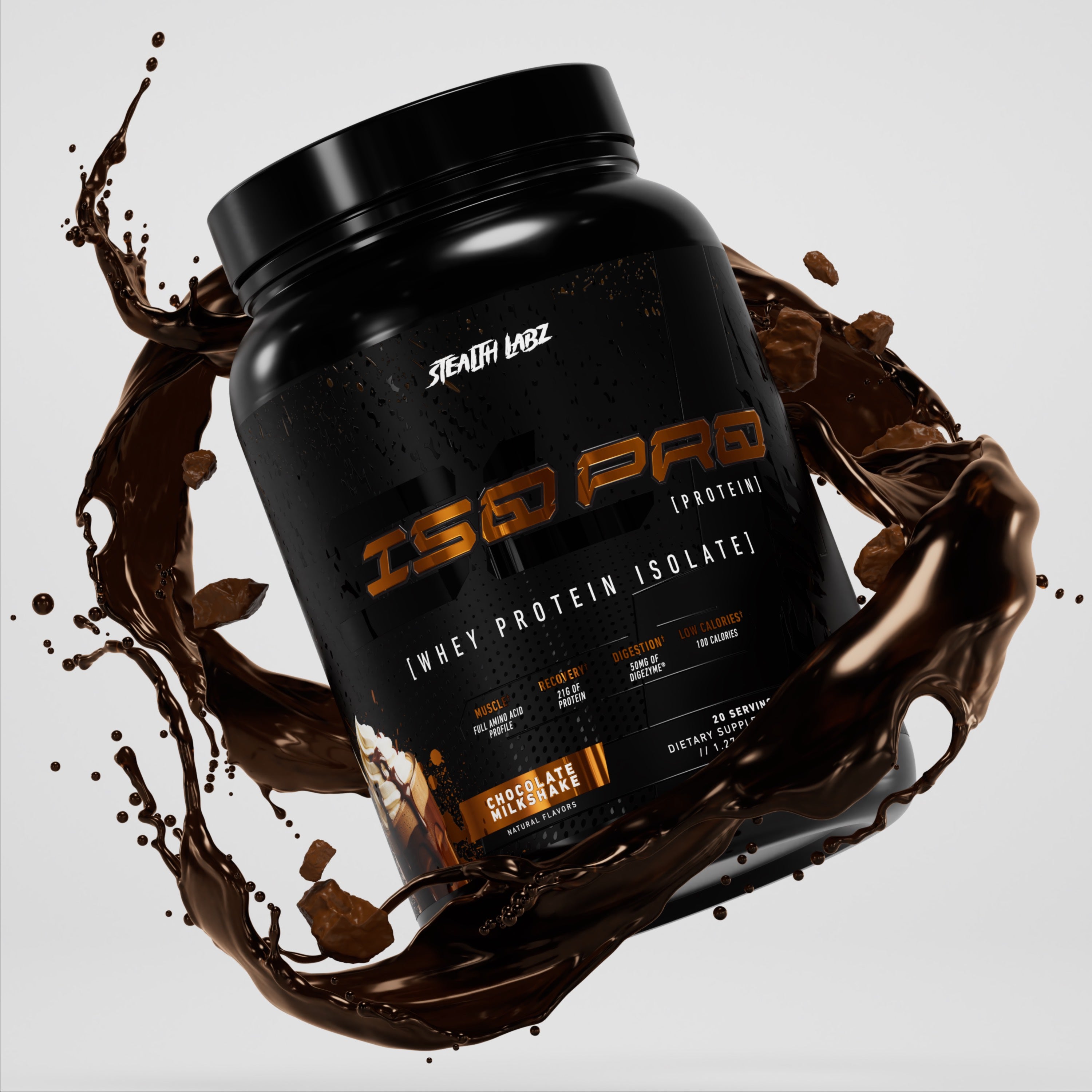
Protein replaces the muscle protein broken down during compound and isolation training alike. ISO PRO Whey Protein Isolate delivers a fast-absorbing, low-lactose protein source that's easy to hit your daily target with, especially after heavy compound sessions.
-
BCAAs/EAAs reduce muscle breakdown and soreness, which matters most after high-volume isolation finishers that leave a muscle fatigued and sore for days. ELEVATE BCAA/EAA Plus supports recovery between sessions so you can hit that muscle group again on schedule.
-
Pre-workout energy helps you actually hit the heavier loads compound lifts demand, especially late in a session or on low-energy days. SURGE Pre-Workout is built to support focus and output through your heaviest sets.
For a full breakdown of what to take and when, our guide on Best Muscle Recovery Supplements for Men in 2026 covers the exact stack serious lifters use to recover faster between compound-heavy sessions.
If protein is the piece you're missing, it's also worth knowing not all whey is the same — see our comparison on Whey Protein Isolate vs Concentrate to pick the right one for your training phase.
Common Mistakes to Avoid
-
Skipping compound lifts entirely because they're harder or more intimidating — you'll cap your overall strength and size potential.
-
Doing isolation work before compound lifts — pre-fatiguing a muscle before your heaviest lift reduces the load you can safely handle.
-
Ignoring isolation work altogether — leads to visible imbalances and stalls progress once compound lifts plateau.
-
Under-eating protein — even a perfect program won't build muscle without enough raw material to repair with.
-
Not managing fatigue — compound lifts are systemically taxing; program enough recovery days to avoid burnout or injury.
Build Your Stack for Compound + Isolation Training
Whether your week leans compound-heavy (strength-focused) or balances both styles evenly, the same recovery fundamentals apply: enough protein, enough amino acids, and enough energy to train hard consistently.
Explore the Muscle Building Stack for a complete, discounted bundle built around this exact training approach.
Frequently Asked Questions
Are compound exercises better than isolation exercises for building muscle?
For overall muscle mass and strength, compound exercises generally build muscle faster because they recruit more total muscle under heavier loads. Isolation exercises are better for targeting a specific muscle or fixing an imbalance that compound lifts can't address on their own.
Should beginners do compound or isolation exercises?
Beginners should build their program around compound exercises first — squats, deadlifts, presses, and rows teach fundamental strength and recruit the most muscle per session. Isolation exercises can be added in smaller amounts to support form and address weak points.
Can you build muscle with isolation exercises alone?
Yes, but it's less efficient. Isolation-only training tends to require significantly more total sets and time to match the muscle growth stimulus of a compound-based program, and it misses the strength and functional carryover compound lifts provide.
How many isolation exercises should I add to a compound-based workout?
Most effective programs use 1–2 compound lifts per major muscle group followed by 2–4 isolation exercises. This keeps compound lifts as the priority for pure strength and size while using isolation work to finish the muscle and address specific weak points.
Do compound exercises burn more calories than isolation exercises?
Yes. Because compound lifts engage more total muscle mass, they typically burn more calories per set than isolation exercises, making them especially useful in a fat-loss phase alongside a calorie deficit.
What should I eat or take to recover faster between compound lifting sessions?
Prioritize daily protein intake to repair the muscle broken down during training, along with BCAAs/EAAs to reduce soreness and support recovery between sessions. Products like ISO PRO and ELEVATE are formulated specifically to support this recovery window.
Read More on Stealth Labz Blogs
-
Best Chest Exercises for Hypertrophy — See this compound-first, isolation-second structure applied to a full chest workout.
-
Best Muscle Recovery Supplements for Men in 2026 — The full recovery stack for lifters training compound-heavy programs.
-
Whey Protein Isolate vs Concentrate — Choosing the right protein to fuel muscle repair after heavy training days.
Final Thoughts
Compound vs isolation exercises isn't really a rivalry — it's a partnership. Build your program around compound lifts for overall strength and mass, then use isolation exercises to finish, correct, and refine. What separates lifters who keep progressing from those who plateau usually isn't which exercise they picked — it's whether their recovery kept up with their training.
Fuel your compound lifts with SURGE Pre-Workout, repair with ISO PRO Whey Protein Isolate, and protect your muscle between sessions with ELEVATE BCAA/EAA Plus.
Shop the Muscle Building Stack and build a program — and a recovery routine — that actually keeps up with your training.


Leave a comment
This site is protected by hCaptcha and the hCaptcha Privacy Policy and Terms of Service apply.