

Training to Failure vs Leaving Reps in Reserve: What's Better for Growth?
You finish a set of bench press. Your arms are shaking, your form is starting to break down and you're not sure if you should grind out one more rep or rack it and call it done. Multiply that decision by every set, every workout, every week, and it adds up to one of the most debated questions in strength training.
Training to Failure vs Leaving Reps in Reserve isn't just gym-bro small talk. It's a real programming decision that affects how much muscle you build, how fast you recover, and whether you're still making progress in month six or burned out and injured.
This guide breaks down what "failure" and "reps in reserve" actually mean, what the research says, and exactly how to apply both methods so your training and your recovery — finally add up to real growth.
What Is Training to Failure?
Training to failure means performing a set until you physically cannot complete another rep with proper form. Your muscles have hit true momentary failure the bar slows, technique starts to break down, and the next rep simply isn't there.
There are actually a few types of failure lifters run into:
-
Concentric failure — you can't complete the lifting portion of the rep at all. This is what most people mean by "failure."
-
Technical failure — form breaks down before true muscular failure, so you stop to protect the joints and stay safe.
-
Eccentric failure — you can no longer control the weight on the way down. This is the most fatiguing type and rarely worth chasing.
Training to failure recruits the highest-threshold motor units and fast-twitch fibers — the ones with the greatest growth potential because your nervous system typically only calls on them when a set gets genuinely hard.
What Is Reps in Reserve (RIR)?
Reps in Reserve (RIR) is a simple way to gauge how close a set was to failure. If you stop a set and estimate you could have done 2 more clean reps, you trained with 2 RIR. Stop right at your last possible rep, and you're at 0 RIR — which is functionally the same as training to failure.
RIR pairs with Rate of Perceived Exertion (RPE), a 1–10 effort scale where RPE 10 = failure (0 RIR), RPE 9 = 1 RIR, RPE 8 = 2 RIR, and so on. Most lifters — even beginners — get reasonably accurate at estimating RIR within a rep or two once they've practiced it for a few weeks.
What Does the Research Actually Say?
This is where "Training to Failure vs Leaving Reps in Reserve" gets interesting, because the science has shifted over the past few years.
On hypertrophy (muscle growth): A 2022 systematic review and meta-analysis pooling multiple studies found only a small, borderline-significant advantage for training to failure over non-failure training — nowhere near large enough to call failure "necessary" for growth.
A more recent 8-week trial comparing failure training to 1–2 RIR training in resistance-trained lifters found essentially similar quadriceps growth between the two groups, with the failure group accumulating more fatigue for a similar result.
On strength: The picture leans further toward leaving reps in the tank. Several pooled analyses have found no meaningful strength advantage from training to failure and in some cases, a slight edge for stopping a few reps short, likely because fresher sets mean better bar speed and more total quality volume over time.
On fatigue and recovery: This is the clearest finding across the research. Failure training consistently produces more neuromuscular fatigue, more rep-speed loss across subsequent sets, and takes longer to recover from which matters for anyone trying to train a muscle group more than once a week.
The practical takeaway: stopping 1–3 reps short of failure builds nearly as much muscle as going all the way, costs you far less recovery, and tends to preserve strength better across a training block.
When Training to Failure Actually Makes Sense
Failure training isn't useless — it just needs to be used selectively:
-
Isolation exercises (curls, lateral raises, leg extensions) — lower systemic fatigue cost, so pushing to failure is generally safe and effective.
-
The last set of an exercise — go closer to failure on your final set once earlier sets have built up volume.
-
Machines and cables — more joint-friendly failure than free weights, where form breakdown carries more injury risk.
-
Intermediate to advanced lifters who can reliably maintain form under fatigue and have the recovery capacity (sleep, nutrition, lower stress) to support it.
When Leaving Reps in Reserve Wins
RIR training is the better default for most people, most of the time:
-
Compound lifts (squats, deadlifts, bench, rows) — the fatigue cost of failure is high and technical breakdown is genuinely risky under heavy load.
-
Beginners — still building the mind-muscle connection and motor patterns; failure adds risk without much extra payoff.
-
High-frequency training — if you're hitting a muscle group 2–3x per week, staying 1–3 RIR most sessions protects your ability to recover and perform in the next one. This is worth reading alongside our training frequency guide if you're structuring a split around multiple weekly sessions per muscle group.
-
Anyone stacking high training volume — since total weekly sets matter more for growth than how close any single set gets to failure, RIR training lets you accumulate more quality volume without digging a fatigue hole.
A Practical Framework You Can Actually Use
You don't need to pick one method forever. The research-backed approach most coaches now use is a hybrid:
-
Compound lifts: Stay at 1–3 RIR (RPE 7–9) on nearly every set.
-
Isolation lifts: Take your last set (sometimes your last two) to true failure.
-
Deload weeks: Pull back to 3–5 RIR across the board to let fatigue dissipate — see our full deload week guide for when and how to schedule one.
-
Track it: Note your RIR estimate for each working set in your log. Progressive overload isn't just adding weight — it's also creeping closer to failure over a mesocycle as fatigue allows. If you want the full picture on how this ties into long-term progress, read our breakdown of progressive overload.
This isn't about being "hardcore" or "soft" — it's about spending your recovery capacity where it earns the most growth.
Fueling Recovery When You Train Near Failure
Here's the part people training to failure often overlook: pushing sets closer to failure only pays off if your body can actually recover from the extra fatigue. That means protein intake, amino acid availability, and hydration matter more, not less, when you're regularly training hard.
-
Protein: Failure and near-failure sets cause more muscle protein breakdown, so hitting your daily protein target consistently is non-negotiable. ISO PRO whey protein isolate is a fast-absorbing option for closing that gap post-workout.
-
Amino acids: Training near failure more frequently increases soreness and next-day fatigue. ELEVATE BCAA/EAA supports muscle protein synthesis and recovery between high-effort sessions.
-
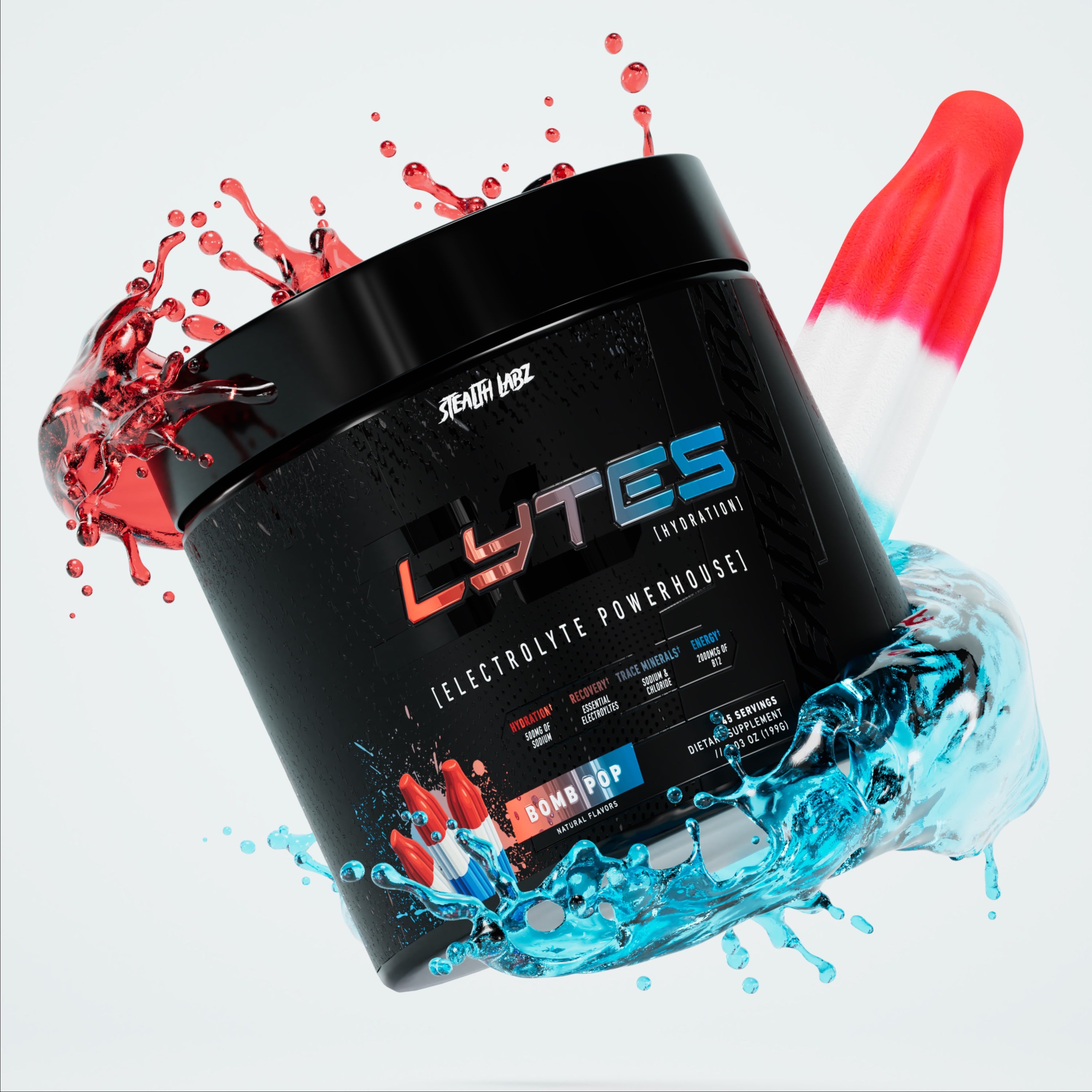
Hydration: Grinding through failure sets raises perceived exertion and core temperature fast. LYTES electrolytes help maintain performance and reduce cramping when sessions run hot and heavy.
If you're building a full training and recovery stack around a serious hypertrophy phase, our Muscle Building Stack bundles the essentials so you're not guessing what to take and when.
Frequently Asked Questions
Does training to failure build more muscle than reps in reserve?
Not meaningfully. Research comparing the two shows similar hypertrophy outcomes, with failure training producing only a small (often statistically borderline) advantage that's usually offset by the extra fatigue and recovery cost.
Is it bad to never train to failure?
No. Many well-designed hypertrophy programs use little to no true failure training and still produce excellent results, as long as total weekly volume and proximity to failure (staying around 1–3 RIR) are managed consistently.
Should beginners train to failure?
Generally, no. Beginners are still developing motor control and form under load. Leaving 2–4 reps in reserve lets you build technique safely while still providing plenty of growth stimulus.
How do I know my RIR if I've never tracked it before?
Start conservative — most people overestimate how many reps they have left early on. A rough gut check: if your last rep felt noticeably slower or your form started drifting, you were probably at 1–2 RIR, not further away.
Can I train to failure on every set?
You can, but it isn't recommended for every exercise or every session. Reserve true failure for isolation moves and final sets, and keep the bulk of your compound lift volume at 1–3 RIR to protect recovery across the week.
Does training to failure cause more muscle soreness?
Yes, generally. The extra neuromuscular fatigue and muscle damage from failure sets tends to increase soreness and next-day fatigue, which is why recovery support (protein, hydration, sleep) matters more on high-effort training days.
Read More on Stealth Labz Blogs
-
How Many Sets Per Week for Maximum Muscle Growth — Set volume matters as much as proximity to failure.
-
Progressive Overload Explained — The #1 long-term driver of muscle growth.
-
Active Recovery Workouts — What to do between high-effort sessions to recover faster.
Final Thoughts
Training to Failure vs Leaving Reps in Reserve isn't a battle with one winner — it's a tool selection problem. Use RIR training as your default on compound lifts and high-frequency work to protect recovery and accumulate quality volume. Save true failure for isolation exercises and final sets where the fatigue cost is lower and the stimulus still counts.
Whichever approach you lean on, your recovery has to keep pace with your effort. Fuel it with ISO PRO for muscle repair, ELEVATE for aminos and reduced soreness, and LYTES to stay hydrated through your hardest sets.
Shop the Muscle Building Stack and build a recovery routine that matches how hard you're training.




Leave a comment
This site is protected by hCaptcha and the hCaptcha Privacy Policy and Terms of Service apply.