

Full Body vs Bro Split: Which Routine Builds Muscle Faster?
Stuck between running one muscle group a day like the bodybuilders you grew up watching, or hitting your whole body every session like the "evidence-based" lifters on YouTube keep recommending? You're not the only one stuck on this. It's one of the most argued-about topics in online fitness communities.
Here's the good news: both Full Body and Bro Split routines can build muscle. The real question isn't "which one works" — it's which one fits your schedule, experience level, and recovery capacity well enough that you'll actually stick with it long enough to see results.
This guide breaks down the science, the real-world community consensus, and how to fuel either split so your training doesn't outpace your recovery. If you're also fine-tuning your nutrition side, our guide on how muscles actually grow after a workout is a useful companion piece before you pick a split.
Shop the Muscle Building Stack to support whichever routine you choose with the protein, aminos, and energy your training actually needs.
What Is a Full Body Split?
A full body split trains most of your major muscle groups — chest, back, legs, shoulders, arms — in a single session, usually 3 times per week (Monday/Wednesday/Friday is the classic layout). Each muscle group gets touched every workout, so your weekly frequency per muscle sits around 3x.
Best for:
-
Beginners building a movement foundation
-
Lifters who can only commit to 2–4 gym days per week
-
Anyone prioritizing strength and full-body conditioning over isolated size
Common criticism: Sessions can run long once you add accessory work, and it's harder to bury a single muscle group in volume without fatigue bleeding into the next exercise.
What Is a Bro Split?
A bro split (also called a body-part split) dedicates each training day to one muscle group — chest on Monday, back on Tuesday, legs on Wednesday, shoulders on Thursday, arms on Friday. Each muscle typically gets trained once per week, but with a much higher volume of sets in that single session.
Best for:
-
Intermediate to advanced lifters who train 5–6 days a week
-
Bodybuilders prioritizing muscle isolation and aesthetics
-
Lifters who enjoy focused, high-volume sessions on one body part at a time
Common criticism: Training a muscle only once a week means a longer stretch between stimulus events, which research suggests is suboptimal for natural lifters compared to hitting each muscle twice or more weekly.
Full Body vs Bro Split: Head-to-Head Comparison
|
Factor |
Full Body |
Bro Split |
|
Training frequency per muscle |
2–3x/week |
Typically 1x/week |
|
Days per week required |
3–4 |
5–6 |
|
Session length |
Moderate, whole-body |
Longer, single muscle focus |
|
Best for |
Beginners, time-limited lifters |
Intermediate/advanced, bodybuilding focus |
|
Volume per session |
Spread evenly |
Concentrated, high-volume |
|
Recovery demand |
Distributed across the week |
Concentrated recovery windows per muscle |
|
Fatigue management |
Easier to manage per session |
Harder in late sets of long sessions |
So Which One Builds Muscle Faster?
For most natural lifters, full body (or a well-structured upper/lower split) tends to edge out a classic bro split — not because the science says one is inherently superior, but because:
-
Frequency is more forgiving of missed days. Miss a full body session and you haven't skipped a whole muscle group for the week — you'll hit it again in 2–3 days. Miss "leg day" on a bro split and that muscle group might not get trained again for 10+ days.
-
Quality reps compound faster than junk volume. Spreading 12–16 weekly sets for a muscle group across 2–3 sessions generally produces higher-quality reps per set than cramming them into one exhausting session.
-
Beginners respond better to frequency. Newer lifters build strength and motor patterns faster with more frequent practice of key movements, a documented advantage of full body training in resistance-trained beginners.
Where the bro split pulls ahead is for advanced lifters chasing maximum single-muscle volume and anyone who genuinely enjoys the focused, high-volume session style enough to train 5–6 days a week consistently. The "best" split is ultimately the one whose recovery demands you can actually meet, under-recovering on either split will blunt your results.
Which Split Should You Choose?
Use this quick decision framework:
-
Training 2–4 days/week? → Full body. You'll hit each muscle group more often with less time investment.
-
Training 5–6 days/week and enjoy high-volume, single-muscle sessions? → Bro split can work well, especially if you're intermediate/advanced.
-
New to lifting? → Full body. It builds technique and strength faster and is more forgiving of missed sessions.
-
Chasing specific muscle group aesthetics (arms, chest)? → A modified bro split, or push/pull/legs with extra volume on your priority muscle, can help — pair it with our best chest exercises for hypertrophy guide if chest is your focus.
Fueling Either Split: Nutrition and Recovery Matter More Than the Split Itself
Whichever split you land on, the split is only the stimulus — growth happens during recovery. Here's how to support it:
-
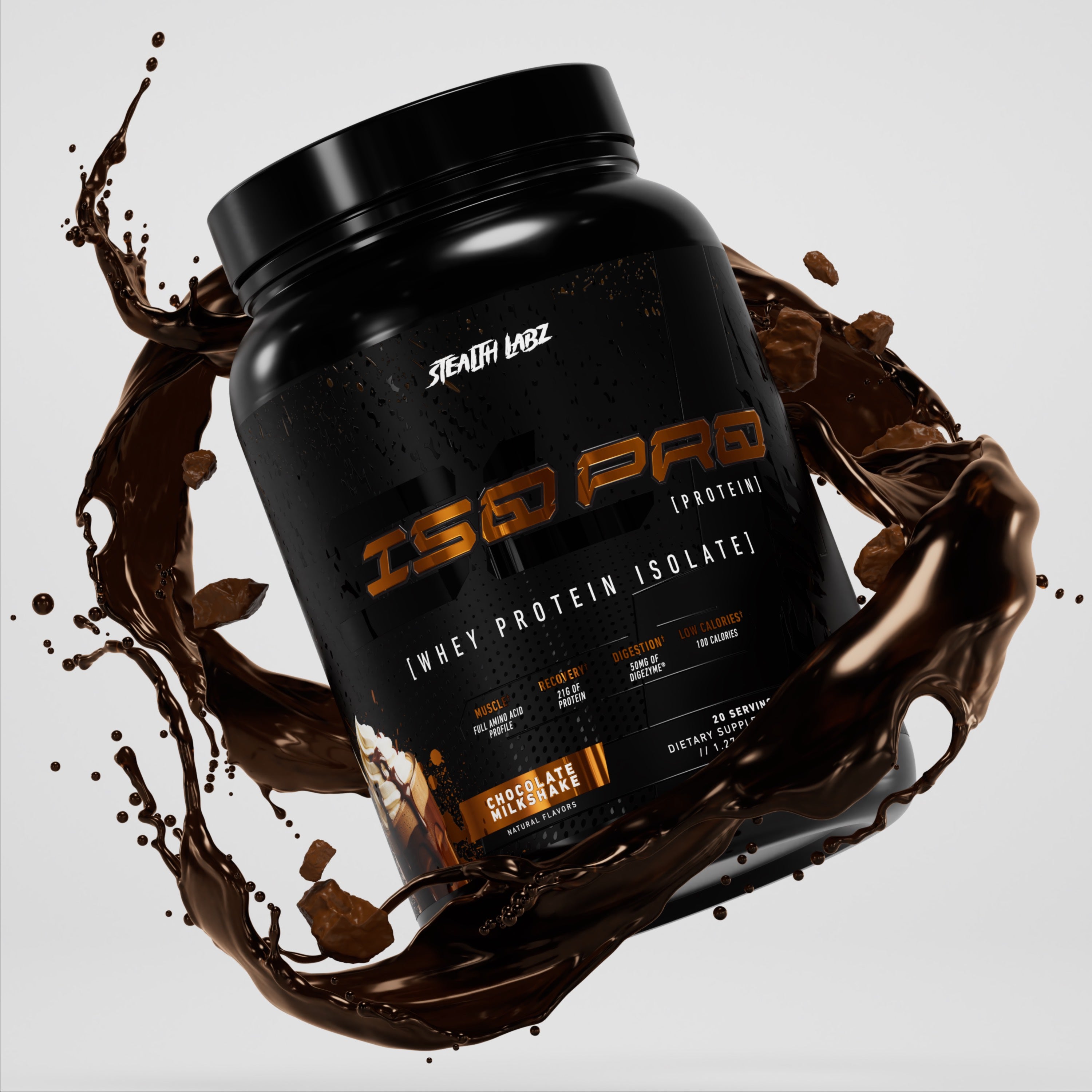
Protein for muscle repair: Whichever split you run, your muscles need fast-absorbing protein after training to rebuild what you broke down. ISO PRO delivers a clean whey isolate that fits either routine.
-
Amino acid support for higher frequency: If you go full body and train each muscle 2–3x a week, recovery between sessions matters even more. ELEVATE combines BCAA/EAAs and electrolytes to help reduce soreness between back-to-back training days.
-
Training energy for longer, higher-volume sessions: Bro split sessions tend to run longer and require sustained focus through 15+ sets on one muscle group. Surge Pre-Workout is built for that kind of sustained energy without a crash mid-session.
-
A complete stack: If you want the fundamentals covered without guessing, the Muscle Building Stack bundles protein, aminos, and training support for lifters serious about hypertrophy on either split.
For a deeper dive into what's actually happening at the muscle-fiber level after each session, see how muscles grow after a workout, and check our full breakdown of supplements that actually move the needle for muscle growth.
Common Mistakes on Each Split
Full body mistakes:
-
Trying to do too many exercises per session, leading to burnout and long workouts
-
Not managing fatigue — going near-failure on every single exercise every session
-
Skipping proper warm-ups since you're hitting multiple movement patterns back-to-back
Bro split mistakes:
-
Cramming 20+ sets into one session where the last third are low-quality "junk volume"
-
Under-recovering because 5–6 training days leaves little room for life stress, poor sleep, or missed meals
-
Neglecting a muscle group for a full week if a session gets skipped
Frequently Asked Questions
Is a full body or bro split better for building muscle?
For most natural lifters, full body training (or upper/lower splits) tends to produce comparable or slightly better results because it allows each muscle group to be trained more than once per week, which research and community consensus both point to as beneficial for natural, non-enhanced lifters.
Can beginners do a bro split?
Beginners can technically run a bro split, but it's usually not the most efficient choice — full body training gives beginners more frequent practice with key lifts, which speeds up early strength and technique gains.
How many days a week should I train on a full body split?
Most full body programs run 3 days per week (e.g., Monday/Wednesday/Friday) with at least one rest day between sessions to allow recovery.
Is bro split outdated?
No — it's simply better suited to intermediate/advanced lifters training 5–6 days a week who prioritize maximum volume per muscle group in a single session. It remains popular for a reason: it's simple to plan and highly effective when programmed correctly.
Can I switch between full body and bro split?
Yes. Many lifters cycle between splits based on their schedule — for example, running full body during busy weeks and shifting to a bro split or push/pull/legs during periods when they can commit to more training days.
Does diet matter more than the split I choose?
Ultimately, yes. Total weekly training volume, protein intake, sleep, and recovery all influence muscle growth more than which specific split you follow — the split is simply how you organize that volume across the week.
Final Thoughts
There's no universal winner in the Full Body vs Bro Split debate, both can build serious muscle when the volume, frequency, and recovery are dialed in. If you're a beginner or short on training days, full body will likely get you further, faster. If you're intermediate or advanced and can commit to 5–6 days a week, a bro split can absolutely deliver — especially if you enjoy that training style enough to stay consistent.
Whichever split you choose, your results will come down to whether your nutrition and recovery can keep up with your training. Fuel your sessions with ISO PRO for muscle repair, add ELEVATE for recovery between sessions, and power longer sessions with Surge Pre-Workout.
Shop the Muscle Building Stack and build the routine and the recovery that actually gets you results.



Leave a comment
This site is protected by hCaptcha and the hCaptcha Privacy Policy and Terms of Service apply.