
Article: Mind-Muscle Connection: Does It Actually Improve Muscle Growth?

Mind-Muscle Connection: Does It Actually Improve Muscle Growth?
You've probably heard a training partner say it mid-set: "Really feel that muscle working." Bodybuilders talk about it like a secret weapon. Coaches coach it. Instagram captions are full of it. But if you've ever wondered whether the mind-muscle connection is backed by real science or is just gym folklore that sounds good in a caption, you're asking the right question.
The short answer: it's real, but it's not magic, and it doesn't work the same way for every lift or every goal.
Here's what the research actually shows, when to use it, when to ignore it, and how to train it so it translates into real muscle growth — not just a better pump.
What Is the Mind-Muscle Connection?
The mind-muscle connection is the deliberate mental focus you place on a specific muscle while it's working, rather than just thinking about moving the weight from point A to point B. Exercise scientists call this "attentional focus," and it comes in two flavors:
-
Internal focus — consciously thinking about the target muscle contracting (e.g., "squeeze my biceps" during a curl)
-
External focus — thinking about the outcome or the equipment (e.g., "pull the bar up" or "push the floor away")
These aren't just two ways of describing the same thing — decades of motor-learning research show they produce genuinely different results depending on what you're training for.
Does the Mind-Muscle Connection Actually Work?
Yes — for hypertrophy-focused training, the evidence is fairly consistent. A well-cited study on trained lifters performing bench press across a range of loads (20–80% of 1RM) found that shifting attentional focus toward a target muscle measurably changed muscle activation during the lift.
Similar research on biceps curls and leg extensions found that an internal focus group gained more muscle size in the targeted area than a group told to simply focus on moving the weight, even though total training volume was similar between groups.
A few important caveats, though:
-
It matters more for isolation and moderate-load work than for max-effort compound lifts. When you're grinding out a near-maximal squat or deadlift, trying to "feel your glutes" is far less useful than focusing on bar path, bracing, and technique.
-
It doesn't replace progressive overload. You can have perfect mind-muscle connection and still stall out if you're not adding reps, weight, or volume over time.
-
The effect size varies by muscle group. Some studies found a bigger benefit for upper-body muscles like biceps than for lower-body muscles like quads — possibly because most people have more day-to-day proprioceptive awareness of their arms than their legs.
So the honest takeaway: mind-muscle connection is a real, measurable training tool — not a placebo — but it's a tool for a specific job, not a universal upgrade to every set you do.
When to Use It (and When Not To)
|
Situation |
Use Mind-Muscle Connection? |
|
Isolation exercises (curls, lateral raises, leg extensions) |
Yes — this is where it shines |
|
Hypertrophy-focused sets (8–20 reps, moderate load) |
Yes |
|
Max-effort strength sets (1–5 reps, near 1RM) |
No — prioritize technique and bracing instead |
|
Compound lifts for pure strength/performance |
Use external focus (push the floor, drive the bar) |
|
Warm-up sets or activation work |
Yes — great time to "prime" the target muscle |
This is the same principle covered in our deep dive on how muscles actually grow after a workout: hypertrophy comes down to mechanical tension, metabolic stress, and muscle damage and mind-muscle connection is one of the tools that helps you apply more tension to the muscle you're actually trying to grow, instead of letting a stronger neighboring muscle take over the rep.
How to Improve Your Mind-Muscle Connection
If you've tried to "feel the muscle" and mostly felt confused, you're not alone — it's a trainable skill, not something you either have or don't.
-
Slow down the eccentric (lowering) phase. A controlled 2–3 second negative gives your nervous system more time to register tension in the target muscle.
-
Reduce the load on isolation movements. Ego-lifting a heavy dumbbell curl usually recruits your shoulders and back to compensate. Drop the weight until you can genuinely isolate the muscle.
-
Pre-activate the muscle before your working sets. A light activation set — like banded glute bridges before squats — can improve how well that muscle fires during the main lift.
-
Use touch or light contact cues. Lightly touching the target muscle during a warm-up rep can improve your ability to consciously activate it.
-
Control your breathing. Holding your breath mid-rep spikes blood pressure and pulls your focus away from the muscle. Exhale on the exertion phase to stay present in the movement.
-
Train with a mirror occasionally — but not always. Visual feedback can help beginners learn what a proper contraction looks like, but over-reliance on the mirror can shift your focus to appearance instead of sensation.
-
Pair it with quality pre-workout focus support. Mental fatigue makes it genuinely harder to concentrate on muscle activation late in a session — which is one reason focus-supporting ingredients like Alpha GPC are included in performance pre-workouts. Our Surge Pre-Workout Review breaks down how nootropic ingredients support this kind of training focus.
Mind-Muscle Connection and Recovery: The Overlooked Link
Training with better mind-muscle connection often means training your target muscles closer to fatigue with more control — which increases the demand on recovery. If you're isolating muscles more effectively during your sessions, make sure your post-workout protein and amino acid intake keeps pace.
Our guide on the best supplements for muscle recovery after workouts covers exactly what your muscles need once the set is over.
For the pre-workout side of the equation, see what pre-workout supplements actually do — including how nootropic ingredients support the kind of mental focus that mind-muscle connection training requires.
Supplements That Support Better Mind-Muscle Training
Mind-muscle connection is a skill, but a few supplement categories can support the physical and mental side of applying it consistently:
-
Focus-supporting pre-workouts: Surge Pre-Workout includes Alpha GPC, a nootropic ingredient specifically included to support mental clarity and concentration during lifts — useful when you're trying to stay locked into a target muscle for an entire set.
-
Stacks built around focus and pump: The Recomp Stack combines Alpha GPC for focus with L-Citrulline Malate for pump, which can make it easier to actually feel the muscle you're training working.
-
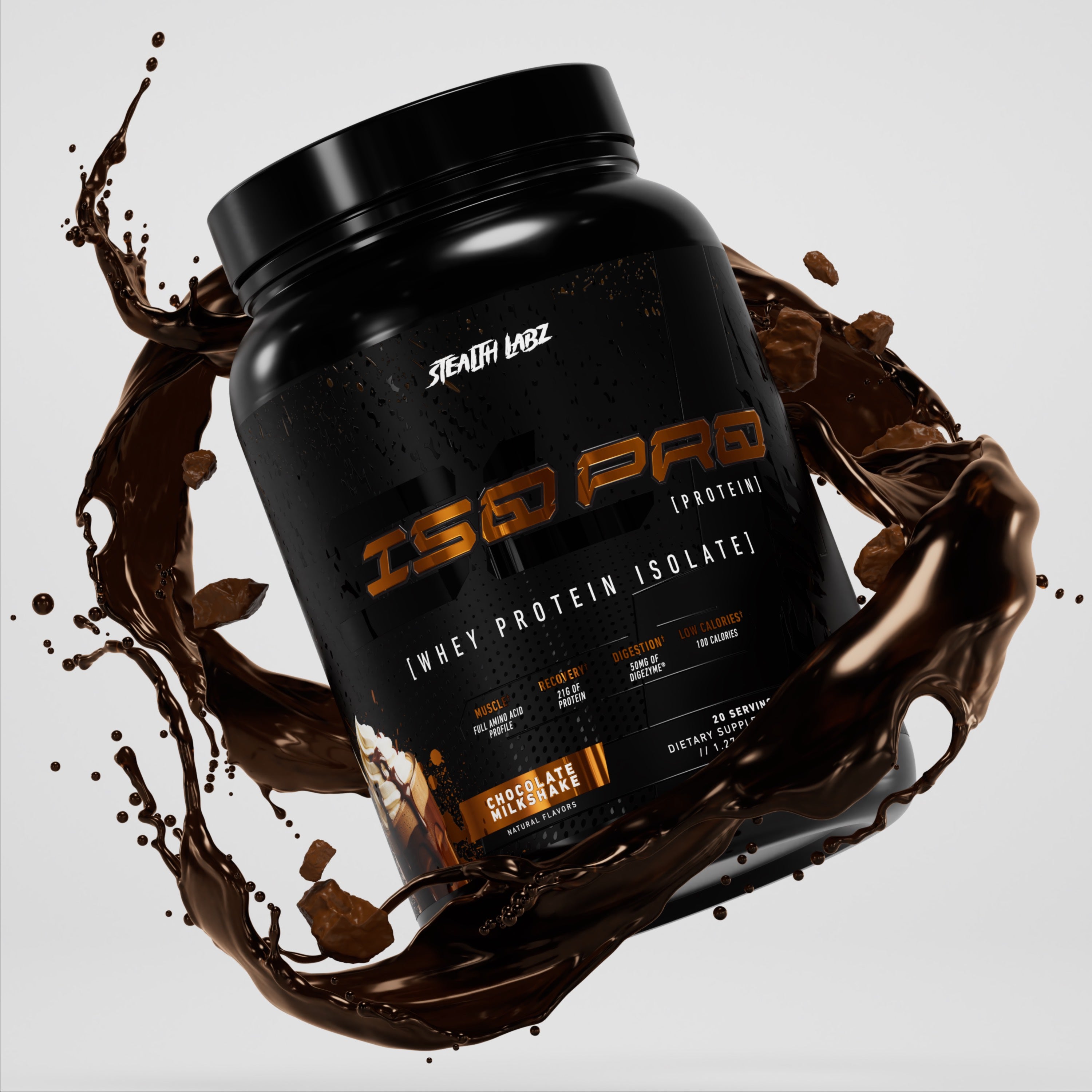
Post-workout protein for muscle repair: ISO PRO Whey Protein Isolate supplies the fast-digesting protein your muscles need to recover from more targeted, higher-tension training.
-
Amino acids for recovery between sessions: ELEVATE BCAA/EAA helps protect lean muscle and reduce soreness as you train with more intensity and control.
None of these supplements create mind-muscle connection for you — the skill still comes from practice and focus — but they support the training intensity and recovery that make consistent practice possible.
Frequently Asked Questions
Is the mind-muscle connection scientifically proven?
Yes, within limits. Multiple studies using EMG and hypertrophy outcomes show that internal focus (consciously activating a target muscle) can increase muscle activation and, in some cases, muscle growth compared to simply moving the weight. It's a real, measurable phenomenon — not just gym folklore — though the effect is stronger for isolation exercises than for heavy compound lifts.
Does mind-muscle connection work for compound lifts like squats and deadlifts?
It's less useful there. For near-maximal compound lifts, an external focus (pushing the floor away, driving the bar up) tends to produce better force output and performance than trying to consciously activate one specific muscle. Save internal focus for isolation work and moderate-load hypertrophy sets.
Can beginners use the mind-muscle connection, or is it only for experienced lifters?
Beginners can absolutely use it — in fact, learning to feel a muscle contract properly is a foundational skill. Start with light weight, slow controlled reps, and isolation exercises before adding heavier compound movements.
How long does it take to improve mind-muscle connection?
Most lifters notice meaningfully better muscle activation within a few weeks of deliberately practicing it, especially when combined with lighter warm-up sets and controlled tempo. It improves with practice the same way any motor skill does.
Does a stronger mind-muscle connection mean faster muscle growth?
It can contribute to muscle growth by increasing the mechanical tension placed on the target muscle during a set, but it works alongside — not instead of — progressive overload, sufficient training volume, protein intake, and recovery. Think of it as one lever among several, not a shortcut around the others.
What's the easiest way to start practicing mind-muscle connection today?
Pick one isolation exercise in your next session, drop the weight by 20–30%, slow the lowering phase down, and focus entirely on the sensation in the target muscle rather than the number on the plate. That single change is usually enough to feel the difference.
The Bottom Line
The mind-muscle connection isn't a gym myth, but it's also not a substitute for the fundamentals: progressive overload, adequate volume, protein intake, and recovery. Used correctly — mostly on isolation work and moderate-load hypertrophy sets it's a legitimate way to get more growth stimulus out of the same rep. Used on every single set regardless of load or goal, it can actually get in the way of performance.
Train the skill deliberately, support it with the right recovery nutrition, and let it do what it's actually good for: helping you feel and grow — the muscle you're training.
Read More on Stealth Labz Blogs
-
Progressive Overload Explained: The #1 Driver of Muscle Growth — the foundation these techniques should be layered on top of.
-
How Many Sets Per Week for Maximum Muscle Growth — check your total volume before adding intensity techniques.
-
Deload Week Guide: When and How to Deload for Better Gains — know the signs it's time to back off.
-
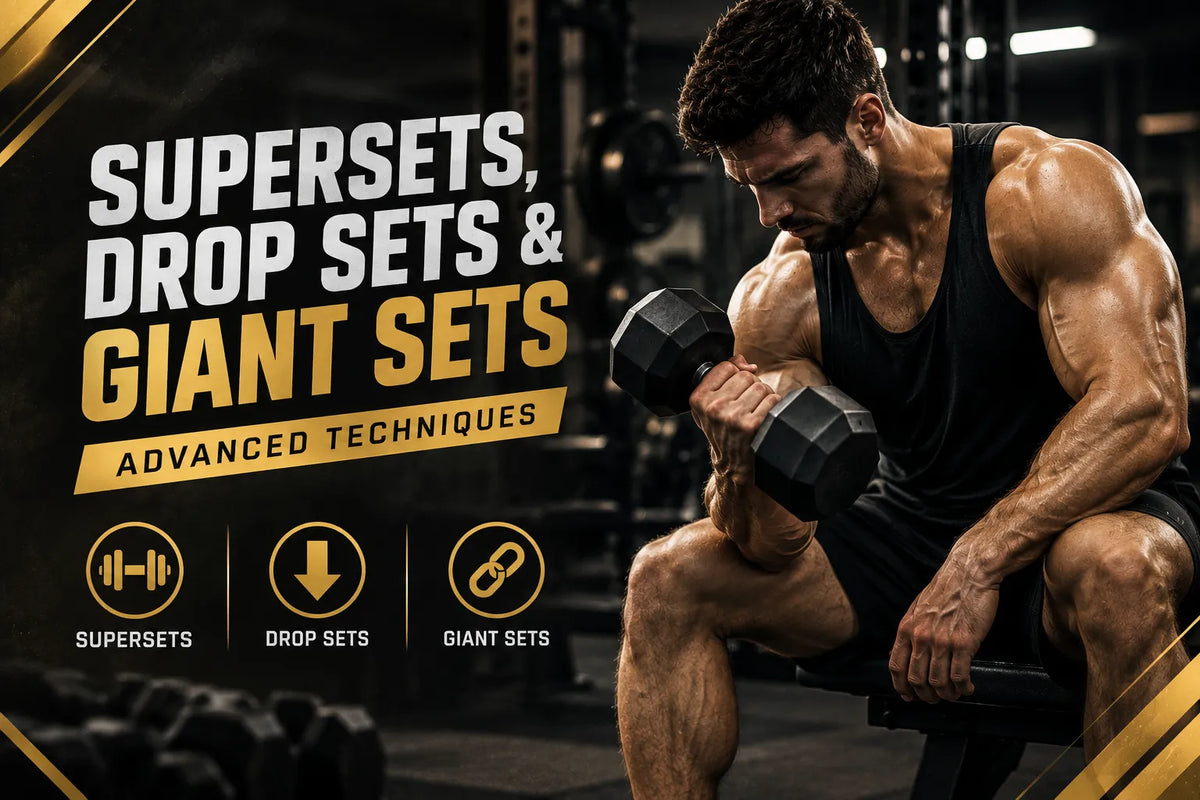
Supersets, Drop Sets & Giant Sets — Advanced Techniques for Muscle Growth
Statements regarding supplement benefits have not been evaluated by the Food and Drug Administration. Stealth Labz products are not intended to diagnose, treat, cure, or prevent any disease.

Leave a comment
This site is protected by hCaptcha and the hCaptcha Privacy Policy and Terms of Service apply.